

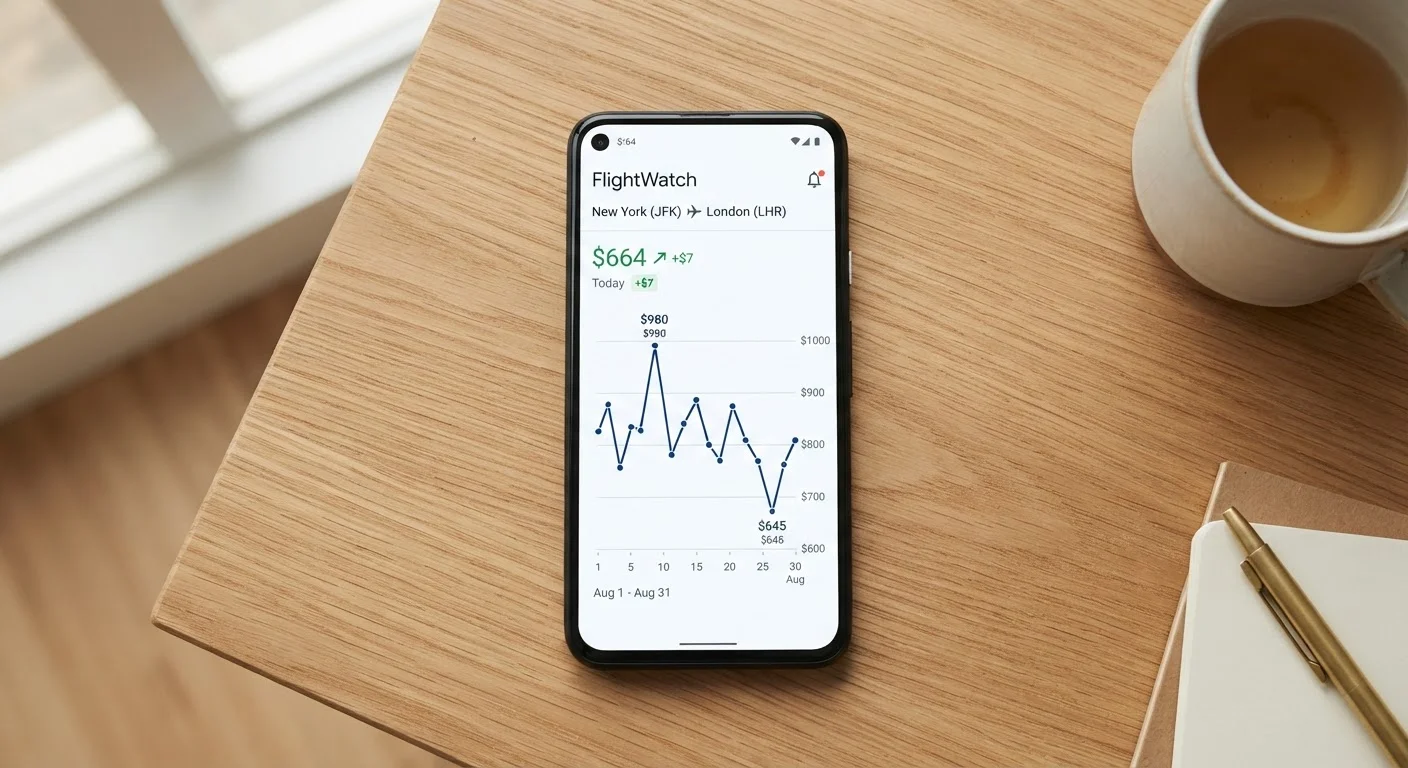
Why Price Alerts Fail Most Travelers
Flight price alerts sound like a passive win: set it, forget it, save money. In practice, most people set them up once, get buried in daily notification emails, and either ignore everything or panic-book at the first drop they see. Neither outcome saves money reliably.
The failure isn't the tool — it's the configuration. Most flight search platforms offer alert features, but the default settings are tuned for engagement, not usefulness. You'll get notified about minor fluctuations that don't represent real savings opportunities. To use alerts effectively, you need to treat them as a structured part of your booking process, not a substitute for one.
Before you configure anything, it helps to run through a pre-search checklist to clarify your actual travel parameters. Knowing your hard constraints — travel window, budget ceiling, acceptable airports — makes your alerts far more precise.
Start Tracking Earlier Than You Think
For domestic routes, fares tend to show the most meaningful variability in the 6 to 12 week window before departure. Setting alerts earlier than that often means tracking a period of price stability, while setting them too late means you're watching fares rise as the departure approaches. International routes generally warrant an even earlier monitoring window — often 3 to 6 months out.
What You Need Before Setting Up Alerts
Effective price alerts require a few defined inputs. Without them, you're just generating noise.
What you will need
Also consider whether your route has genuine price variability. Very popular routes with limited competition tend to have narrow price bands — alerts will fire often but savings will be modest. Less-served routes or those with multiple competing carriers tend to show wider swings worth tracking.
Step-by-Step: Configuring Alerts That Actually Deliver
Follow these steps to set up a focused, actionable alert system. The goal is a small number of high-signal notifications, not a flood of marginal updates.
Choose one platform with reliable alert functionality
Pick a single flight search platform that offers price tracking and set up alerts there. Using multiple tools for the same route generates duplicate notifications and muddies your data. Most major flight search platforms allow you to track a specific route or trip and will email you when the price changes significantly.
Search your route with flexible date options enabled
Run your initial search with date flexibility turned on — typically a plus or minus 3-day window around your preferred travel dates. This widens the range of fares the alert system monitors and increases the probability of catching a genuine low. Note the current price shown across the date range before setting the alert.
Set your alert threshold based on a realistic target price
Where the platform allows you to configure a price threshold (the fare level that triggers a notification), set it at or below your pre-determined budget ceiling. Do not leave this at the default, which is often set to flag any price change. You want alerts that signal a genuinely bookable opportunity, not background noise.
Add one or two nearby alternate airports as separate alerts
If your origin or destination city has more than one airport within reasonable travel distance, set up a separate alert for that route. Flights through alternate airports often follow different pricing patterns and can drop at different times. Keep these as distinct alerts rather than combined searches so you can compare cleanly.
Decide in advance when you will act on an alert
Before your first alert arrives, write down a simple decision rule: if the fare hits X dollars and meets my date requirements, I book within 24 hours. This removes hesitation and prevents the common pattern of watching a fare drop, waiting for it to drop further, and missing the window. Prices can reverse within hours.
Once alerts are running, pair them with a clear decision rule: know in advance what fare price is your trigger to book. Without a pre-set threshold, you'll second-guess every notification. Keep in mind that a low headline fare isn't always the full story — cheap flights can end up costing more once fees for bags and seat selection are added.
Making Alerts Work Alongside Broader Search Habits
Price alerts are one layer of a broader flight search strategy, not a standalone solution. They're most powerful when combined with active tactics. Lesser-known flight search tactics — like searching in incognito mode, checking nearby origin airports, or querying one-way legs separately — can surface fares that alert tools never track.
Review and update your alerts every two to three weeks. Delete routes you're no longer considering and add alternate date windows if your schedule opens up. An alert left running for a route you've already booked — or abandoned — is just inbox clutter.
Don't Let Old Alerts Linger
Unreviewed alerts accumulate quickly and train you to ignore your inbox — the opposite of what you need when a real opportunity appears. Build a habit of auditing your active alerts every few weeks and deleting any that no longer reflect your actual travel plans. Alert fatigue is a real risk; a cluttered notification stream is nearly as useless as no alerts at all.
Finally, treat flight price data as one input among several. Fares fluctuate for reasons outside your control — fuel costs, route competition, seasonal demand — and no alert system can predict when the lowest price will appear. What alerts do is ensure you don't miss a meaningful drop while you're not actively watching.
The content provided on our blog site traverses numerous categories, offering readers valuable and practical information. Readers can use the editorial team’s research and data to gain more insights into their topics of interest. However, they are requested not to treat the articles as conclusive. The website team cannot be held responsible for differences in data or inaccuracies found across other platforms. Please also note that the site might also miss out on various schemes and offers available that the readers may find more beneficial than the ones we cover.