

Why Look Beyond Hotels and Hostels
Standard hotels and even hostels represent only a narrow slice of where you can sleep when traveling. For budget-conscious travelers willing to think creatively, a broader set of options exists—some entirely free, others dramatically cheaper than market rates. The trade-off is usually time, flexibility, or advance planning rather than money.
This isn't about roughing it. Many of these alternatives offer genuine comfort, safety, and a depth of cultural experience that a chain hotel lobby simply can't deliver. The key is matching the option to your actual travel style and destination. If you're building out a fuller lodging strategy, the Budget Traveler's Complete Playbook for Finding Affordable Accommodation covers the broader picture—this article goes deep on the alternatives most travelers overlook.
Start with One Alternative at a Time
Trying to stack multiple unfamiliar lodging types into a single trip adds logistical complexity. Pick one alternative that fits your destination and travel style, test it thoroughly, then add others on future trips. Building confidence with each option separately makes the learning curve manageable and the outcomes more reliable.
Six Lodging Alternatives Worth Knowing
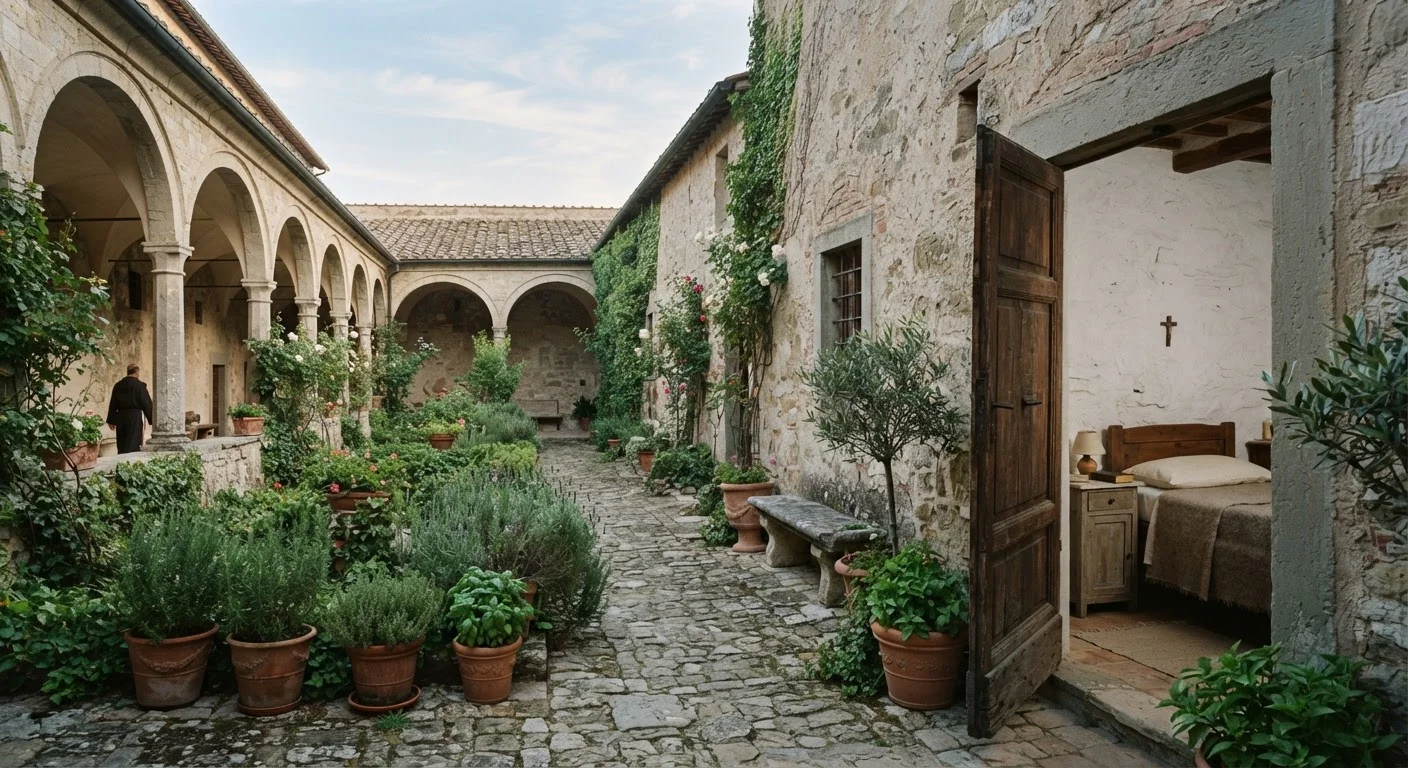
Monastery and Convent Stays
Many religious institutions across Europe, Asia, and Latin America offer guest rooms to travelers—sometimes open to people of any faith, sometimes requiring a brief contact or letter of introduction. Costs are typically modest, often including meals, and the environments tend to be quiet and well-maintained.
What you give up: flexible check-in times, noise tolerance, and sometimes alcohol on the premises. What you gain: unique architecture, genuine peace, and an experience no review aggregator algorithm will surface automatically. Research individual monasteries directly; many don't list on mainstream booking platforms, so finding them requires a bit of manual digging by country and region.
Monastery guest rooms often include meals at a fraction of typical hotel rates.
Work Exchanges (WWOOFing and Similar Programs)
Work exchange programs connect travelers with farms, eco-projects, hostels, and community organizations that offer room and board in exchange for a set number of working hours per day—typically four to six. The most established network is WWOOF, which focuses on organic agriculture, though similar frameworks exist for a range of project types globally.
This option suits travelers with a flexible itinerary who want extended time in one place. It's not suitable for a short trip or for anyone who needs predictable working conditions. Vet hosts carefully: look for detailed reviews, ask specific questions about accommodations and duties before committing, and confirm everything in writing. Spending mindfully in affordable destinations is worth considering alongside work exchanges to ensure your presence genuinely benefits local communities.
Work exchanges trade four to six hours of daily labor for free room and meals.
House-Sitting
House-sitting involves caring for someone's home—and often their pets—while they travel, in exchange for free accommodation. Arrangements range from a few days to several months. Platforms that connect house-sitters with homeowners typically charge an annual membership fee, which is usually recovered quickly if you land even one successful sit.
Building a track record takes time. New house-sitters often start with shorter, local sits to accumulate reviews before applying for desirable international listings. References matter enormously—treat them as seriously as a job application. The upside is significant: free accommodation in private homes, often in residential neighborhoods that feel nothing like tourist zones.
A single successful house-sit can recover the cost of a platform membership many times over.
Couchsurfing and Hospitality Networks
Hospitality exchange networks allow travelers to stay with local hosts for free, with the expectation of cultural exchange rather than payment. The original and largest such network requires a small verification fee, though the model itself is about reciprocity—most active participants both host and surf over time.
Safety due diligence is non-negotiable here. Read host profiles thoroughly, check references from previous guests, and communicate substantively before accepting or requesting a stay. This option works well for sociable solo travelers. It's generally less suitable for couples, families, or anyone who values privacy highly. Compare the honest trade-offs by reading Staying in a Shared Dorm Room: The Honest Trade-Offs—the dynamics around privacy are similar.
Hospitality exchange networks work best for sociable solo travelers who vet hosts rigorously.
University and College Residences
Many universities rent out dormitory rooms to travelers during academic breaks—typically summer and winter recesses. Rates are often well below local hotel averages, and amenities like laundry facilities and campus dining may be included or available cheaply. Location varies; some campuses sit in city centers, others on suburban edges.
Availability is seasonal and requires advance planning. Contact university accommodation offices directly rather than expecting these options to appear on mainstream booking platforms. This is a particularly practical option for travelers visiting college towns where conventional lodging prices spike during events or tourist seasons.
University dorms rented during academic breaks often undercut local hotel rates significantly.
Camping and Dispersed Public Land
In countries with strong public land access laws—including parts of the United States, Canada, and several Northern European nations—camping on designated public land is either free or very low cost. In the US, dispersed camping on Bureau of Land Management (BLM) land and many national forests is permitted without a fee in many areas, subject to specific rules about fire, waste, and duration of stay.
This option requires a vehicle or willingness to carry gear, and rules vary significantly by jurisdiction and season. Always verify current regulations through official government sources before arriving. Fire restrictions, permit requirements, and designated zones change seasonally. Done right, it's one of the most affordable lodging strategies available—and in the right landscape, genuinely spectacular.
Dispersed camping on public land can be free, but current rules must always be verified officially.
Matching the Right Option to Your Trip
None of these alternatives is universally superior. Monastery stays require booking months ahead in popular regions and aren't available everywhere. Work exchanges demand a meaningful time commitment—they don't make sense for a five-day city trip. House-sitting depends heavily on supply in your destination and your own track record on platforms. Couchsurfing works best for solo travelers comfortable with social unpredictability.
A few consistent rules apply across all of them: get any agreement in writing, read reviews or references carefully, and verify the arrangement directly with your host before making travel commitments. If you're worried about trade-offs on comfort and safety, Sleeping Cheap Without Sleeping Badly offers grounded guidance on maintaining quality while keeping costs down. And if you're exploring whether slow travel could help you use these options more effectively, see Slow Travel vs. Itinerary-Hopping: Which Approach Saves More Money?
The destinations you choose also shape which alternatives are viable. Some lodging options cluster in rural or heritage-rich regions rather than major cities. Exploring low-cost destinations that already have infrastructure for alternative lodging can multiply your savings significantly. Whatever path you take, treat these options as skills to build—not one-time hacks—and they'll serve you across many trips.
This article is for general informational purposes only. Prices, availability, and platform terms change frequently. Always verify conditions, agreements, and safety considerations directly with hosts and through official sources before booking or traveling.
The content provided on our blog site traverses numerous categories, offering readers valuable and practical information. Readers can use the editorial team’s research and data to gain more insights into their topics of interest. However, they are requested not to treat the articles as conclusive. The website team cannot be held responsible for differences in data or inaccuracies found across other platforms. Please also note that the site might also miss out on various schemes and offers available that the readers may find more beneficial than the ones we cover.