

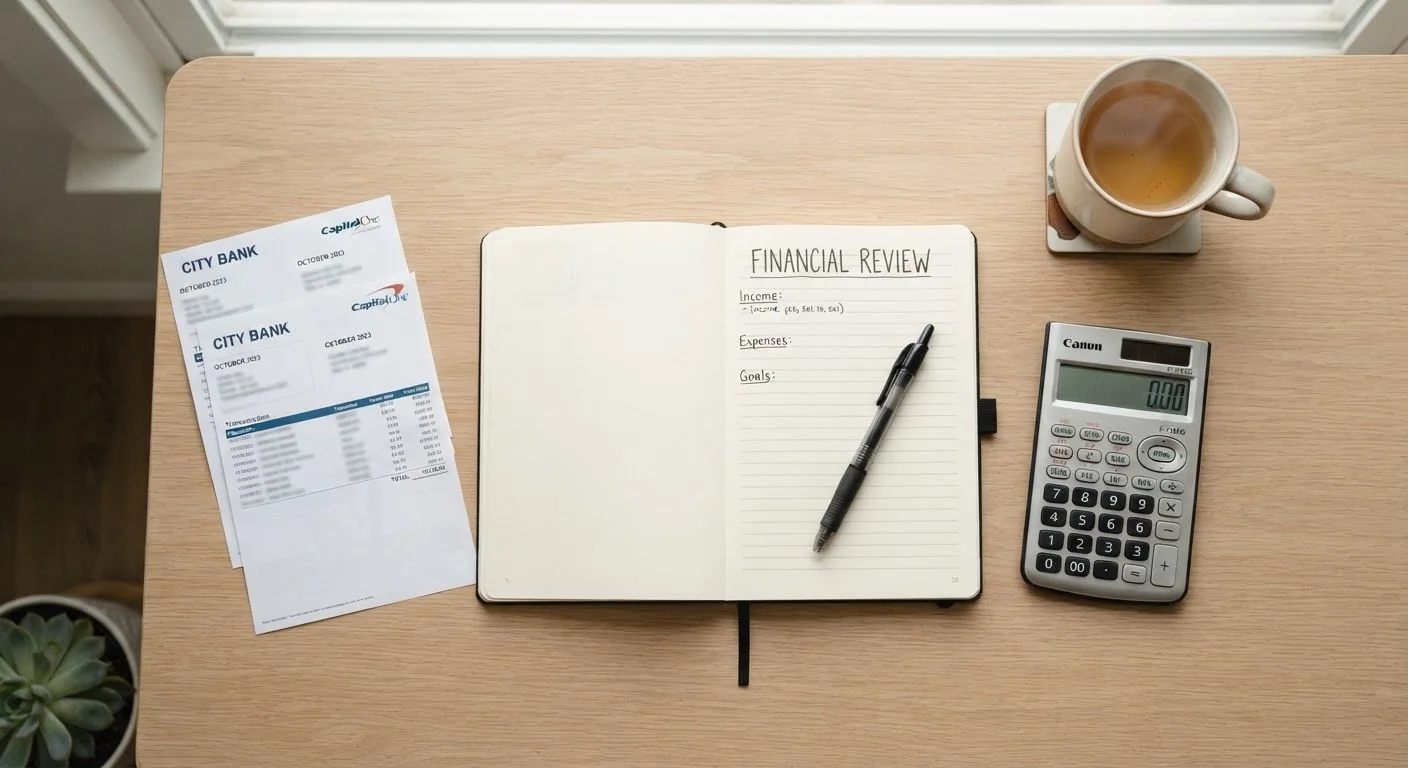
Why Subscription Costs Are Easy to Lose Track Of
Subscriptions are designed to feel frictionless. You sign up once, the charge recurs automatically, and there's no moment each month that draws your attention back to it. That's convenient when you're actively using a service — and a quiet drain when you're not.
The pattern is common enough that it has a name: subscription creep. Charges start small and accumulate over months until they represent a meaningful slice of a monthly budget. If you want to understand how this happens at the household level, subscription creep in recurring household costs breaks down the mechanics clearly.
The audit process below doesn't require any special app or paid tool. It takes one focused session and a spreadsheet. What you'll need is covered here:
What you will need
The Step-by-Step Audit Process
Work through these steps in a single sitting if you can. Splitting the process across multiple days increases the chance of losing track of where you left off.
Pull three months of statements from every payment source
Open your bank account, each credit card, and any digital wallet you use. Download or print statements covering the last three months. Three months matters — some subscriptions bill quarterly and would be missed in a single-month snapshot.
Don't skip payment sources you rarely use. A forgotten card with an annual streaming charge is exactly what this process is designed to catch.
List every recurring charge, no matter how small
Go line by line through each statement and write down any charge that appears more than once or is labeled as a subscription, membership, or plan. Include amounts under five dollars — those add up faster than people expect.
Record the service name, amount, billing frequency (monthly vs. annual), and which payment method it hits. A simple four-column spreadsheet works well here.
Categorize each subscription by actual usage
For every item on your list, ask one honest question: Did I use this in the past 30 days? Sort each subscription into one of three buckets:
- Regular use — you used it multiple times in the past month
- Occasional use — you used it once or twice, or only seasonally
- No use — you can't remember the last time you logged in
Be honest. The goal isn't to justify keeping things — it's to see the picture clearly.
Calculate the annual cost of low-use subscriptions
Take every subscription in the 'occasional' and 'no use' buckets and multiply the monthly charge by 12. Seeing the annual figure instead of the monthly one often reframes the decision. A $14.99 streaming service that you haven't touched is $180 a year.
Add up the total annual spend across all low-use subscriptions. This number is the opportunity sitting in your budget right now.
Contact providers for lower-tier options before canceling
Before you cancel anything in the 'occasional use' bucket, check whether the service offers a lower-cost plan, a pause option, or a reduced rate. Many subscription companies have unpublished retention offers they extend when you initiate a cancellation.
A quick chat or call takes a few minutes and can reduce a bill without losing access entirely. This step is worth doing for any subscription over $10 per month.
[tip_callout]Cancel 'no use' subscriptions and confirm in writing
Cancel every subscription in the 'no use' bucket. Do it through the service's own account settings where possible — this creates a paper trail. For services that require a phone call to cancel, note the date, time, and name of the representative you spoke with.
After canceling, screenshot or save any cancellation confirmation email. Check your next billing statement to confirm the charge no longer appears.
Schedule your next subscription audit
Put a recurring calendar reminder for six months from today. Subscription lists grow quietly — new sign-ups, trial conversions, and annual renewals accumulate between reviews. A twice-yearly audit keeps the list manageable and prevents the same problem from rebuilding.
For a broader look at recurring household costs, the monthly household cost audit checklist covers utilities, deliveries, and other ongoing expenses alongside subscriptions.
Free Trials Convert Automatically
Many free trials require a payment method upfront and roll into paid plans without a reminder. If you signed up for a trial and never explicitly canceled, assume you are being charged. Check your statements before the next billing cycle to confirm.
Once you've completed the audit, pair it with a broader monthly spending review. The monthly budget audit self-check is a useful companion for turning one-time findings into a repeating habit.
This article is for general informational purposes only and does not constitute financial or legal advice. For guidance specific to your situation, consider speaking with a qualified financial professional.
The content provided on our blog site traverses numerous categories, offering readers valuable and practical information. Readers can use the editorial team’s research and data to gain more insights into their topics of interest. However, they are requested not to treat the articles as conclusive. The website team cannot be held responsible for differences in data or inaccuracies found across other platforms. Please also note that the site might also miss out on various schemes and offers available that the readers may find more beneficial than the ones we cover.