

What Typical Household Bills Actually Look Like
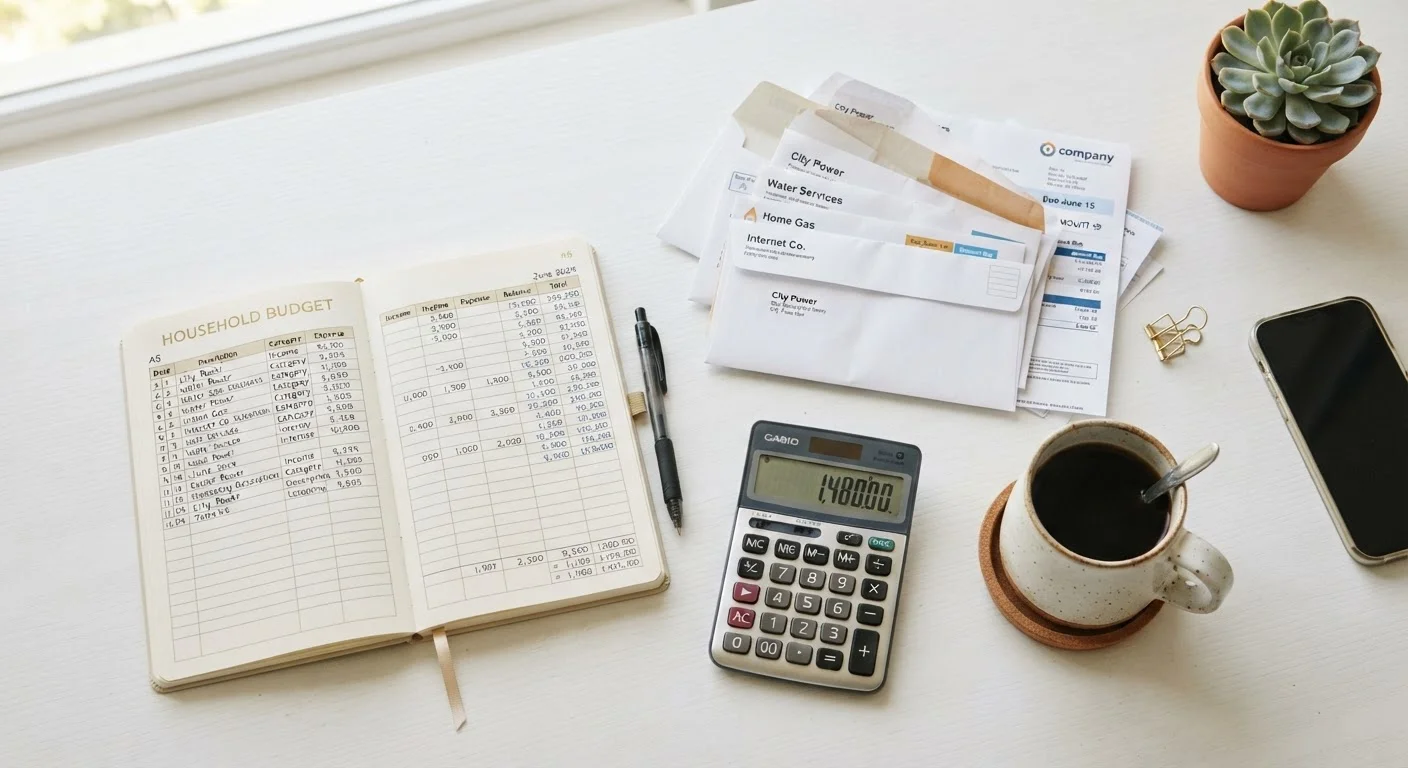
Before you can cut costs, you need a baseline. The figures below reflect broadly reported averages for U.S. households — they'll vary based on your location, home size, and habits, but they give you a realistic starting point for budgeting and benchmarking your own bills.
A few things worth noting: energy costs are higher in states with extreme climates, and renters in all-bills-included arrangements may not see itemized utility figures at all — which makes it harder to identify waste. If you want to go deeper room by room, the Monthly Household Cost Audit checklist walks through exactly that.
Energy Use by Appliance: Where the Money Goes
Heating and cooling typically account for the largest share of a home's energy bill — often 40–50% of total electricity and gas use, according to the U.S. Energy Information Administration (EIA). After that, water heating is usually the second biggest draw.
Here's a rough breakdown of average annual electricity consumption by appliance category for a typical U.S. household:
- Heating & cooling (HVAC): 40–50% of total home energy use
- Water heating: 14–18%
- Lighting: 9–12% (higher in older homes without LED bulbs)
- Refrigerator: 4–6%
- Washer & dryer: 4–6%
- Electronics & standby loads: 5–10%
Standby power — sometimes called "vampire load" — is easy to overlook. Devices plugged in but not actively in use can collectively add $100 or more annually to a household's electric bill. If you've added smart home devices, those carry their own ongoing costs too; see the hidden ongoing costs of running a smart home for a fuller picture.
Practical Swaps That Move the Needle
Small, consistent changes tend to outperform one-time upgrades for most renters and budget-conscious homeowners. Here are adjustments that are widely documented to reduce utility bills without major upfront investment:
- Adjust your thermostat by 7–10°F for 8 hours a day (while sleeping or out) — the U.S. Department of Energy suggests this can reduce heating and cooling costs by around 10% annually.
- Switch to cold-water washing. Roughly 90% of the energy used by a washing machine goes to heating water. Cold-water cycles accomplish the same cleaning for most everyday laundry loads.
- Fix leaky faucets. A single dripping faucet can waste more than 3,000 gallons of water per year, according to EPA WaterSense data.
- Unplug chargers and idle electronics. Power strips with on/off switches make this easier to manage without hunting for individual plugs.
- Seal drafts around windows and doors. Weatherstripping and door sweeps are low-cost DIY fixes that directly reduce heating and cooling load.
For a broader framework on running your household on less, Low-Cost Home Life covers energy, groceries, and everyday habits in one place.
Bills Look Different for Renters
If utilities are included in your rent, you may not receive itemized bills — which makes benchmarking harder. Ask your landlord for utility cost data or request a breakdown before signing a lease. Some all-inclusive arrangements can mask higher-than-average consumption in older, poorly insulated buildings.
This article provides general educational information about household utility costs and is not personalized financial advice. Actual costs vary by location, provider, home size, and individual usage. Consult your utility provider or a qualified energy auditor for guidance specific to your situation.
The content provided on our blog site traverses numerous categories, offering readers valuable and practical information. Readers can use the editorial team’s research and data to gain more insights into their topics of interest. However, they are requested not to treat the articles as conclusive. The website team cannot be held responsible for differences in data or inaccuracies found across other platforms. Please also note that the site might also miss out on various schemes and offers available that the readers may find more beneficial than the ones we cover.