

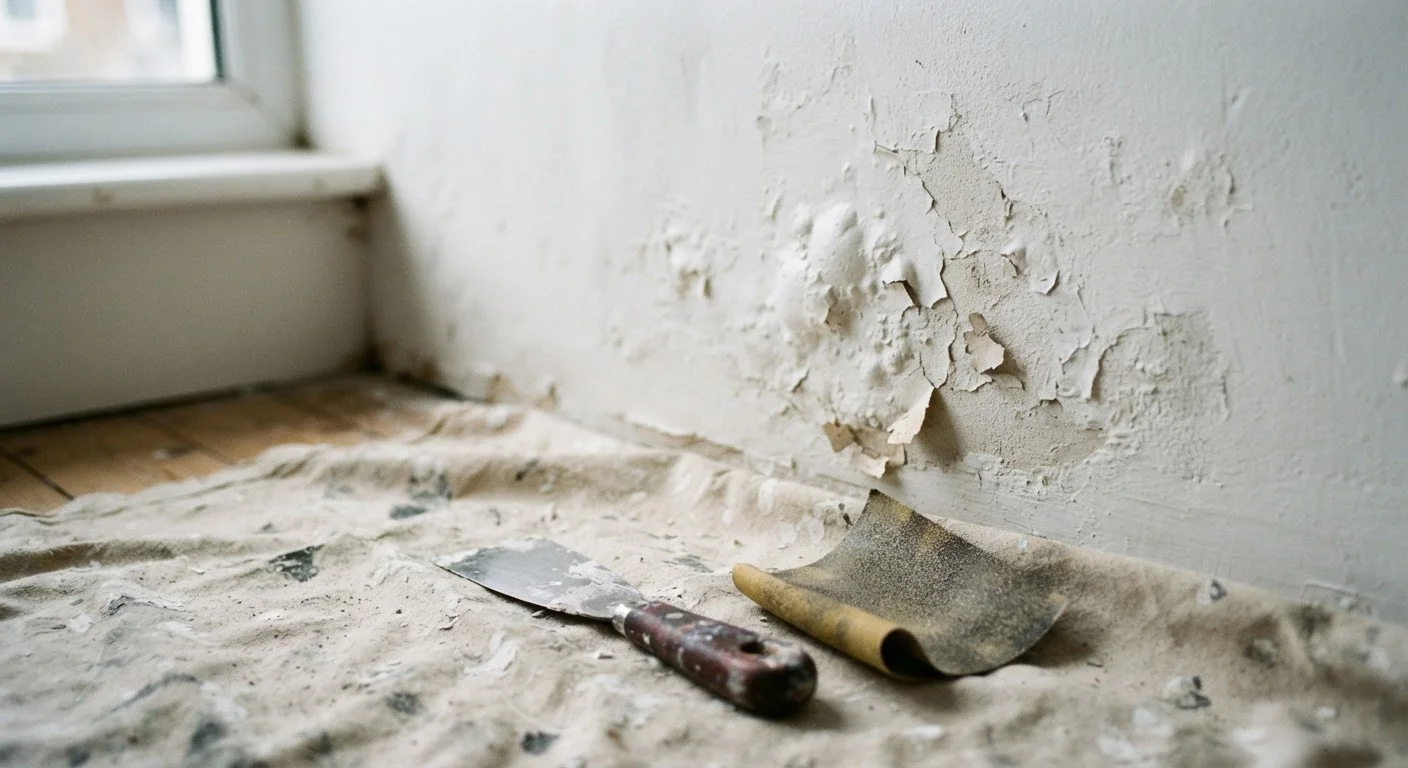
Why Interior Paint Peels in the First Place
Before reaching for a scraper, it's worth understanding why your paint is failing. Repainting over an unresolved problem is one of the fastest ways to redo work that shouldn't need redoing.
The most common culprits include:
- Moisture and humidity: Condensation from showers, cooking steam, or roof and plumbing leaks causes paint to lose its bond with the wall surface. This is especially common in bathrooms, kitchens, and laundry rooms.
- Poor surface preparation during original painting: Paint applied over dirty, greasy, or glossy surfaces — or directly onto drywall without primer — often peels within a few years.
- Incompatible paint layers: Oil-based paint applied over latex (or vice versa) without the correct preparation tends to peel as the layers expand and contract differently.
- Age and natural wear: Older homes may have multiple layers of paint that collectively lose adhesion over time.
Once you've identified the likely cause, you can address both the symptom (the peeling surface) and the source (the underlying condition).
Proven Practices for Repairing Peeling Interior Paint
These methods apply to most standard drywall and plaster interior walls. Always work in a well-ventilated space and wear a dust mask when sanding.
Remove all loose and peeling paint before doing anything else.
Painting over peeling layers traps the problem rather than solving it. Any paint that isn't firmly adhered will continue to lift, pulling the new coat with it. Thorough removal creates the stable foundation every successful repair depends on.
Sand the repair area smooth and feather the edges into the surrounding wall.
A scraped wall is rarely level — there will be a distinct ledge where paint was removed. Sanding blends this transition so the repaired patch doesn't show through the finish coat as a visible bump or outline.
Apply a quality primer to all repaired and bare sections before repainting.
Primer seals porous drywall or plaster, improves adhesion dramatically, and evens out the sheen so the topcoat looks consistent. Skipping this step is the single most common reason repaired areas peel again within a season.
Address the source of any moisture before repainting.
Paint is not a moisture barrier. If steam, condensation, or a slow leak caused the peeling, a fresh coat will fail just as quickly without fixing ventilation or the leak first. Cosmetic repairs in moisture-affected rooms are temporary unless the environment changes.
Fill gouges and low spots with lightweight spackling compound, then re-sand.
Scraping and sanding often leaves minor divots or uneven texture. Skipping the fill step means your finish coat will reflect these imperfections under raking light, especially with satin or semi-gloss sheens.
Use the same paint sheen as the surrounding wall when repainting.
Mismatched sheens — even with a perfect color match — create visible patches because flat, eggshell, and satin paints reflect light differently. The repaired area will stand out under normal room lighting.
Quick Actions You Can Take This Weekend
If you have a small peeling patch and want to make visible progress quickly, these focused actions will get you most of the way there without a full-room overhaul.
This article provides general home improvement guidance for informational purposes only. Always verify that your specific repair does not require permits, inspections, or licensed professional work under your local building codes — particularly if moisture damage suggests underlying structural or plumbing issues.
The content provided on our blog site traverses numerous categories, offering readers valuable and practical information. Readers can use the editorial team’s research and data to gain more insights into their topics of interest. However, they are requested not to treat the articles as conclusive. The website team cannot be held responsible for differences in data or inaccuracies found across other platforms. Please also note that the site might also miss out on various schemes and offers available that the readers may find more beneficial than the ones we cover.