

Why Your Toilet Keeps Running — and Why It Matters
That persistent running sound from your bathroom isn't just annoying — it signals that water is being wasted continuously, which shows up directly on your water bill. The good news: a running toilet is one of the most approachable home repairs you can tackle yourself. Understanding what the three key tank components actually do is the first step toward fixing the problem confidently.
Before opening the tank lid, shut off the water supply by turning the small valve behind or beneath the toilet clockwise until it stops. Then flush once to drain most of the water. Now you're ready to take a look inside.
Take a Photo Before You Start
Before disconnecting anything inside the tank, snap a photo with your phone showing how the chain, flapper, and float arm are connected. This gives you an easy reference when reassembling or when buying a matching replacement part at the hardware store.
The Flapper: Your Tank's Main Seal
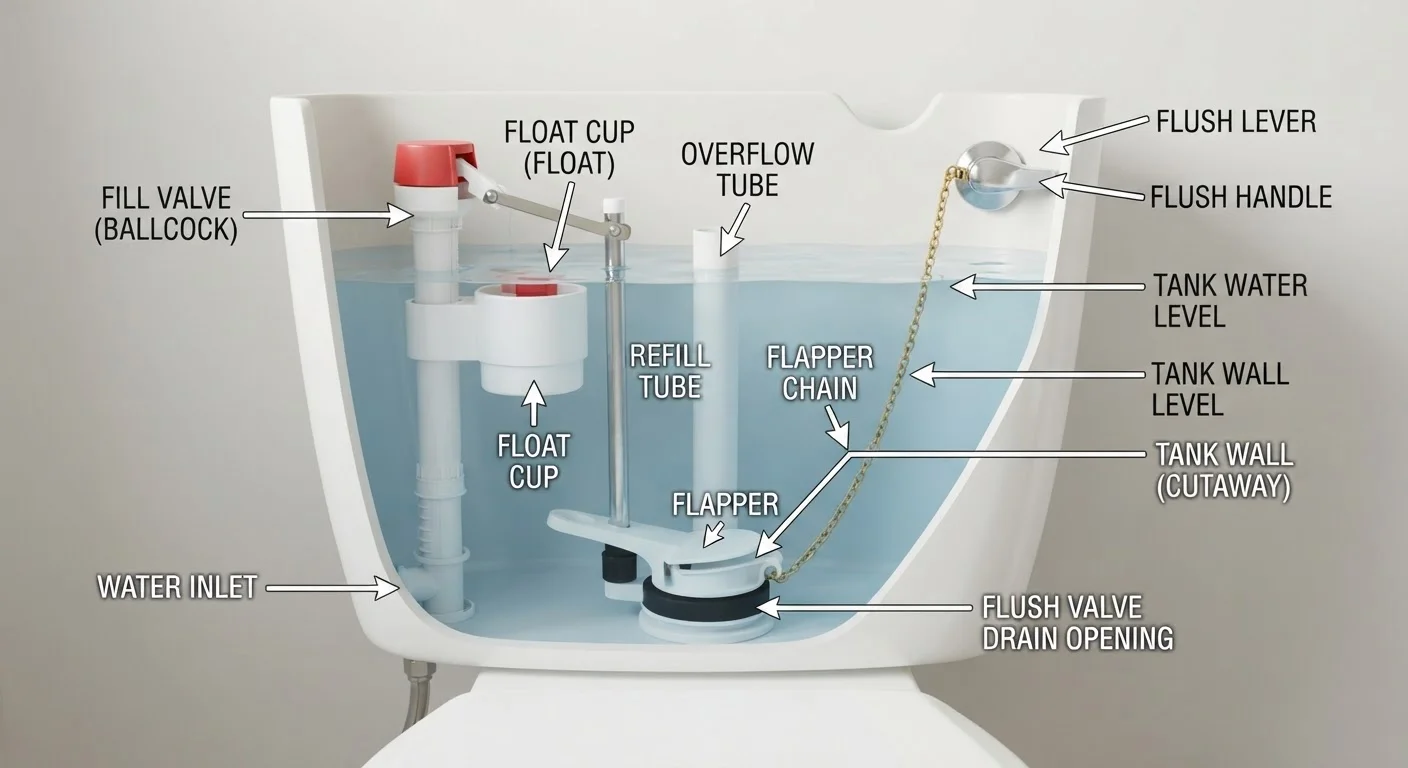
The flapper is a rubber disc or cone that sits at the bottom of the tank, covering the opening (called the flush valve seat) that connects the tank to the bowl. When you press the flush handle, a chain lifts the flapper, releasing water into the bowl. Once the tank empties, the flapper drops back down and seals the opening so the tank can refill.
Over time, rubber flappers degrade — they warp, crack, or accumulate mineral buildup — and stop forming a complete seal. When this happens, water slowly and silently leaks from the tank into the bowl around the clock, which is why the fill valve keeps activating to compensate.
How to check it: Use the food coloring test described in the FAQ section below. If the color migrates to the bowl, the flapper is the culprit. Replacement flappers are inexpensive and simply snap onto two pegs on either side of the flush valve. Match the size to your existing flapper or bring it to the hardware store.
For broader context on which plumbing repairs are genuinely low-risk, see our guide on DIY plumbing myths.
The Float: The Water Level Regulator
The float is the component that monitors how much water is in the tank. In older toilets, it's a large ball attached to a horizontal arm — a ballcock float. In most modern toilets, it's a cylindrical float that slides up and down directly on the fill valve shaft.
As the tank fills after a flush, the float rises with the water level. When it reaches the correct height, it signals the fill valve to shut off. If the float is set too high, water rises past the overflow tube (a vertical pipe in the center of the tank) and drains continuously into the bowl. If it's set too low, the tank never gets a full flush.
20–200 gal
Water wasted daily by a running toilet
According to the U.S. Environmental Protection Agency, a leaking toilet can waste this amount depending on the severity of the leak.
$10–$25
Typical DIY repair cost for toilet tank parts
Flappers, floats, and fill valves are widely available at hardware stores and represent a fraction of professional plumber service call rates.
How to adjust it: On a ball-and-arm style float, gently bend the arm downward to lower the water shutoff point. On a modern float, there's usually a screw or clip on the fill valve shaft — turn or slide it to raise or lower the float. The target water level is typically about one inch below the top of the overflow tube. Mark this with a pencil if it helps.
The Fill Valve: The Refill Engine
The fill valve (sometimes called a ballcock) is the mechanism connected to your home's water supply line. Its job is simple: refill the tank after each flush and then shut off once the float signals that the correct water level has been reached.
When the fill valve is worn or faulty, it may not shut off completely — leading to that constant hissing or trickling sound even when the flapper and float appear fine. In some cases, debris from the water supply can clog the valve seat, preventing a full shutoff.
How to diagnose it: If the water level in the tank looks correct but you still hear running water, try lifting the float arm or float manually while the water is on. If the hissing stops, the fill valve is functional but the float is set too high. If the hissing continues, the fill valve itself likely needs replacement.
Replacing a fill valve involves shutting off the supply valve, flushing to drain the tank, disconnecting the supply line, unscrewing the locknut underneath the tank, and swapping in the new valve. Most replacement valves include clear printed instructions. This is still firmly within DIY territory — no specialized tools required.
This article provides general home repair information for educational purposes. For work involving main water lines, gas connections, or structural components, always consult a licensed plumber or contractor and verify local permit requirements.
Frequently Asked Questions
Add a few drops of food coloring to the tank and wait 15 minutes without flushing. If color appears in the bowl, the flapper is leaking. If the water level is visibly above the overflow tube, the float or fill valve needs adjustment. A persistent hissing sound usually points to the fill valve.
Yes — toilet tank repairs are among the safest and most accessible DIY plumbing jobs. No soldering, permits, or special tools are required. The main risk is forgetting to shut off the water supply valve before starting, so always do that first.
Replacement flappers typically cost $5–$10. Fill valves run $10–$20. A complete toilet repair kit with all three components usually costs under $25 at most hardware stores. Professional plumber rates can run $100–$200 for the same job.
It's not an emergency in the sense of flooding, but it does waste a significant amount of water and money over time. A slow flapper leak can add hundreds of gallons to your monthly bill. Address it within a few days rather than leaving it indefinitely.
No. Every toilet has its own shutoff valve located on the wall or floor behind the base of the toilet. Turn that valve clockwise to shut off water only to the toilet without affecting the rest of your home.
The content provided on our blog site traverses numerous categories, offering readers valuable and practical information. Readers can use the editorial team’s research and data to gain more insights into their topics of interest. However, they are requested not to treat the articles as conclusive. The website team cannot be held responsible for differences in data or inaccuracies found across other platforms. Please also note that the site might also miss out on various schemes and offers available that the readers may find more beneficial than the ones we cover.