

Our Verdict
Surface-level touch-ups are a practical, cost-effective choice when your grout is sound but looks worn or stained. When grout is physically failing — cracked, hollow, or missing — full regrouting is the only lasting solution. Skipping a needed regrout risks water damage that costs far more to fix than the regrout itself.
| Best for | Recommended |
|---|---|
| Renters or homeowners on a very tight budget with stained but intact grout | Surface-Level Touch-Up |
| Wet areas like showers where grout is cracked or crumbling | Full Regrouting |
| Quick cosmetic refresh before selling or listing a home | Surface-Level Touch-Up |
| Older tile installations with widespread grout failure | Full Regrouting |
How to Read Your Grout Before Picking a Fix
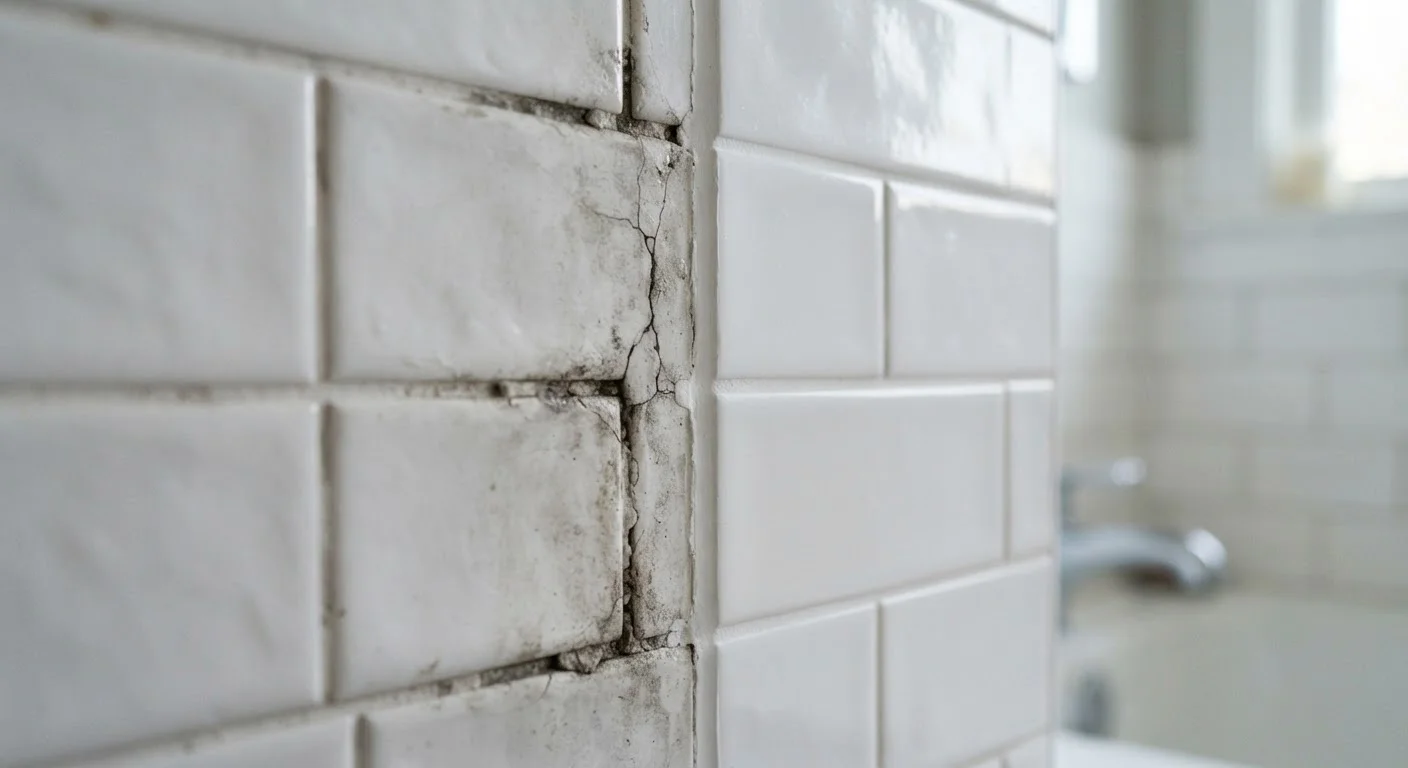
Before you grab a grout pen or rent a grout saw, you need to accurately diagnose what's actually wrong. Grout problems fall into two categories: cosmetic (discoloration, staining, surface mold) and structural (cracking, crumbling, hollow spots, or gaps).
Run your fingernail or a small screwdriver lightly along the grout lines. Cosmetically compromised grout will feel firm and continuous — it just looks bad. Structurally failing grout will flake, crumble, or sound hollow when tapped. Also press gently on individual tiles: any flex or movement signals that moisture may have already compromised the substrate beneath.
In dry areas like a kitchen backsplash, cosmetic-only problems are lower stakes. In wet areas — showers, tub surrounds, floors near sinks — even minor structural grout failure deserves prompt attention, because water behind tile can rot backer board and subfloor within months.
| Surface-Level Touch-Up | Full Regrouting | |
|---|---|---|
| Best use case | Stained or faded but structurally sound grout | Cracked, crumbling, or missing grout |
| Typical time required | 1–2 hours | Full weekend (removal + cure) |
| Material cost (DIY) | Low — pen or colorant only | Moderate — grout, float, sealer, tool rental |
| Waterproofing restored? | No — surface coating only | Yes — full joint replacement |
| Skill level required | Beginner-friendly | Intermediate DIY |
| Longevity | 1–3 years (wet areas) | 10+ years with proper sealing |
| Risk of tile damage | Very low | Low to moderate if rushed |
Surface-Level Touch-Ups: What Works and What Doesn't
Surface-level products include grout pens (paint-like applicators that coat existing grout), grout colorants (brush-on sealants that bond to the surface), and grout stain (deeper-penetrating tints). These are legitimate tools — not gimmicks — when your underlying grout is hard and intact.
To get a durable result, preparation is everything. Clean the grout thoroughly with a grout cleaner or a diluted oxygen bleach solution, then let it dry completely — ideally 24 hours. Apply your colorant or pen in thin, even strokes, wiping tile faces immediately with a damp cloth before the product dries. A second coat after the first cures dramatically improves longevity.
Realistic expectations matter here. A quality grout colorant in a shower can hold up for one to three years with regular cleaning. A grout pen on a kitchen backsplash may last considerably longer. Neither is a substitute for structurally sound grout, and neither will bond reliably to grout that is already failing or flaking.
Full Regrouting: When You Can't Avoid It
Full regrouting means removing the existing grout and replacing it with fresh material. It's more labor-intensive than a touch-up but far more durable, and it's the only approach that actually restores waterproofing integrity.
The process involves three main phases. First, remove old grout using an oscillating multi-tool fitted with a grout removal blade, or a manual grout saw. Work carefully to avoid chipping tile edges — use low speed settings and let the tool do the work. Remove grout to a depth of at least 2–3 mm to give fresh grout enough thickness to bond properly.
Second, vacuum or wipe out all debris, then mix and apply new grout with a rubber float, pressing it firmly into joints at a diagonal angle. Work in small sections to prevent premature drying. Third, once the grout hazes over (typically 20–30 minutes), buff the tile surface with a damp sponge in a circular motion, rinsing frequently.
Allow the grout to cure for the manufacturer's recommended time — usually 24 to 72 hours — before applying a grout sealer, which is especially important in wet areas. Sanded grout suits joints wider than 1/8 inch; unsanded grout is used for narrower joints and polished stone tile.
Cost and Time: Setting Realistic Expectations
Surface touch-up products are relatively inexpensive — a grout pen or small bottle of colorant is a modest investment and the job typically takes an hour or two for a standard backsplash or bathroom floor.
Full regrouting costs more in both time and materials. An oscillating tool (if you don't own one) can be rented. Grout, float, sponges, and sealer add up, but the total is still a fraction of what a tile contractor would charge for the same job. Budget a full weekend: one day for removal and grouting, one day for curing and sealing.
Neither approach is inherently the wrong choice — the right one depends entirely on the condition of your existing grout, not on which is easier or cheaper in isolation.
This article is for general informational and educational purposes only. Always verify local building codes and, for any work involving waterproofing in wet areas, consider consulting a licensed tile contractor to confirm your substrate is in sound condition before proceeding.The content provided on our blog site traverses numerous categories, offering readers valuable and practical information. Readers can use the editorial team’s research and data to gain more insights into their topics of interest. However, they are requested not to treat the articles as conclusive. The website team cannot be held responsible for differences in data or inaccuracies found across other platforms. Please also note that the site might also miss out on various schemes and offers available that the readers may find more beneficial than the ones we cover.