

Why Skip the Chemical Drain Cleaners?
Chemical drain cleaners are marketed as a quick fix, but they come with real tradeoffs. Many formulas rely on sodium hydroxide (lye) or sulfuric acid — substances that generate heat as they work. Over time, that heat and chemical reaction can soften PVC pipes, corrode older metal pipes, and degrade the rubber gaskets inside your plumbing joints.
Beyond the plumbing, chemical cleaners pose household safety risks. They can cause burns on skin and eyes, release fumes in enclosed spaces, and create hazardous reactions if accidentally mixed with other cleaners. For renters and homeowners alike, protecting both the pipes and the people in the home matters — especially when effective mechanical alternatives cost less and carry far fewer risks.
Mechanical and natural methods also tend to address the actual cause of a clog rather than partially dissolving it and pushing residue further down the pipe. For a broader look at what home repairs you can realistically handle yourself, see our guide on DIY plumbing myths.
What you will need
What You'll Need Before You Start
Gather your tools before you begin. Having everything within reach makes the job faster and cleaner. You don't need a full plumber's kit — the items below cover the vast majority of residential drain clogs.
Cup plunger
Creates suction to dislodge soft clogs in sink and tub drains; different from the flange plunger used for toilets.
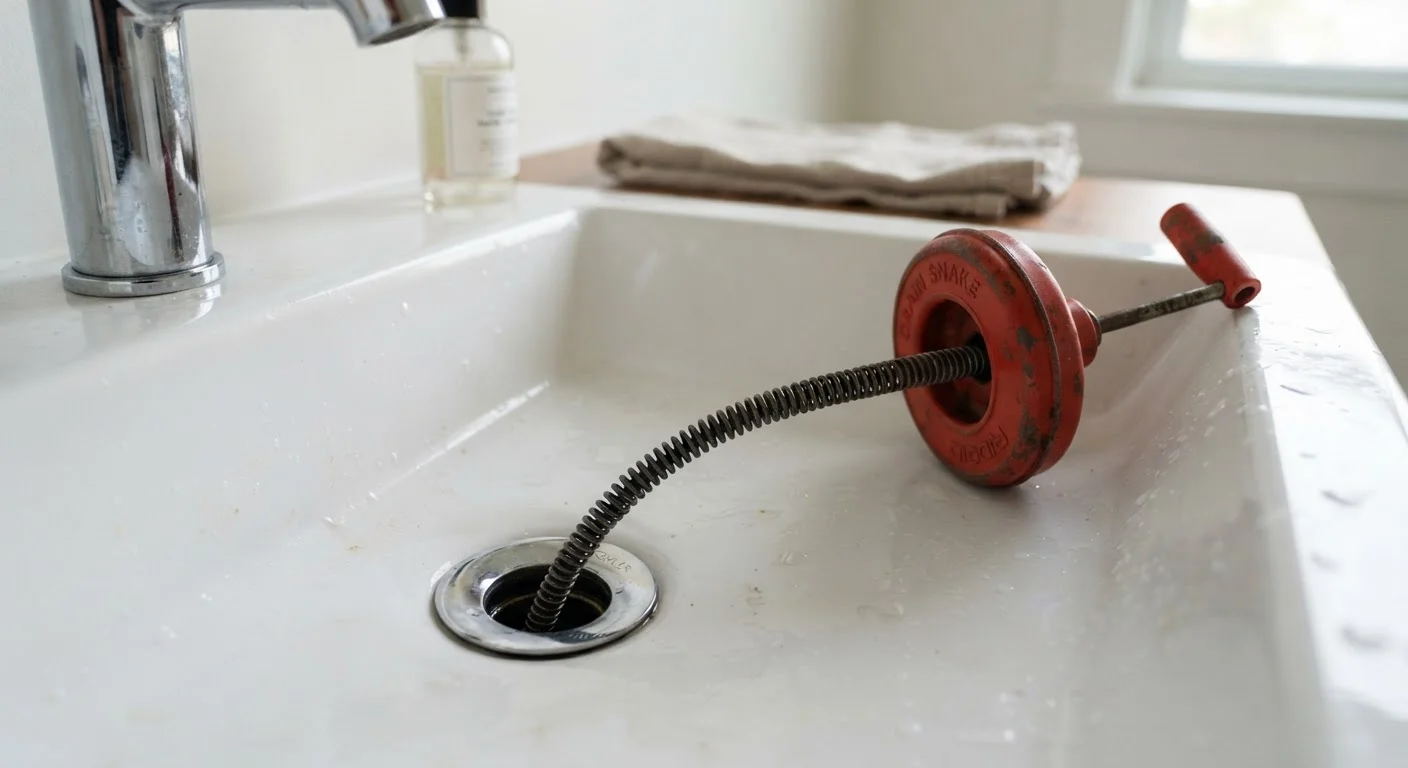
Manual drain snake (hand auger)
A flexible cable that reaches past the P-trap to physically break up or retrieve deeper clogs like hair masses.
Needle-nose pliers
Useful for pulling out hair or debris that's just below the drain cover and within reach.
Baking soda and white vinegar
A natural fizzing combination that can help loosen mild soap scum and surface buildup.
Adjustable wrench or channel-lock pliers
Needed if you choose to remove the P-trap to clear a clog manually.
Bucket
Placed under the P-trap to catch water if you disconnect it.
Step-by-Step: Clearing the Clog
Work through these steps in order. Start with the least invasive method and escalate only if needed. Many clogs clear at step one or two.
Remove and clean the drain cover
Unscrew or pop off the drain cover or stopper. Many bathroom sink stoppers lift out with a quarter-turn; tub stoppers often unscrew or pull free. Use needle-nose pliers or gloved fingers to remove any visible hair and soap buildup sitting right at the drain opening. Rinse the cover under hot water before setting it aside.
Try hot water first
Run the hottest water your tap produces for 30–60 seconds. For mild grease or soap buildup, heat alone sometimes restores flow. If the water drains slowly but drains, proceed to step 3. If it pools and stands still, move directly to the plunger.
Plunge the drain
Fill the sink or tub with just enough water to cover the plunger cup. Press the cup firmly over the drain opening to create a seal. Push down slowly, then pull up sharply — the suction on the upstroke is what dislodges clogs. Repeat 10–15 times before lifting the plunger to check drainage. If there's a secondary drain nearby (such as an overflow hole in a bathroom sink), seal it with a wet cloth to maintain pressure.
Use baking soda and vinegar for buildup
If plunging improves flow but doesn't fully clear the drain, a baking soda and vinegar treatment can help dissolve residual soap scum. Pour half a cup of baking soda directly into the drain, followed by half a cup of white vinegar. Cover the drain opening immediately and let it fizz for 15–20 minutes. Flush with hot tap water. This method works best on soft buildup, not solid blockages like a clump of hair.
Snake the drain
Feed the end of the drain snake into the drain opening and turn the handle clockwise as you push it forward. When you feel resistance, you've reached the clog. Continue rotating to either break it up or hook into it. Pull the snake back slowly — if you've snagged the clog, it will come out with the cable. Run hot water to confirm the drain is clear, then repeat if needed.
Remove and clear the P-trap (if needed)
The P-trap is the curved pipe section directly beneath the sink — it holds water to block sewer gases, but it also traps debris. Place a bucket underneath it. Use channel-lock pliers or an adjustable wrench to loosen the slip nuts on both ends of the curve. Remove the P-trap, empty it into the bucket, and clean it out. Reattach firmly — hand-tight plus a quarter-turn with pliers is usually sufficient. Run water and check for leaks at the joints.
If you've worked through all steps without success, or if water is backing up in multiple fixtures simultaneously, that points to a deeper blockage in the main line — a situation that warrants a licensed plumber. Don't keep forcing tools into the drain at that point, as you risk damaging the pipe or pushing the clog further down.
Preventing Future Clogs
Clearing a clog is satisfying. Preventing the next one takes less than five minutes a month. Hair is the leading cause of bathroom drain clogs; a simple mesh drain cover catches it before it enters the pipe. In the kitchen, keeping cooking grease out of the drain entirely is the single most effective habit you can build — fats cool and solidify inside pipes, gradually narrowing them until water can't pass.
A monthly flush with hot (not boiling) water helps rinse away soap film and light buildup before it accumulates. Boiling water can soften PVC pipe joints, so stick to hot tap water or water just off the boil that has cooled for a minute or two.
Drain maintenance fits naturally alongside other seasonal home upkeep. Our seasonal home maintenance checklist covers a full range of tasks that help you stay ahead of small problems before they become expensive ones. Managing your home proactively is also one of the most reliable ways to keep household costs down — something the low-cost home life hub explores in depth.
The content provided on our blog site traverses numerous categories, offering readers valuable and practical information. Readers can use the editorial team’s research and data to gain more insights into their topics of interest. However, they are requested not to treat the articles as conclusive. The website team cannot be held responsible for differences in data or inaccuracies found across other platforms. Please also note that the site might also miss out on various schemes and offers available that the readers may find more beneficial than the ones we cover.