

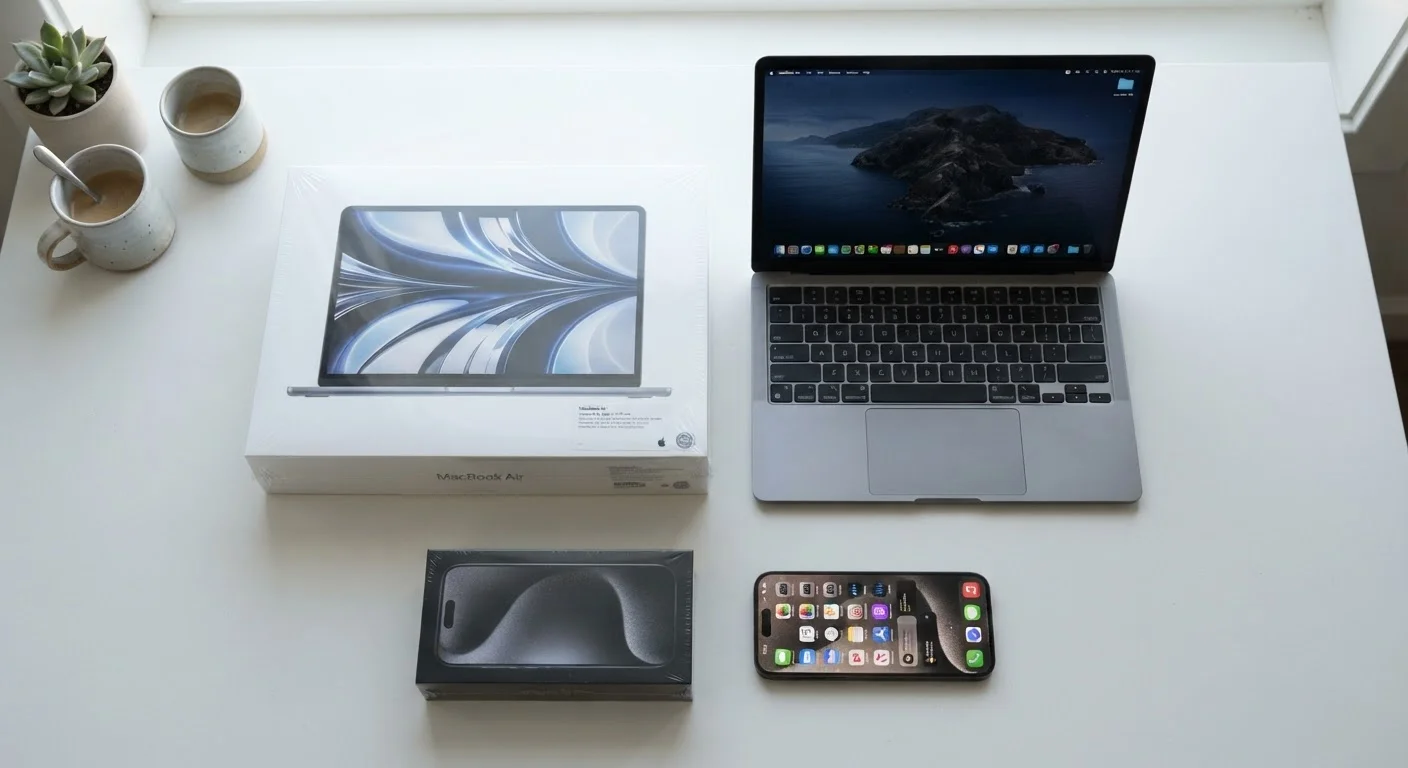
Option A
New Budget Tech
The straightforward, factory-fresh option with standardized guarantees.
Best for: Shoppers who want predictable warranty coverage and zero question marks about prior use.
Option B
Refurbished Tech
The potentially smarter value play — if you know what the label actually means.
Best for: Budget-conscious buyers who do their homework and prioritize lower price over pristine packaging.
What 'New' Actually Guarantees — And What It Doesn't
A new device means one thing clearly: no prior owner. It comes factory-sealed, untouched, and in original packaging. At the budget end of the market, though, 'new' is where the certainty tends to stop.
New budget tech still carries a manufacturer warranty — typically 12 months in the US — but the scope of that coverage varies enormously by brand. Some warranties cover defects in materials and workmanship; others exclude anything deemed accidental or place the return burden on the buyer. As we explore in warranty terms on budget tech, the fine print often tells a very different story from the headline number.
'New' also says nothing about component quality. An entry-level device assembled with cost-cutting components can fail sooner than a well-refurbished mid-range device. The label confirms origin, not longevity. If a gadget came off a production line last month but uses sub-standard parts, factory-fresh offers little practical protection past the warranty window.
What 'Refurbished' Can Mean — The Range Is Wide
Unlike 'new,' the word 'refurbished' has no standardized legal definition in the US. It can describe a device returned within a few days and never actually used, or one that was repaired after significant damage. Both can legally carry the same label. That range is the core issue buyers need to understand.
In practice, refurbished products generally fall into a few informal tiers:
- Manufacturer-certified refurbished: Inspected, repaired to original specifications, and resold directly by the original manufacturer or an authorized partner. Usually comes with a warranty (often 90 days to 12 months) and is graded for cosmetic condition.
- Retailer-refurbished: Processed by a third-party retailer. Standards vary significantly; some are rigorous, others are minimal. Warranty terms differ by retailer.
- Seller-refurbished (marketplace listings): Broadly the highest-risk tier. Individual sellers on open marketplaces may use 'refurbished' loosely. Inspection depth and warranty protections (if any) depend entirely on the seller's own practices.
Understanding this spectrum helps explain why two refurbished devices at similar prices can have very different outcomes. The label itself is not the signal — the source and the documented process behind it are.
| Criterion | New Budget Tech | Refurbished Tech |
|---|---|---|
| Prior use | None — factory sealed | Varies: returned, repaired, or lightly used |
| Definition standardization | Consistent meaning | No universal legal definition in US |
| Typical warranty | 12 months manufacturer | 90 days to 12 months depending on source |
| Component quality assurance | No guarantee at budget tier | Varies; certified programs inspect components |
| Price relative to specs | Entry-level specs at given price | Potentially higher specs at same price |
| Risk level | Low history risk, variable quality risk | Variable, strongly tied to seller tier |
| Return policy clarity | Generally standard through retailers | Highly variable; check before buying |
The Metrics That Actually Matter for Both Categories
Rather than anchoring on 'new' versus 'refurbished' as the deciding factor, experienced budget buyers focus on a short list of verifiable attributes that apply to both categories equally.
Warranty length and coverage scope — A 90-day warranty on a refurbished device is materially weaker than a 12-month warranty on a new one. But a refurbished device with a 12-month certified warranty can match or beat a new device's protection. Read what is actually covered, not just the headline duration. Our guide on what value for money actually means in consumer tech breaks down how to weigh these factors honestly.
Return window — A meaningful return period (14–30 days) lets you verify the device works as described before you're locked in. Short or no-returns listings on either new or refurbished products are a yellow flag worth noting.
Condition grading transparency — Reputable refurbished sellers use graded condition labels (Grade A, Grade B, etc.) with defined cosmetic standards. Vague language like 'good condition' without specifics warrants caution. Before committing, run through the pre-purchase checklist for budget tech to vet any listing systematically.
One clarification worth making explicit: this article provides general educational information about product categories. It is not personalized advice for your specific purchase situation. What works for one buyer's use case and risk tolerance may not fit another's.
The content provided on our blog site traverses numerous categories, offering readers valuable and practical information. Readers can use the editorial team’s research and data to gain more insights into their topics of interest. However, they are requested not to treat the articles as conclusive. The website team cannot be held responsible for differences in data or inaccuracies found across other platforms. Please also note that the site might also miss out on various schemes and offers available that the readers may find more beneficial than the ones we cover.