

Why Subscription Costs Are So Easy to Underestimate
Recurring charges are designed to feel painless. A $9.99 line item barely registers in the moment, but twelve of them add up to nearly $120 a month — well over $1,400 a year. Research from financial services firms has consistently found that consumers significantly underestimate what they spend on subscriptions, often by a factor of two or more.
The problem compounds because subscriptions accumulate gradually. A streaming service here, a cloud storage tier there, a news app you signed up for during a free trial — and suddenly you're paying for a stack of services you haven't consciously chosen to keep. This audit is about making that choice deliberately, not by default.
This process pairs well with a broader spending review. If you're already running a monthly budget audit, a subscription deep-dive fits naturally at the end of any month. And if tech costs are the bigger concern, our end-to-end playbook for managing tech costs covers the full picture.
What You'll Need Before You Start
Gathering your materials upfront makes the audit much faster. You're essentially becoming a financial detective for one afternoon.
What you will need
Bank and credit card statements (2–3 months)
The primary source for identifying recurring charges — look for identical or near-identical amounts repeating each month.
Email inbox search
Search terms like 'receipt', 'subscription', 'invoice', and 'renewal' surface charges that may not appear on the card you're actively monitoring.
Apple ID or Google Play subscriptions screen
App store billing is a separate system — subscriptions purchased through apps won't always appear clearly on bank statements.
Spreadsheet or note app
Track each service name, monthly cost, last used date, and your keep/cut/downgrade decision in one place.
PayPal or digital wallet transaction history
Some subscriptions bill through PayPal or similar wallets and won't appear on a regular bank statement.
The Step-by-Step Audit Process
Follow these steps in order. Skipping ahead — especially the collection phase — leads to missed charges and an incomplete picture.
Pull and scan three months of statements
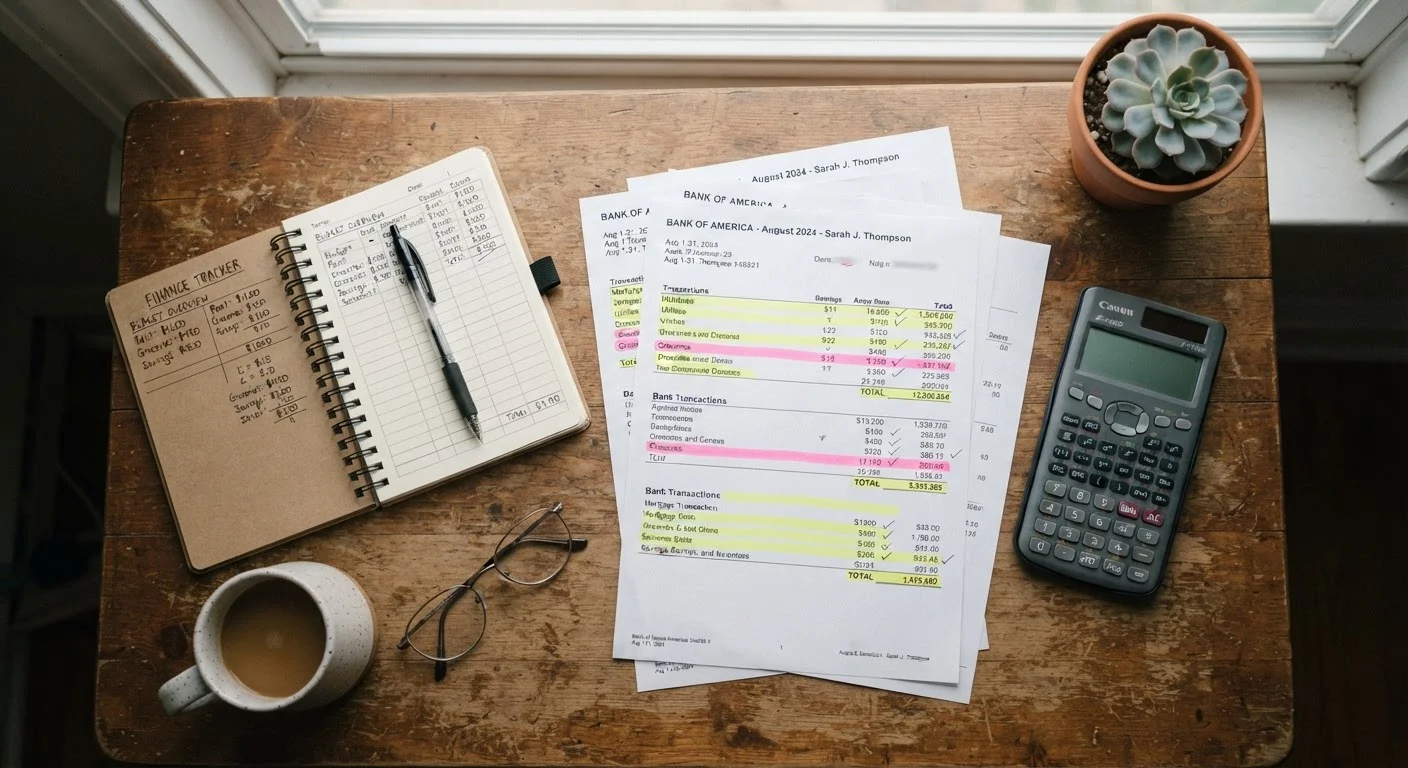
Download or open your last three months of statements for every bank account and credit card you use. Scan each one line by line — don't rely on memory or a single month. Use a highlighter or filter to mark any charge that repeats. Three months catches quarterly billing cycles that a single-month review would miss.
Search your email for receipts and renewal notices
In your primary email, search for: receipt, invoice, subscription, renewal, billing, and free trial. Many services send confirmation emails even when the bank line item is cryptic. This step often surfaces forgotten trials that converted to paid plans without a clear statement entry.
Check your app store subscription list
On iOS: go to Settings → [your name] → Subscriptions. On Android: open the Google Play app → Profile → Payments and subscriptions → Subscriptions. These screens show active and recently expired subscriptions billed through the respective stores — a category that many people overlook entirely during a statement review.
Build a master list with costs and usage notes
Log every subscription you find into a single document. For each entry, record: the service name, the billing amount, the billing frequency (monthly or annual), the payment method, and roughly when you last used it. Honesty matters here — 'I might use it someday' is not the same as 'I used it this month.'
Score each subscription: keep, cut, or downgrade
For each item on your list, ask three questions: Did I use this in the past 30 days? Would I pay for it if I had to re-subscribe today? Is there a free or lower-cost alternative that covers 80% of what I need? Anything that fails two of three questions is a strong candidate for cancellation. Mark each service clearly: keep, cut, or downgrade to a cheaper tier.
Cancel or downgrade — starting today
Work through your 'cut' list immediately. Most cancellations can be completed through account settings in under five minutes. For services that bury the cancellation option, a direct web search for '[service name] cancel subscription' usually surfaces the correct page or phone number. Confirm each cancellation via the email confirmation the service sends.
Schedule Your Next Audit Now
Before you close your spreadsheet, set a calendar reminder for 90 days from today labeled 'Subscription check-in.' New free trials, app store charges, and price increases accumulate quickly. A brief quarterly review — even just 20 minutes — prevents the pile-up from happening again. Pairing it with your everyday money wins routine keeps the habit sustainable.
After the Audit: What to Do With What You Find
Once you have a complete list and have flagged what to cut, act on it within 24–48 hours while the motivation is fresh. Cancellation processes vary: some services cancel immediately through account settings, others require a customer service call or chat, and a few — particularly those with annual billing — may involve a refund request.
For services you're on the fence about, check whether a pause or downgrade option exists. Many streaming and software subscriptions offer a lower tier or a temporary suspension, which avoids re-signup friction later. Before splitting costs with others, review what family and group plan fine print actually says — eligibility rules are stricter than the marketing implies.
Set a calendar reminder to repeat this audit in three to six months. Subscriptions re-accumulate; the habit matters more than any single session. You can apply the same structured thinking to other fixed costs — the annual car ownership audit is a strong companion exercise for a fuller picture of your recurring expenses.
This article provides general financial information for educational purposes only and is not personalised financial advice. For guidance specific to your situation, consult a qualified financial professional.
The content provided on our blog site traverses numerous categories, offering readers valuable and practical information. Readers can use the editorial team’s research and data to gain more insights into their topics of interest. However, they are requested not to treat the articles as conclusive. The website team cannot be held responsible for differences in data or inaccuracies found across other platforms. Please also note that the site might also miss out on various schemes and offers available that the readers may find more beneficial than the ones we cover.