

Start here
What Is a Hostel, Really?
Prepare
What to Pack for a Dorm Stay
Fit in
Dorm Etiquette Every First-Timer Needs to Know
Stay safe
How to Evaluate Safety Before You Book
Set expectations
Managing Expectations: Trade-Offs Worth Knowing
What Is a Hostel, Really?
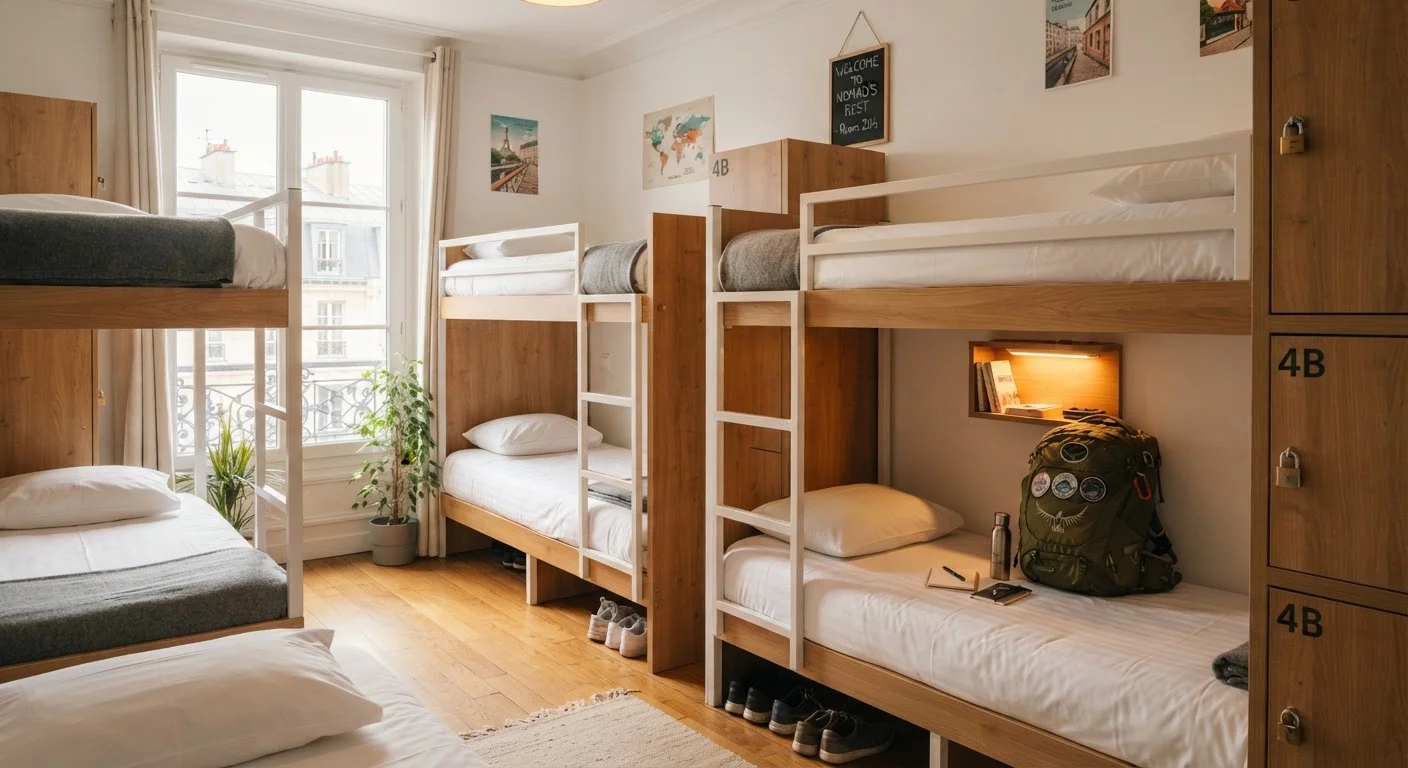
A hostel is a type of accommodation that rents beds in shared dormitory rooms rather than private rooms. Guests from different backgrounds share sleeping space, bathrooms, and communal areas like kitchens and lounges. Prices vary widely by city and season, but a dorm bed typically costs a fraction of a private hotel room in the same location — making hostels a practical tool for stretching a travel budget further.
Today's hostels range from bare-bones budget spots to design-forward properties with rooftop bars and private pod bunks. The common thread is shared sleeping space, but the experience around it can differ enormously. For a broader picture of where hostels fit among other affordable lodging types, see this overview of budget accommodation categories.
Dormitory room
A shared sleeping room in a hostel where multiple guests — typically strangers — each rent a single bed rather than a private room.
Locker
A secured storage unit, usually in the dorm room or a common area, where guests can lock up valuables. Many require a guest-supplied padlock.
Bunk bed
A two-tier bed frame common in hostel dorms; the lower bunk typically offers more convenience while the upper bunk may offer slightly more privacy.
Pod bunk
An upgraded bunk design that includes a curtain, personal light, and outlet, providing more privacy than a standard open bunk in a dorm.
Common area
Shared spaces in a hostel — kitchen, lounge, or rooftop — where guests from all rooms can socialize, cook, or relax.
Quiet hours
A designated period, usually overnight, when hostel guests are expected to keep noise to a minimum to allow others to sleep.
What to Pack for a Dorm Stay
Packing deliberately is the difference between a comfortable hostel stay and a frustrating one. These items are worth prioritizing:
- Padlock: Many lockers require you to supply your own. A combination lock avoids the risk of losing a key.
- Earplugs and eye mask: Dorms run on mismatched schedules. These are non-negotiable for anyone who isn't a heavy sleeper.
- Quick-dry travel towel: Compact and fast-drying; many hostels charge for towel rental or don't provide them at all.
- Flip-flops: For shared showers and bathroom floors.
- Small flashlight or headlamp: Lets you navigate a dark dorm without waking everyone else.
- Power strip with a short cord: Outlet availability per bunk is often limited; this solves it without being inconsiderate.
Pack light overall. In a dorm, a bulky suitcase is harder to manage and can inconvenience bunkmates when you're rummaging through it at odd hours.
Dorm Etiquette Every First-Timer Needs to Know
Hostel etiquette isn't written on a sign anywhere — but breaking it makes you that guest. The core principle: you're sharing a bedroom with strangers, so minimize your footprint.
- Respect quiet hours. Most hostels enforce these between 10 p.m. and 8 a.m. Hushed voices and no speakerphone apply even outside official hours when others are sleeping.
- Use your flashlight, not the overhead light. Flipping on room lights at 1 a.m. is the fastest way to earn enemies.
- Pack the night before. Rustling through your bag at 5 a.m. is audible to everyone. Sort what you need before you sleep.
- Keep shared bathrooms tidy. Leave counters clear, don't monopolize showers during peak morning hours, and remove your toiletries.
- Don't occupy more space than your bunk. Your belongings belong in the locker or under your bed, not spread across the floor.
Book a Smaller Dorm for Your First Stay
If you're new to hostel life, choose a four- or six-bed dorm over a twelve-bed room. Fewer bunkmates means less noise, easier bathroom access, and a less overwhelming introduction to shared accommodation. Once you're comfortable, larger dorms are usually cheaper and fine for light sleepers.
The social upside of hostels — meeting other travelers, getting destination tips from people who just came from where you're headed — is very real, but it happens in common areas. The dorm is for sleeping.
How to Evaluate Safety Before You Book
Safety at a hostel is largely about due diligence before you hand over payment. Two signals matter most: recent guest reviews and locker security.
Reviews: Filter for the most recent three to six months. Look specifically for mentions of theft, broken locks, or management responsiveness to complaints. A high overall score doesn't protect you if the most recent reviews flag security problems. Our guide on reading hostel listings critically shows exactly what to look for — and what properties often leave out.
Lockers: Confirm the listing explicitly states that lockers are available in dorm rooms, not just at reception. If the listing is vague, email the property directly before booking.
Location: Use a mapping tool to check the neighborhood context — proximity to transport, walkability at night, and general area safety. For a structured approach to vetting any budget property, the pre-check-in safety checklist gives you a practical framework.
When you arrive, do a quick walk-through: test your locker, note the emergency exits, and assess whether the front desk is staffed around the clock. Trust your read of the environment.
Managing Expectations: Trade-Offs Worth Knowing
Hostels involve genuine compromises, and being clear-eyed about them prevents disappointment. Privacy is limited by design — you will share space with strangers, and you won't always choose who those strangers are. Noise is a factor even in well-run properties. Bathrooms are shared, morning rush is real, and some nights won't be perfectly restful.
Those trade-offs are real. So is the upside: you can often afford to stay in cities or neighborhoods that would be out of reach in a hotel, extend a trip by several days on the same budget, and meet fellow travelers who become useful sources of on-the-ground information.
If you're weighing a hostel against a guesthouse or private rental, the cost and comfort comparison breaks down how these options typically stack up. And if you're still uncertain whether hostels are as sketchy as their reputation suggests, the reality behind common lodging myths is worth a read before you decide.
A first hostel stay is a skill — one that gets easier and more comfortable with practice. Most guests who prepare properly find the experience far more manageable than they anticipated.
This article provides general travel information for educational purposes. Prices, availability, safety conditions, and property standards vary by location and change over time. Always verify current details directly with the property and consult official government travel advisories for up-to-date entry, safety, and health requirements before traveling.
Frequently Asked Questions
Many hostels offer female-only dorm options, which provide an added layer of comfort for solo women. Safety varies by property, so check recent reviews specifically from solo female guests and look for lockers with working locks. Always trust your instincts when assessing a property in person.
Most hostels include sheets or a sleeping-bag liner but may charge a small fee for towels. Bringing a compact, quick-dry travel towel is generally recommended to avoid fees and for convenience. Always check the listing's amenity list before arrival.
Most hostels accept guests 18 and older; some welcome younger travelers if accompanied by a parent or guardian. A small number of properties have upper age limits, though this is becoming less common. Verify the property's age policy directly before booking.
Most hostels offer a luggage storage area where you can leave bags before check-in or after check-out. Ask the front desk staff when you arrive. Storage is usually free or available for a small fee.
Use the provided lockers — they are your first line of defense. Bring your own padlock since lockers often require one. Keep valuables like your passport and cards on your person or locked away, and don't leave electronics unattended in common areas.
Yes, with the right tools. Earplugs and an eye mask block most disruptions. Booking a smaller dorm — four to six beds rather than twelve or more — substantially reduces noise and light interruptions. Reading recent reviews about nighttime quiet is also a reliable predictor.
The content provided on our blog site traverses numerous categories, offering readers valuable and practical information. Readers can use the editorial team’s research and data to gain more insights into their topics of interest. However, they are requested not to treat the articles as conclusive. The website team cannot be held responsible for differences in data or inaccuracies found across other platforms. Please also note that the site might also miss out on various schemes and offers available that the readers may find more beneficial than the ones we cover.