

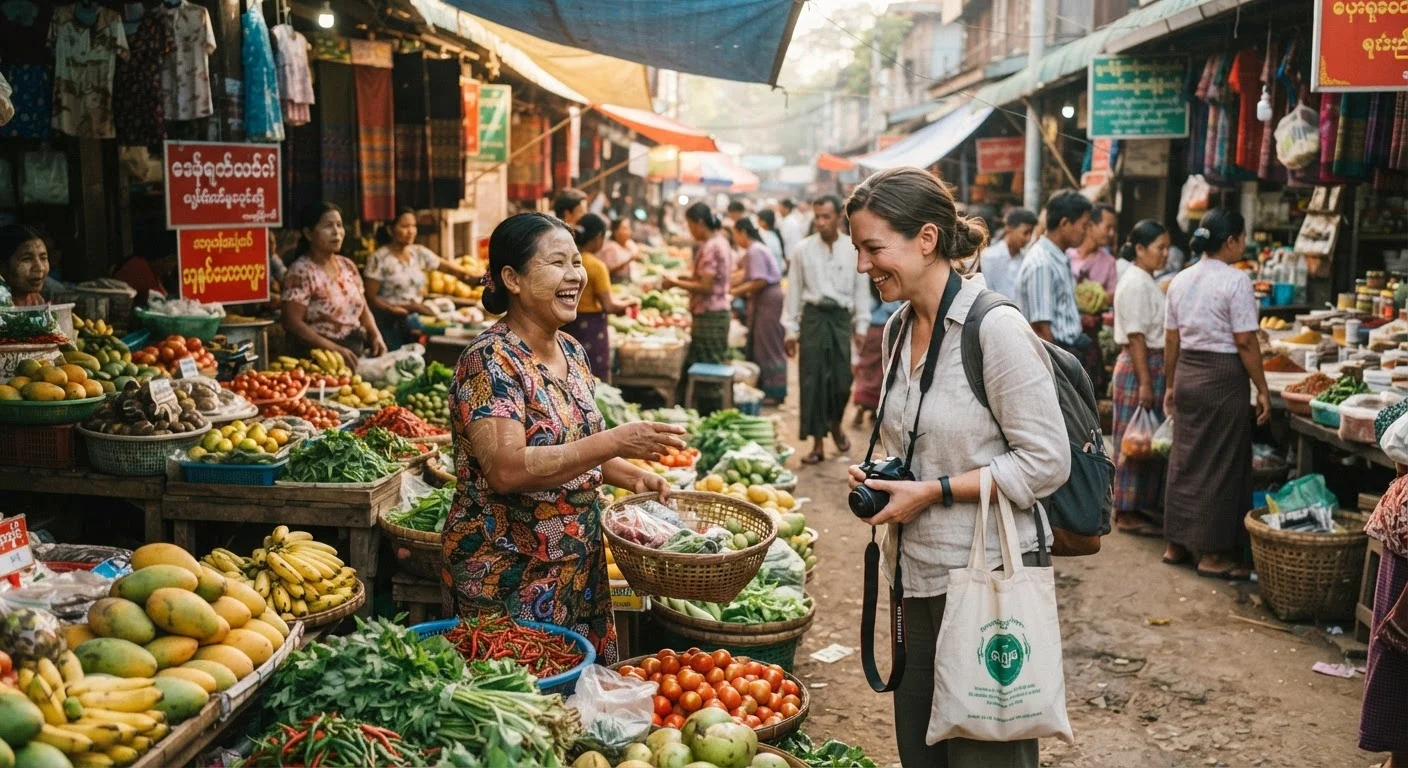
Why the Ethics of Budget Travel Deserve More Attention
Low-cost destinations attract budget travelers for an obvious reason: your dollar (or euro, or pound) goes further. But the same exchange-rate advantage that makes a destination feel affordable also means the wages local workers earn are dramatically lower than what you're used to at home. That gap deserves a moment of honest reflection before you start optimizing every line item of your trip.
This isn't about guilt-tripping yourself out of traveling affordably. It's about recognizing that how you spend matters almost as much as how much you spend. As our explainer on what 'low cost' really means lays out, affordability is always relative — and the power differential embedded in exchange rates shapes every transaction you make abroad.
The good news: spending mindfully is often the same as spending smartly. The habits that channel money into local economies also tend to produce richer, more authentic travel experiences.
Practices That Keep Your Budget Low and Local Economies Stronger
The following approaches are grounded in how tourism economics actually work — not in idealism. Each one is something you can act on immediately, without spending more overall.
Eat and shop where locals eat and shop, not where tourists are directed.
Tourist-facing businesses often source ingredients from outside the local supply chain and funnel revenue toward absentee owners or foreign-owned chains. Local markets and family-run restaurants circulate money more directly through the community. You also tend to pay less for better food.
Resist the urge to haggle locals down to the absolute floor on small purchases.
Aggressive bargaining over a dollar or two extracts a meaningful percentage of a vendor's daily wage while saving you almost nothing in the context of your overall trip budget. Accepting a fair price — not the inflated tourist price, but a reasonable one — is a concrete way to let the exchange rate work in your favor without weaponizing it.
Prioritize locally owned accommodation over international chains.
Studies on tourism economics consistently find that a higher proportion of revenue from locally owned guesthouses and hotels stays within the destination economy, compared with internationally branded properties that repatriate profits abroad. Locally owned lodging is also frequently cheaper than comparable chain options — the ethical and budget-conscious choice often coincide.
Use local transport options rather than defaulting to tourist-oriented transfers.
Public buses, shared minibuses, and local rail networks are almost always cheaper than private tourist shuttles, and the revenue stays closer to local operators. They also provide a more honest view of how a place actually functions day-to-day.
Tip at local norms or modestly above them, understanding that service charges are often not passed on.
In many low-income destinations, tipped service workers earn a base wage that presumes tips as part of total compensation. Tipping nothing because it 'isn't expected' in a particular culture can be accurate in one context and harmful in another. Research local norms before you arrive rather than applying a blanket rule.
What to Start Doing Before You Even Land
Responsible spending habits are easier to maintain when they're built into your planning process rather than improvised on the ground. A few decisions made before you book can set the right frame for the whole trip.
For a more complete pre-departure checklist — including visas, vaccinations, and insurance verification — see our pre-trip planning checklist before committing to any destination.
The Slow Travel Advantage: Spend Less, Leave More
One of the most underappreciated budget strategies is also one of the most community-friendly: stay longer in fewer places. Slow travel consistently outperforms itinerary-hopping on cost — transportation is typically the biggest travel expense, and cutting down on inter-city or inter-country moves adds up fast.
Beyond the savings, longer stays mean you graduate from tourist to temporary resident in the eyes of local vendors. You get better prices because you become a repeat customer, not because you haggled someone down. You find the lunch spots that don't have menus in English and don't need them. Your spending filters through a wider cross-section of the local economy rather than concentrating in the tourist bubble.
Overtourism Is a Real Cost — Even in Cheap Destinations
When a destination becomes known as budget-friendly, visitor volumes can spike faster than local infrastructure can absorb. This drives up rents for residents, strains water and waste systems, and gradually prices locals out of their own neighborhoods. Visiting during shoulder season and distributing your spending across multiple neighborhoods — rather than concentrating in one tourist zone — helps distribute both the benefits and the pressures of tourism more evenly. Shoulder season travel also tends to lower your own costs significantly.
If you're deciding between regions, our comparison of Eastern Europe and Southeast Asia breaks down where a slow-travel approach yields the strongest combination of low costs and authentic local access.
This article is for general informational and educational purposes only. Prices, conditions, and local circumstances vary and can change; verify current details with official sources and local contacts before you travel.
The content provided on our blog site traverses numerous categories, offering readers valuable and practical information. Readers can use the editorial team’s research and data to gain more insights into their topics of interest. However, they are requested not to treat the articles as conclusive. The website team cannot be held responsible for differences in data or inaccuracies found across other platforms. Please also note that the site might also miss out on various schemes and offers available that the readers may find more beneficial than the ones we cover.