

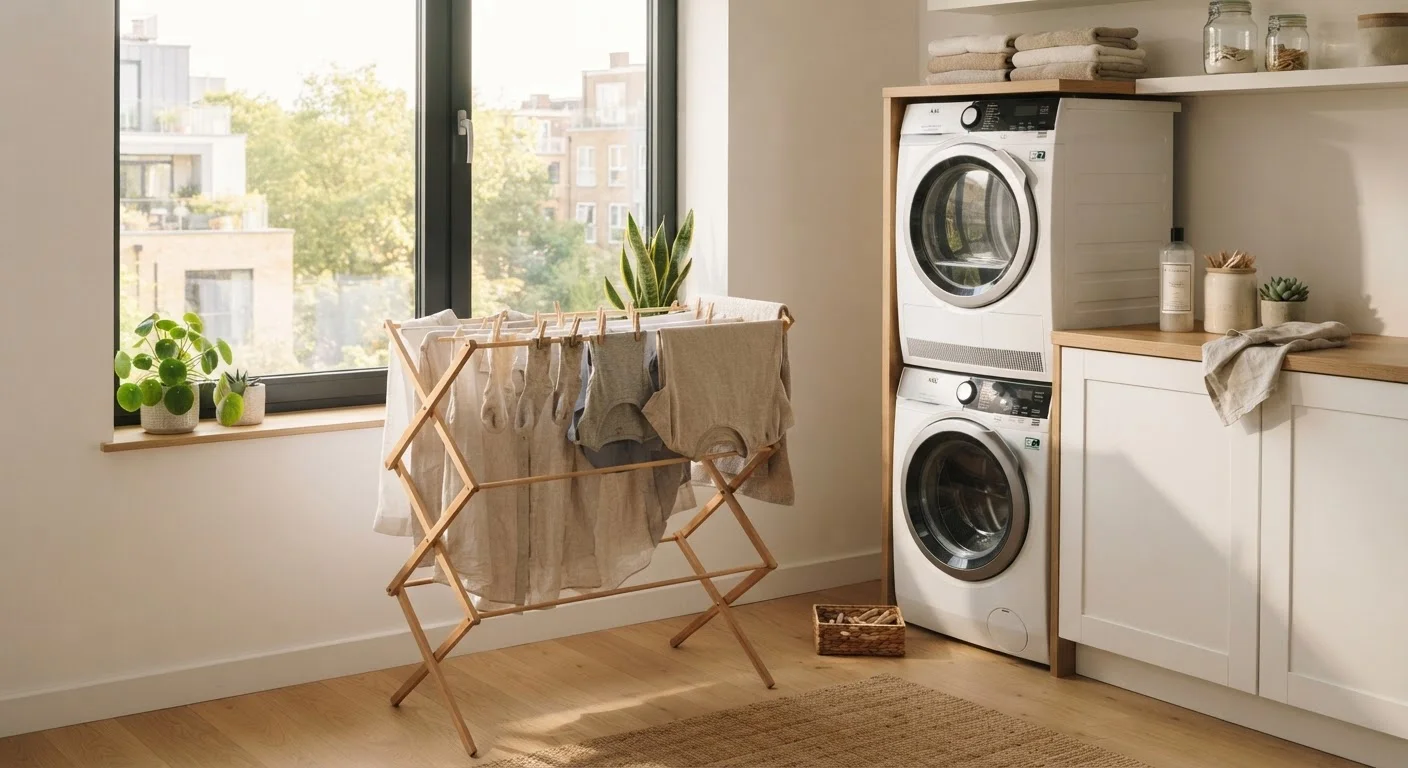
Option A
Air-Drying
The zero-energy, time-tested alternative.
Best for: Budget-conscious households willing to plan ahead and work around longer drying times.
Option B
Tumble Drying
The fast, convenient option with a real running cost.
Best for: Households that prioritize speed and convenience and have room in their energy budget.
How Much Energy Does a Tumble Dryer Actually Use?
A standard electric tumble dryer uses roughly 4 to 6 kilowatt-hours (kWh) per cycle, depending on the model, load size, and heat setting. At the US average residential electricity rate of around $0.16 per kWh (though this varies significantly by state), that works out to approximately $0.64 to $0.96 per cycle.
That might sound small, but it compounds quickly. A two-person household doing five loads a week would spend roughly $166 to $250 per year on drying alone. A family of four running seven or eight loads a week could easily exceed $300 annually. For context, energy data from the US Energy Information Administration consistently shows that clothes dryers rank among the top five electricity consumers in American homes.
For a broader picture of how dryers fit into total household running costs, see our household running costs reference guide.
| Criterion | Air-Drying | Tumble Drying |
|---|---|---|
| Running cost per cycle | $0 | ~$0.64–$0.96 |
| Estimated annual cost (5 loads/week) | $0 | ~$200–$250 |
| Upfront equipment cost | $20–$60 (rack) | $300–$1,000+ (appliance) |
| Drying time | 2–24 hours | 45–90 minutes |
| Fabric wear | Minimal | Moderate (lint/heat) |
| Space required | Floor or outdoor space | Dedicated appliance footprint |
| Works in all climates | Not always practical | Yes |
What Air-Drying Costs — and What It Doesn't
The running cost of air-drying is straightforward: zero. No electricity, no gas, no per-cycle expense. A drying rack or a clothesline is a one-time purchase — typically $20 to $60 for a freestanding indoor rack — that pays for itself within a few weeks of replacing regular dryer use.
The real costs are indirect. Air-drying takes longer — anywhere from a few hours for lightweight items to 24 hours or more for thick fabrics like denim or towels in a poorly ventilated space. That means planning ahead, managing more loads simultaneously, and having enough physical space to spread items out. In humid climates or during winter months, indoor drying can also raise ambient moisture levels, which may require running a dehumidifier — something worth factoring in if that applies to your home.
On the fabric side, air-drying is generally gentler. Tumble drying generates lint, which is essentially fiber loss from your clothing. Garments tend to last longer when air-dried — a practical savings benefit that's harder to quantify but real. This pairs well with energy-conscious laundry habits more broadly; cold-water washing is another low-effort swap that reduces wear and running costs at the same time.
Running the Numbers by Household Size
The annual cost gap between air-drying and tumble drying scales with how often you do laundry. Here's a rough estimate using an average of $0.80 per dryer cycle:
- Single person (3 loads/week): ~$125/year in dryer costs
- Two-person household (5 loads/week): ~$208/year
- Family of four (8 loads/week): ~$333/year
These figures assume full dryer use for every load. Switching entirely to air-drying eliminates that cost. A hybrid approach — air-drying half your loads — halves it. Even modest changes add up meaningfully over 12 months.
~$0.80
Average cost per tumble dryer cycle
Based on a 5 kWh cycle at the US average residential electricity rate of roughly $0.16/kWh, per US EIA data.
$200–$330+
Estimated annual dryer running cost
Varies by household size and load frequency; calculated at average US electricity rates for 5–8 loads per week.
Top 5
Dryer rank among home electricity consumers
The US Energy Information Administration consistently identifies clothes dryers as one of the largest electricity draws in American homes.
It's also worth noting that dryers, like all high-draw appliances, contribute to the background energy footprint that can quietly inflate your bills — a dynamic explored in this breakdown of hidden ongoing home appliance costs.
Practical Trade-Offs Worth Knowing
Neither method is universally superior — the right choice depends on your living situation, schedule, and what you're optimizing for. A few things to weigh:
- Space: Air-drying needs room. A studio apartment may not have enough floor or wall space for a full load.
- Climate: In dry, warm climates, outdoor air-drying is fast and effective. In cold or humid regions, indoor drying is slower and may need airflow management.
- Lease restrictions: Some rental agreements prohibit outdoor clotheslines. Check before installing anything permanent.
- Fabric type: Delicate and synthetic items often benefit from air-drying anyway — many garment care labels recommend it.
If you're renting and uncertain whether appliance access is part of your cost picture, this guide on renting vs. owning appliances walks through when each arrangement actually saves money.
This article provides general information about household energy use and is not a substitute for advice tailored to your specific home, utility plan, or financial situation. Electricity rates and appliance energy use vary widely — check your utility bill and appliance specifications for figures relevant to your circumstances.
The content provided on our blog site traverses numerous categories, offering readers valuable and practical information. Readers can use the editorial team’s research and data to gain more insights into their topics of interest. However, they are requested not to treat the articles as conclusive. The website team cannot be held responsible for differences in data or inaccuracies found across other platforms. Please also note that the site might also miss out on various schemes and offers available that the readers may find more beneficial than the ones we cover.