

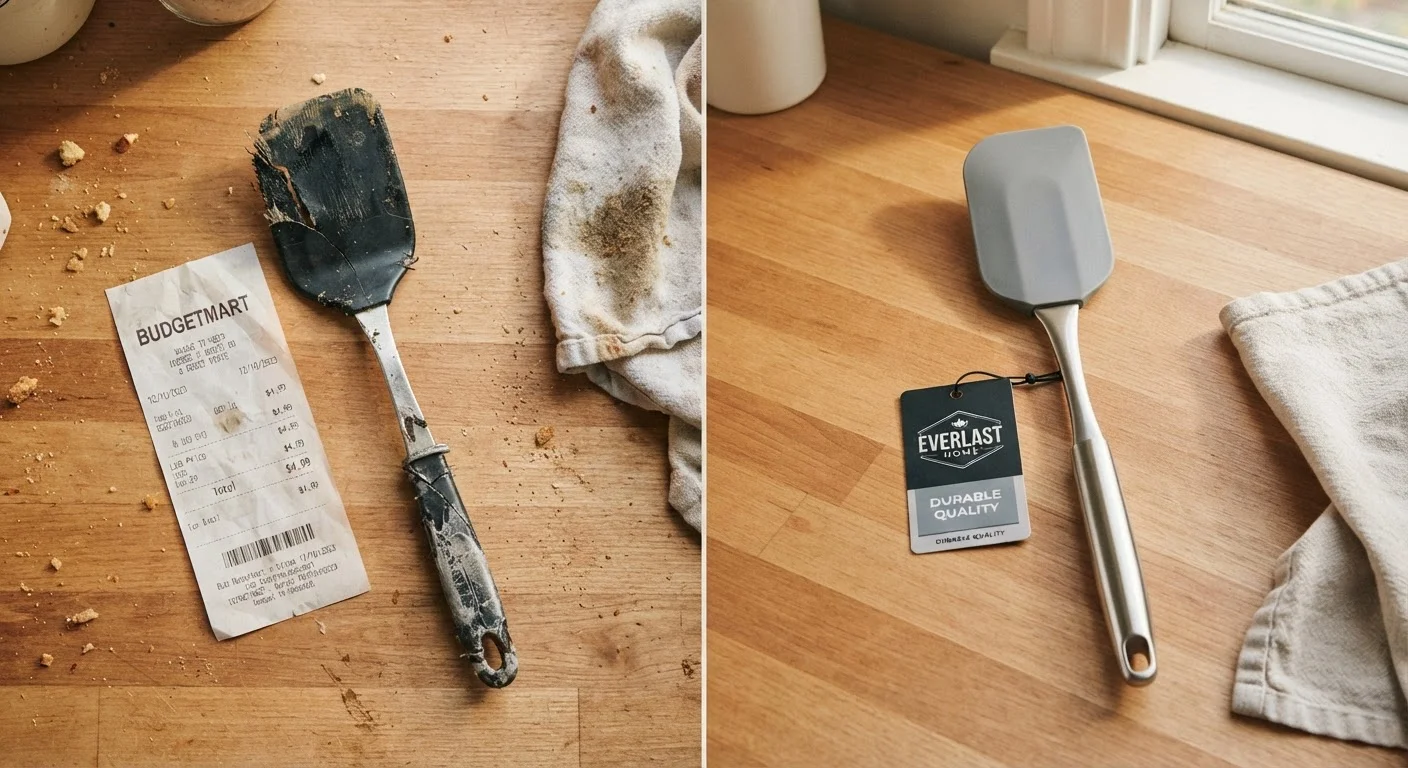
Why Cheap Upfront Can Get Expensive Fast
When money is tight, reaching for the lowest price feels like the smart move. And sometimes it is. But for certain home purchases, that cheap price tag is really just the down payment on a series of costs you haven't seen yet.
The concept behind this is called total cost of ownership — the full amount you'll spend on something over its useful life, not just what you hand over at checkout. It includes energy bills, repair costs, replacement parts, and how soon you'll need to buy the whole thing again.
This isn't about encouraging anyone to overspend. It's about making sure the math actually works in your favor. As our piece on why cheap gadgets can cost more explores, the pattern shows up across product categories — not just the home.
~47%
Share of home energy use from heating and cooling
According to the U.S. Energy Information Administration, space heating and cooling account for roughly 47% of energy consumption in a typical American home.
2–3x
Typical lifespan gap between budget and mid-range appliances
Consumer reports and appliance industry research consistently show mid-range major appliances outlasting entry-level models by a factor of two to three in average service life.
$900+
Average annual US household energy bill
The U.S. EIA estimates the average American household spends over $900 per year on electricity alone, making appliance efficiency a meaningful variable in long-term household budgeting.
The Three Factors That Shift the Math
Not every product category rewards a bigger upfront spend. But three specific factors tend to flip the equation:
- Energy consumption: Appliances that run constantly — refrigerators, water heaters, older window AC units — can cost significantly more to operate each year if they're inefficient. A higher-efficiency model may pay back its price premium in saved energy costs within a few years.
- Durability and replacement frequency: If a cheap version of something fails in 18 months and a mid-range version lasts five years, you may end up buying the cheap one three or four times. Over a decade, the durable option was almost certainly less expensive.
- Maintenance and repair costs: Some products are designed to be serviced; others are designed to be replaced. If replacement is the only option and parts are expensive or unavailable, a product with a longer service life and accessible repair support tends to win on total cost.
These same principles apply beyond the home — see how they factor into car maintenance savings too.
Where the Upfront Spend Is Usually Worth It
Certain home categories consistently reward the higher initial investment:
Major appliances
A refrigerator runs around the clock, every day of the year. The efficiency difference between a lower-end and a mid-range model can translate to meaningful energy savings annually. Over a 10–15 year lifespan, those savings add up considerably.
Mattresses and bedding
A mattress that fails in two years and needs replacement isn't a bargain — it's an expensive inconvenience. Quality construction here directly affects how long the product remains usable. Replacement costs and the disruption of having to shop again carry real value.
Cookware and kitchen tools used daily
Items you reach for every single day wear out faster with lower build quality. A cast iron pan or quality chef's knife, properly maintained, can last decades. The per-use cost drops to nearly nothing over time.
Insulation and weatherproofing
Sealing drafts and improving insulation have an upfront cost — whether materials for a DIY job or professional installation — but the energy savings on heating and cooling bills can recoup that cost within a few years in many climates. Always verify local permit and code requirements before making structural changes, and consult a qualified professional where required.
Where the Premium Isn't Always Worth It
This logic doesn't apply universally. There are categories where paying more rarely returns proportional value:
- Decorative items with no functional wear component — a picture frame doesn't degrade with use the same way a coffee maker does.
- Fast-changing technology — items that become obsolete quickly (certain smart home devices, for instance) may not give you enough time to recoup a premium. Our article on the hidden ongoing costs of running a smart home covers how these investments can compound over time.
- Items you rarely use — a high-end appliance used twice a year takes far longer to justify its cost than one used daily.
The goal is applying the TCO calculation selectively, not uniformly. Bulk buying follows the same conditional logic — sometimes it helps, sometimes it quietly costs more.
Run a Quick Annual Cost Comparison
Before choosing between two price points, divide each item's price by its expected lifespan in years. Add any yearly operating costs (energy, filters, consumables). Whichever has the lower annual number is the better deal over time — regardless of which one costs more at the register. This takes about two minutes and can save you real money on big purchases.
This article is for general informational purposes only and does not constitute financial or purchasing advice tailored to your individual situation. Costs, lifespans, and energy rates vary. Consult a qualified professional for decisions involving significant household expenditure or home improvement work.
Frequently Asked Questions
Divide the total purchase price by the item's expected lifespan in years to get an annual cost. Add any recurring costs like energy or filters. Compare that number to the same calculation for the cheaper option. Whichever annual cost is lower is the better deal over time.
Generally, items that run constantly (refrigerators, water heaters, HVAC systems), items you use daily (mattresses, cookware), and items with high replacement or repair costs tend to reward a higher upfront spend. Items you use rarely or that change frequently with technology are less clear-cut.
Often yes, but it depends on how much you use the appliance and your local energy rates. A more efficient refrigerator running 24/7 typically pays back its price premium within a few years. An energy-efficient ceiling fan used only occasionally may take much longer to break even.
Absolutely. Renters make plenty of purchases — cookware, bedding, small appliances, cleaning tools — where the same TCO logic applies. The key difference is that renters typically aren't responsible for major systems like HVAC or water heaters, so focus on items you own and use regularly.
Watch for short warranties, parts that are expensive or hard to source, high energy ratings, and reviews that mention early failures. If replacement is the only repair option and the item fails in a year or two, you've often spent more than a durable alternative would have cost.
The content provided on our blog site traverses numerous categories, offering readers valuable and practical information. Readers can use the editorial team’s research and data to gain more insights into their topics of interest. However, they are requested not to treat the articles as conclusive. The website team cannot be held responsible for differences in data or inaccuracies found across other platforms. Please also note that the site might also miss out on various schemes and offers available that the readers may find more beneficial than the ones we cover.