

Our Verdict
Bulk buying is a legitimate money-saving strategy for specific categories — primarily non-perishables, cleaning supplies, and personal care items you use at a predictable rate. Outside those conditions, the math often works against you through spoilage, storage constraints, or cash flow tied up in products you don't need quickly. Approach it as a deliberate calculation, not a reflex.
Best for households with stable budgets, predictable consumption habits, and adequate storage space who regularly use a core set of non-perishable or slow-to-expire products.
The Basic Logic — and Where It Breaks Down
The appeal of bulk buying is straightforward: pay less per unit, spend less overall. It's a sound principle when the conditions support it. The problem is that most people apply it too broadly, turning a selective strategy into a shopping habit that quietly inflates their spending.
The key variable is utilization rate — how reliably and quickly you actually consume the product. When your usage rate is high and consistent, bulk pricing genuinely reduces your cost per use. When it isn't, that lower unit price becomes an illusion: you're paying for volume you won't fully use.
For a deeper look at how unit pricing works in practice, see how to read shelf unit pricing labels — it's the single most useful skill for evaluating whether a bulk deal is real.
Lower cost per unit on high-turnover items
When you buy a product you use frequently, the unit price drop directly translates to long-term savings with no waste offset.
Fewer shopping trips and impulse purchases
Stocking up on staples means less time in stores — and less exposure to unplanned purchases that add up over time.
Stable supply of essentials during price spikes
Having a reserve of non-perishables provides a buffer when prices rise temporarily, letting you avoid buying at peak cost.
Predictable household budgeting for staples
Buying in bulk on a regular cycle makes certain line items in your budget highly stable, reducing month-to-month spending variation.
When Bulk Buying Works Against You
The most common pitfall is perishables. Buying a three-pound container of salad greens at a steep discount is only a saving if you eat three pounds of salad greens before they go bad. Studies on food waste suggest American households discard roughly 30–40% of the food they buy — and oversized packages of fresh or short-shelf-life items are a significant contributor.
A second category of risk: products you might stop using. Tastes change, products get reformulated, and circumstances shift. Locking significant cash into a six-month supply of something ties up money that could go elsewhere — a form of opportunity cost that rarely gets factored in at the checkout.
There's also the psychological dimension. Large quantities of a product can subtly encourage faster consumption. Research in consumer behavior has suggested that bigger package sizes sometimes lead to higher usage rates, which erodes the savings and can even increase your total spend over time.
Spoilage wipes out savings on perishables
Fresh produce, dairy, and even some pantry items expire before large quantities can be used, turning discount pricing into outright waste.
Large upfront costs strain tight monthly budgets
Even when the math favors bulk buying, paying more at the register today can create cash flow problems for households without a buffer.
Encourages faster consumption of some products
Consumer behavior research suggests larger package sizes can lead people to use more per occasion, reducing or eliminating the unit-price advantage.
Storage space is a real constraint
Not every household has the pantry, garage, or closet space to store warehouse-scale quantities without inconvenience or damage to the goods.
Locks cash into items your needs may change
If a product is discontinued, reformulated, or your household situation changes, a large stock becomes a sunk cost rather than a saving.
Categories That Generally Make Sense
Certain product types consistently reward bulk buying:
- Cleaning supplies — laundry detergent, dish soap, all-purpose cleaner. Usage is predictable, shelf life is long, and these items rarely change in your routine. See how generic cleaning products compare to name brands before committing to any large purchase.
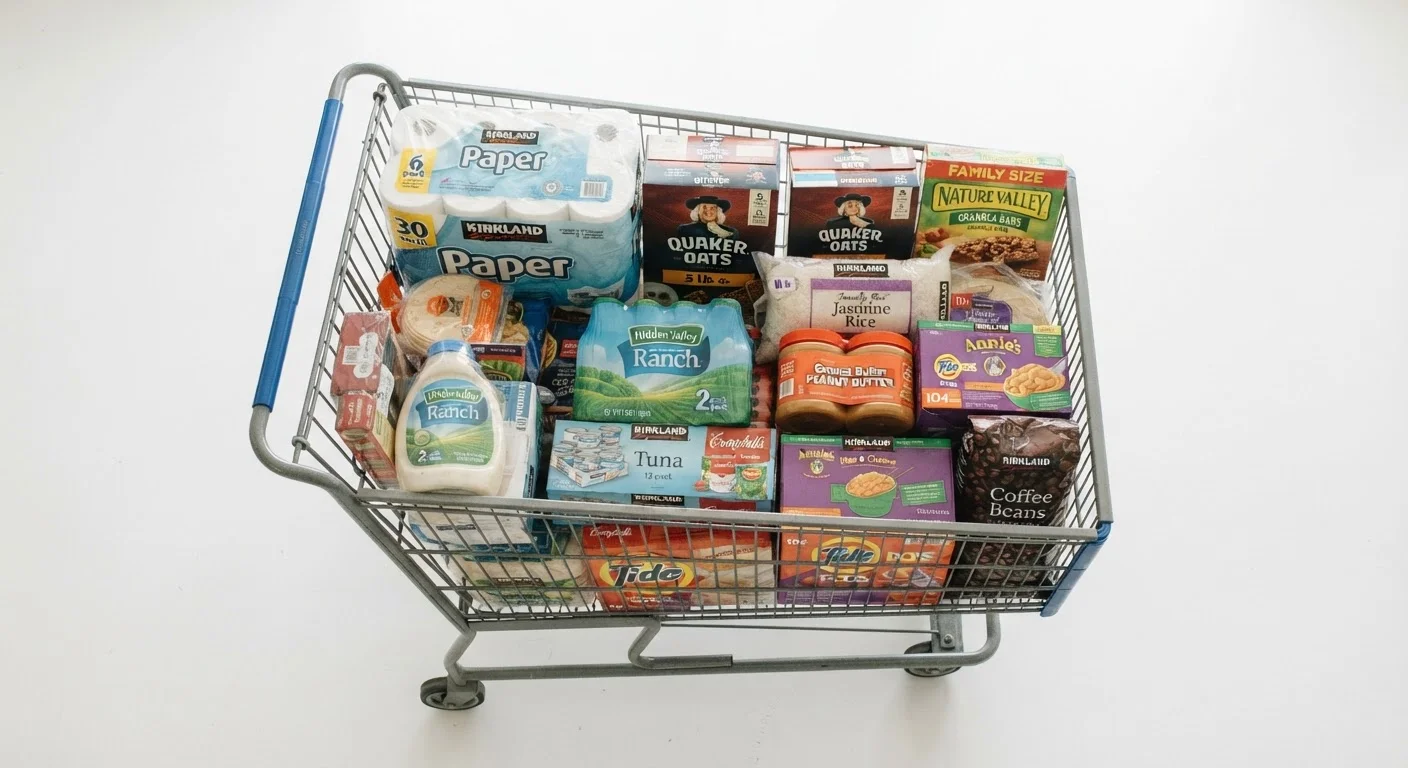
- Paper products — toilet paper, paper towels. Zero spoilage risk, compact enough to store, and used at a consistent rate.
- Pantry staples — rice, dried pasta, canned goods, cooking oil. These have long shelf lives and form the backbone of most household meal plans.
- Personal care basics — if you've used the same shampoo or toothpaste for years, buying larger quantities is predictable and risk-free.
The common thread: long shelf life, stable demand, and no meaningful risk of lifestyle change altering your consumption. For a broader look at where grocery spending goes wrong before you even get to bulk decisions, common grocery habits that drain your budget is worth a read.
Check the Unit Price Before Assuming Bulk Is Cheaper
Bulk packaging isn't always priced lower per unit — retailers sometimes charge more per ounce or count on large sizes, knowing shoppers assume it's a deal. Always compare the shelf unit price (usually shown per ounce, per count, or per fluid ounce) between sizes before putting anything in your cart. Some store apps and websites display unit pricing digitally if the shelf tag is hard to read.
Membership Costs and the Real Break-Even Point
Warehouse clubs typically charge an annual membership fee. That fee is a real cost and needs to be accounted for in your savings calculation. If you spend the year buying products you could have purchased elsewhere at comparable prices, the membership may not pay for itself.
A practical approach: track your warehouse club purchases for three months and tally the price difference versus your standard grocery store. If the savings exceed your prorated membership cost over that period, you're ahead. If they don't, you may be buying bulk out of habit rather than savings discipline.
It's also worth considering the cash flow angle. Bulk purchases require larger upfront payments. If that temporarily stretches a tight monthly budget, the savings math matters less than whether you can absorb the outlay without stress. This connects to a broader pattern explored in how small and large purchases interact in a monthly budget.
This article is for general informational purposes only and does not constitute personalized financial advice. For guidance specific to your situation, consider speaking with a qualified financial professional.
The content provided on our blog site traverses numerous categories, offering readers valuable and practical information. Readers can use the editorial team’s research and data to gain more insights into their topics of interest. However, they are requested not to treat the articles as conclusive. The website team cannot be held responsible for differences in data or inaccuracies found across other platforms. Please also note that the site might also miss out on various schemes and offers available that the readers may find more beneficial than the ones we cover.