

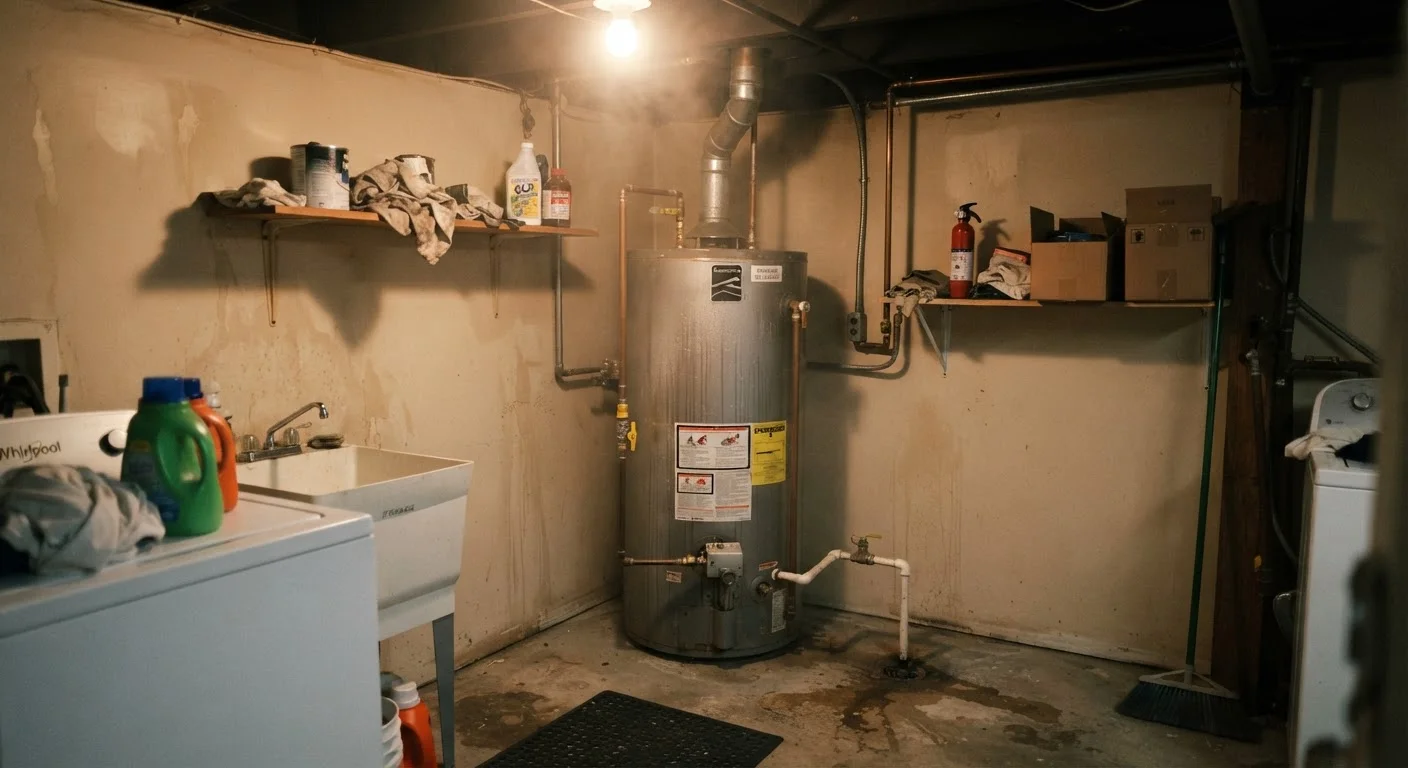
The Hidden Cost Hiding in Your Utility Room
Most people think of energy use in terms of activity — running the dishwasher, taking a shower, turning on the oven. What is easier to overlook is the energy a hot water tank consumes while doing absolutely nothing. If your home has a hot water storage cylinder, it is almost certainly losing heat right now, and your heating system is periodically compensating for that loss whether or not anyone in the household wants hot water at this exact moment.
This matters for renters and homeowners alike. You may not be able to control what type of system you have, but in most cases you can control when it runs — and that scheduling decision alone can shave a meaningful amount off monthly energy costs. It is one of the lower-effort changes available, which makes it worth understanding properly.
Why Tanks Lose Heat Even When You're Not Using Them
A hot water cylinder is essentially a large insulated thermos, but no thermos is perfect. Heat moves from warm areas to cooler ones — through the tank walls, through pipe connections, and into the surrounding air of whatever room the tank sits in. The better the insulation, the slower this happens, but it never stops entirely.
When the water temperature drops below the thermostat's set point, the heating element or boiler fires up to bring it back. In a poorly insulated or older cylinder, this cycle can happen frequently. In a modern well-lagged unit, less often — but it still happens throughout the day and night.
Standby Loss vs. Appliance Standby: Not the Same Thing
Standby heat loss in a water cylinder is a passive thermal process — heat escaping through walls — and is separate from the electrical standby drain of plugged-in devices like televisions or phone chargers. Both matter for household energy use, but they work differently and require different fixes. See our breakdown of appliance standby use for how those two types of waste compare.
This dynamic is different from the standby drain of plugged-in electronics. See our breakdown of appliance standby use for how those two types of waste compare.
What Smarter Scheduling Actually Looks Like
The practical fix is straightforward: set your boiler programmer or immersion heater timer to heat water only during the windows when your household actually uses it. For most people, that means a morning block (before showers and breakfast) and an early evening block (before cooking and winding down). Outside those windows, the tank is off — and a reasonably insulated cylinder will stay warm enough to be usable for an hour or two after the heating stops.
A few things worth knowing before you adjust your schedule:
- Legionella temperature setting: Hot water cylinders should be set to reach at least 140°F (60°C) to prevent bacterial growth. Do not lower the thermostat below this threshold as a cost-cutting move — adjust timing, not temperature.
- Older cylinders benefit from a jacket: A foam or foil cylinder jacket is a low-cost addition that slows heat loss considerably on tanks that do not have factory-fitted insulation.
- Combi boiler households are unaffected: If you have a combination boiler with no storage tank, water is heated on demand and standby loss is not a factor for hot water.
The same logic — matching energy use to actual need rather than running things continuously — applies in other areas of home costs. Cold-water laundry cycles are another practical way to reduce energy use without sacrificing results.
The Bigger Picture: Small Habits, Real Savings
It is easy to assume that energy savings come from dramatic changes — replacing appliances, overhauling insulation, or investing in solar. Those things matter, but they are out of reach for most renters and many homeowners on tight budgets. Scheduling a water heater costs nothing beyond ten minutes with a timer. Adding a cylinder jacket is a modest one-time expense. Neither requires a contractor.
The pattern of continuous, unconsidered energy use shows up in other places too. Fuel consumption in cars follows a similar logic: it is often habitual, low-visibility behavior — not dramatic events — that drives up routine costs. Paying attention to what runs when, and for how long, is the starting point for almost any household spending reduction.
This article is for general informational purposes only. For guidance specific to your heating system, home, or energy costs, consult a qualified heating engineer or energy adviser.
Frequently Asked Questions
Yes, for most households it does. Every hour a tank maintains temperature, it loses heat through its walls and the heating element or boiler compensates. Over a month, that continuous cycle adds meaningful cost compared to scheduled heating windows.
For most households, one or two timed windows per day — typically morning and early evening — cover the bulk of actual hot water use. Review your own routine for a week, then set the timer to match those peak periods.
Heating from cold on a schedule is generally cheaper than maintaining temperature continuously. The energy to reheat water that has cooled somewhat is typically less than the cumulative standby loss over many hours.
Yes. A well-insulated modern tank loses heat much more slowly than an older bare-metal cylinder. Adding a foam cylinder jacket to an older tank is a low-cost step that reduces how often the heating element needs to cycle on.
Generally yes — there is little reason to pay to maintain a full tank of hot water in an empty home. If your system is a combi boiler with no storage tank, this is less of a concern since water is heated on demand.
No. A combination (combi) boiler heats water on demand rather than storing a tank of hot water, so there is no standing tank to lose heat. Standby loss is primarily a concern for homes with a separate hot water storage cylinder.
The content provided on our blog site traverses numerous categories, offering readers valuable and practical information. Readers can use the editorial team’s research and data to gain more insights into their topics of interest. However, they are requested not to treat the articles as conclusive. The website team cannot be held responsible for differences in data or inaccuracies found across other platforms. Please also note that the site might also miss out on various schemes and offers available that the readers may find more beneficial than the ones we cover.