

Three Different Products, One Broad Label
"Usage-based insurance" is a catch-all phrase that actually describes several distinct products. Lumping them together causes confusion, so it helps to separate them from the start.
Telematics (black box) policies involve a physical device installed in your car — or a smartphone app — that continuously monitors how you drive. The insurer collects that data and uses it to adjust your premium, usually at renewal. These are common among younger drivers who lack a long driving history and would otherwise pay elevated rates based purely on their age group.
Named driver policies are structurally different. Here, an individual is added to an existing policy as a named — or additional — driver. They're covered to drive the vehicle but aren't the primary policyholder. This is a legitimate option for someone who drives a parent's or partner's car occasionally. The critical legal distinction: the person who drives the car most must be listed as the main driver. Reversing this arrangement to get a cheaper rate — known as fronting — is insurance fraud.
Pay-per-mile (or pay-as-you-go) policies charge a flat base rate plus a per-mile fee. Your monthly bill reflects how many miles you actually drove. This structure is straightforward and transparent — low mileage means lower cost. It's worth understanding how standard premiums are calculated before comparing it to any usage-based alternative, since the underlying risk factors overlap.
How Telematics Scoring Actually Works
If you're considering a black box policy, knowing what gets measured — and how — matters more than the marketing language around it.
Devices typically record: speed relative to posted limits, acceleration rates, braking intensity, cornering force, and time of day. Night driving (roughly 11 p.m. to 5 a.m.) consistently shows up in insurer data as higher-risk and is often weighted heavily in scoring models. Mileage is also tracked — more miles driven means more exposure to potential incidents.
These inputs feed into a proprietary risk score. Insurers don't all use the same algorithm, which means the same driver could receive different scores from different providers. At renewal, a good score can lead to a lower premium; a poor one can raise it or, in some cases, result in the insurer declining to renew.
Check the App Before You Commit
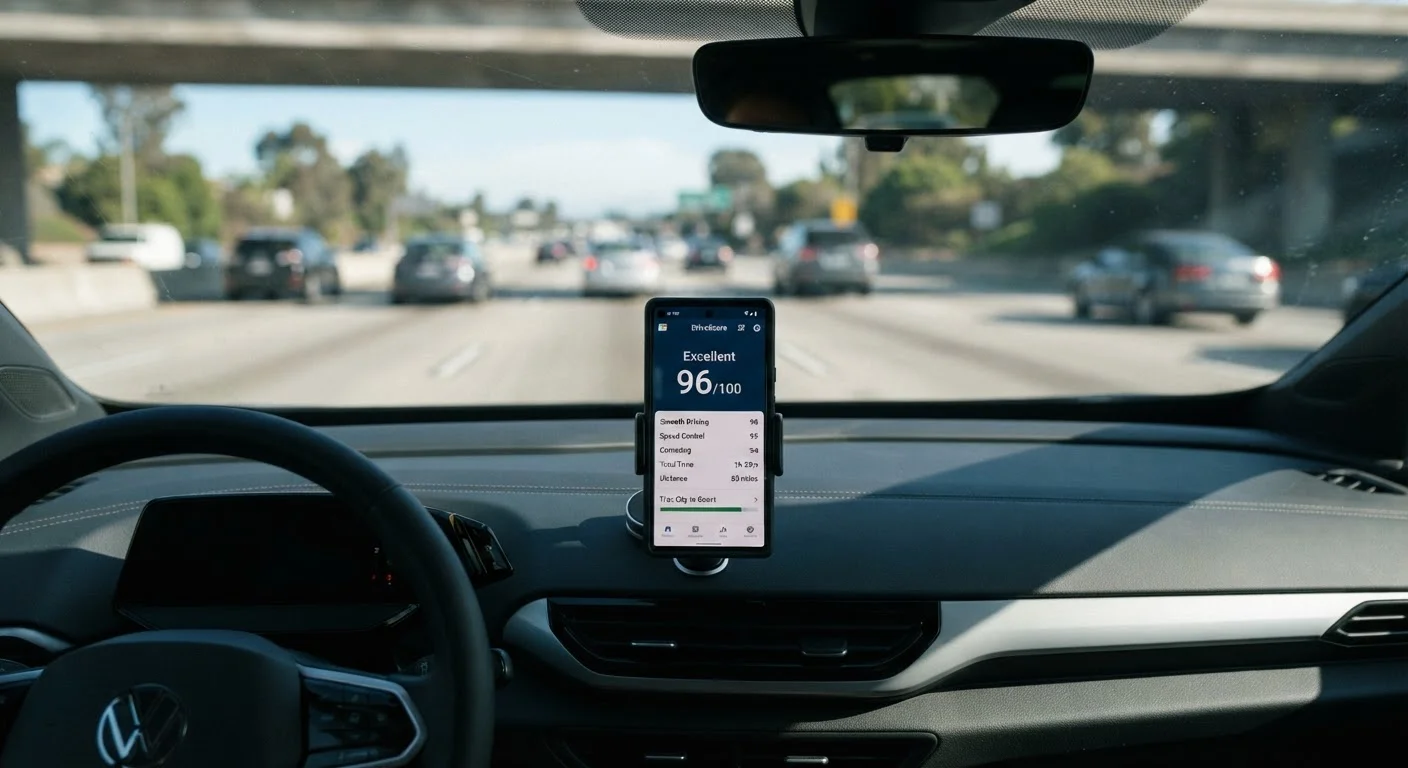
If you're considering a telematics policy that uses a smartphone app rather than a physical device, run the app in trial mode first if the insurer offers one. Some providers let you see a sample score before the policy starts. This gives you a realistic preview of how your driving patterns will be evaluated — before you're locked into a pricing structure based on them.
App-based telematics systems — where your phone does the recording — are increasingly common and work similarly to installed devices. The main difference is that phone-based systems may be more sensitive to how the phone is mounted or handled during a trip, which can affect readings.
For a balanced view of what this type of policy involves day to day, see the full picture on black box policies.
Who Each Structure Actually Suits
These products don't work equally well for every driver. Here's a plain assessment of each:
- Telematics policies make the most sense for newer drivers — particularly those under 25 — whose demographic profile pushes standard premiums high. If your actual driving is genuinely careful and low-risk, a telematics policy gives you a mechanism to demonstrate that and potentially pay less. If your lifestyle involves regular late-night driving or long highway commutes at speed, the data may not work in your favor.
- Named driver coverage suits someone who drives a car they don't own, infrequently. A college student who uses a parent's car during school breaks is a textbook example. It does not suit the person who is actually the primary user of the vehicle — that arrangement must be reflected accurately on the policy.
- Pay-per-mile plans reward low annual mileage. The break-even point varies by insurer and base rate, but drivers covering fewer than roughly 7,000–8,000 miles per year are generally the best candidates. Remote workers, urban dwellers who primarily use transit, or people with a second car that sits mostly parked are typical fits.
Understanding where your own situation falls is the first step. The broader question of managing your fuel and insurance costs together puts these decisions in a wider financial context.
~26%
U.S. drivers enrolled in telematics programs
According to J.D. Power's U.S. Auto Insurance Study, telematics program participation has grown substantially in recent years, with roughly one in four insured drivers now in some form of usage-based program.
7,000–8,000 miles
Approximate annual mileage break-even for pay-per-mile plans
Industry analysts generally estimate this threshold as the point below which pay-per-mile pricing tends to compete favorably with flat-rate annual premiums, though the exact figure depends on each insurer's base rate and per-mile charge.
11 p.m.–5 a.m.
Night driving window most penalized by telematics models
Multiple insurers' published telematics guidelines identify late-night hours as a high-risk factor in driving scores, reflecting industry-wide claims data on nighttime accident rates.
The Privacy Trade-Off You Should Understand
Telematics and pay-per-mile policies both require handing over driving data. That's the deal. What varies — and what you should check before agreeing to any policy — is exactly what data is collected, how long it's retained, whether it's shared with third parties, and under what circumstances.
Some insurers share aggregated data with third parties for research or marketing purposes. Others keep it strictly internal. A small number of policies use GPS route data, which is more granular than simple speed and mileage tracking. These details are in the policy documents and privacy notices — not always in the marketing materials.
This isn't a reason to avoid these products. It's a reason to read what you're signing. The common myths about car insurance article covers some related misconceptions about how insurer data use actually works.
This article provides general information about insurance structures and is not personalised insurance, financial, or legal advice. Coverage terms, data practices, pricing, and eligibility vary by insurer and by state. Read your policy documents carefully and consult a licensed insurance agent for guidance specific to your situation.
Frequently Asked Questions
Not automatically. A telematics device records your driving and the insurer uses that data to assess risk. Safe habits — smooth acceleration, avoiding late-night driving, staying within speed limits — can reduce your premium at renewal. But if the data reveals risky patterns, your rate may go up or your policy could be cancelled.
Most devices log speed, braking intensity, acceleration, cornering, time of day, and total mileage. Some app-based systems also use GPS to record routes. Each insurer's data policy differs, so it's important to read the terms before agreeing to a telematics policy.
It can be, if you drive significantly below average annual mileage — generally under 7,000–8,000 miles per year. Pay-per-mile plans charge a base rate plus a per-mile fee, so costs scale directly with use. Drivers who work remotely or rely on public transit for most trips are typically the best fit.
A named driver policy covers a specific person to drive a car they don't own — typically as an occasional user. The primary policyholder remains the main driver; the named driver is listed separately. It differs from being a 'main driver' and misrepresenting usage (called fronting) is considered insurance fraud.
Your telematics data generally stays with the insurer who collected it and isn't automatically shared across the industry. However, any claims made during a telematics policy period will appear in your claims history, which other insurers can access. Always ask an insurer how your data is stored and shared before signing up.
No. Drivers with established safe driving records and long insurance histories often get competitive rates through traditional policies. UBI products tend to offer the most potential benefit to newer drivers or those whose demographics push premiums high, provided their actual driving habits are genuinely low-risk.
The content provided on our blog site traverses numerous categories, offering readers valuable and practical information. Readers can use the editorial team’s research and data to gain more insights into their topics of interest. However, they are requested not to treat the articles as conclusive. The website team cannot be held responsible for differences in data or inaccuracies found across other platforms. Please also note that the site might also miss out on various schemes and offers available that the readers may find more beneficial than the ones we cover.