

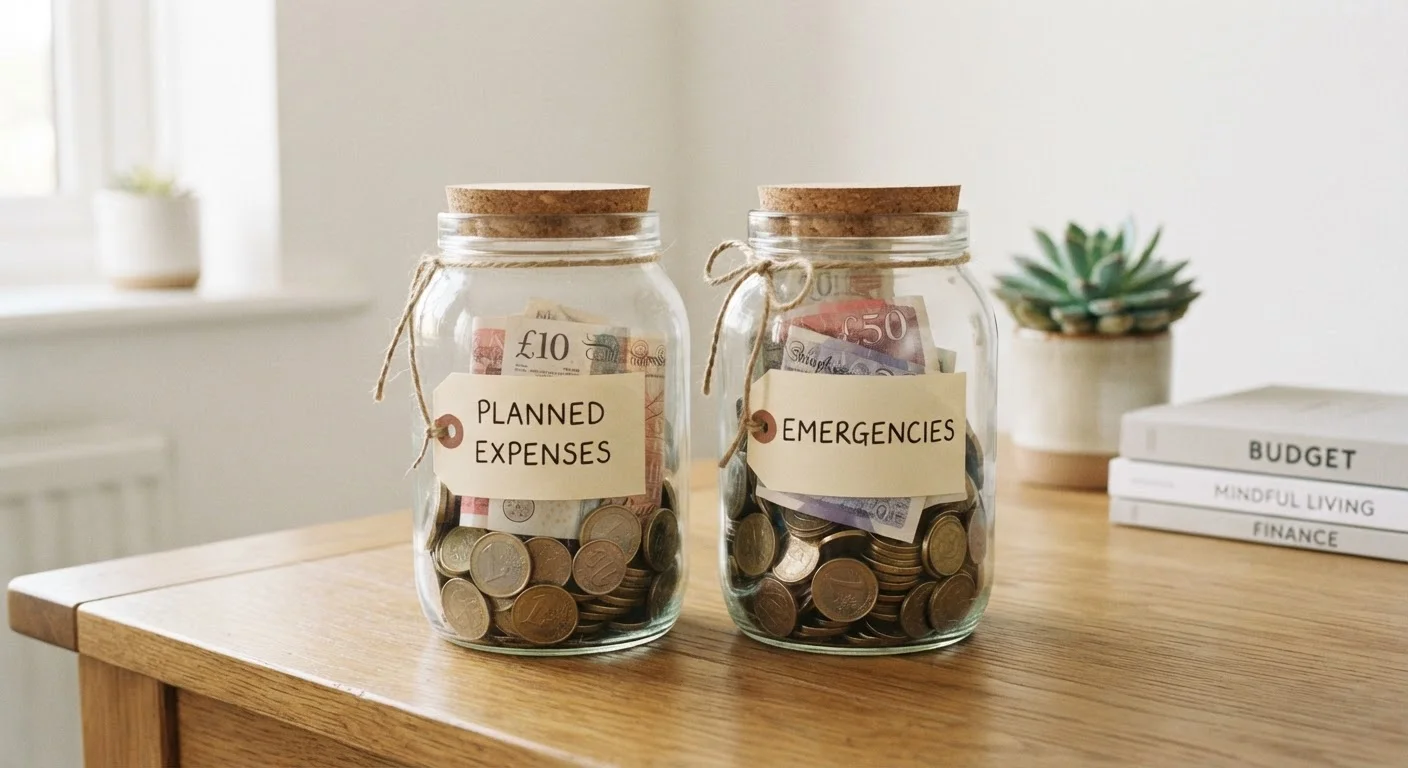
Option A
Sinking Fund
The planned-expense powerhouse.
Best for: Anyone saving toward a known, upcoming cost — like car registration, holiday gifts, or a home appliance replacement.
Option B
Emergency Fund
Your financial safety net for the unexpected.
Best for: Anyone who wants a buffer against unplanned financial shocks like job loss, medical bills, or urgent car repairs.
The Core Distinction: Planned vs. Unplanned
Many people treat these two savings tools interchangeably — and that mistake quietly erodes financial stability. Understanding what separates them is one of the most practical things a budget-conscious millennial can do.
A sinking fund is money you set aside intentionally for a known, future expense. You know the cost is coming — a car insurance premium, a holiday trip, new tires — you just don't want to absorb it all in one paycheck. By saving a fixed amount each month, the expense lands softly when it arrives. Think of it as paying yourself in installments for something you've already decided to buy or pay for.
An emergency fund is fundamentally different. It exists for costs you cannot predict — a medical emergency, sudden job loss, an urgent home repair that can't wait. Its purpose isn't to cover planned life expenses; it's to prevent a financial crisis from becoming a debt spiral. For a deeper look at sizing and placement, see Emergency Fund Basics.
Conflating the two leaves you in a vulnerable position: you either drain your safety net on predictable costs, or you neglect sinking funds entirely and blow your budget every time an annual expense rolls around.
How Each Fund Works in Practice
Sinking funds are built around simple math. If you know your car registration costs $240 and it's due in six months, you save $40 a month. If holiday gifts typically run $480, that's $40 a month starting in January. You can run multiple sinking funds at once — many personal finance apps and banks allow you to label sub-savings accounts for exactly this purpose.
| Criterion | Sinking Fund | Emergency Fund |
|---|---|---|
| Purpose | Known, planned future expenses | Unknown, unexpected financial shocks |
| Examples | Car registration, holidays, appliances | Job loss, medical emergency, urgent repairs |
| Target amount | Exact cost of the planned expense | 3–6 months of essential living costs |
| Contribution method | Fixed monthly amount toward a deadline | Ongoing until target is reached |
| When you use it | When the expected expense arrives | Only during a genuine financial crisis |
| Number you might have | Multiple, one per goal | One central fund |
Emergency funds require a different calculation. The commonly cited guideline is three to six months of essential living expenses — rent, utilities, groceries, minimum debt payments. That number is a target, not a starting point. As Building Your First $1,000 Safety Net explains, even $1,000 provides meaningful protection while you work toward a fuller cushion.
Neither fund belongs in your checking account. Keeping them in separate, clearly labeled savings accounts reduces the temptation to spend them and makes your budget easier to read at a glance.
Funding Both When Money Is Tight
The most common objection is straightforward: I can barely cover my bills — how do I fund two extra savings buckets? The answer isn't to choose one over the other. It's to start small with both.
Even $10 to $20 per month directed toward each fund builds the habit and the balance simultaneously. If your income is irregular, percentage-based saving — setting aside a fixed share of every deposit rather than a fixed dollar amount — can make contributions more sustainable. Savings habits for inconsistent incomes outlines approaches designed exactly for that scenario.
If you're also paying down debt, you don't have to pause savings entirely. Paying off debt and building savings don't have to be mutually exclusive — a parallel approach, even at small scale, keeps your financial foundation intact while you reduce what you owe.
The strategic sequence most financial educators suggest: build a small emergency fund first (around $500–$1,000), then open sinking funds for your most predictable upcoming costs, then grow your emergency fund toward a fuller target as your cash flow allows.
This article is for general informational and educational purposes only and does not constitute personalised financial advice. Consult a qualified financial professional for guidance specific to your situation.
The content provided on our blog site traverses numerous categories, offering readers valuable and practical information. Readers can use the editorial team’s research and data to gain more insights into their topics of interest. However, they are requested not to treat the articles as conclusive. The website team cannot be held responsible for differences in data or inaccuracies found across other platforms. Please also note that the site might also miss out on various schemes and offers available that the readers may find more beneficial than the ones we cover.