

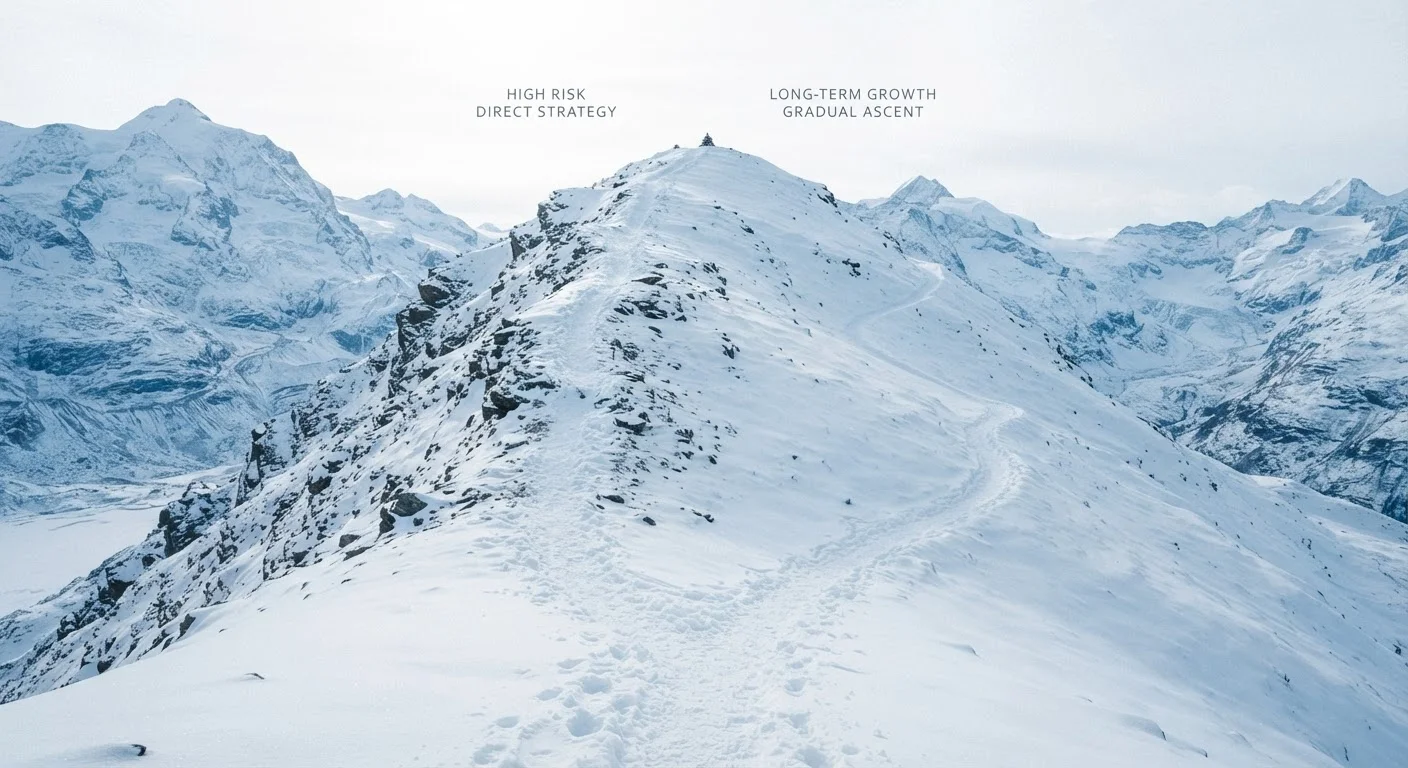
Option A
Debt Avalanche
The mathematically optimal, interest-minimizing approach.
Best for: Savers who are motivated by long-term cost savings and can stay consistent without quick wins.
Option B
Debt Snowball
The psychologically driven, momentum-building approach.
Best for: Individuals who need early motivation and steady encouragement to stay on track with debt repayment.
How Each Method Actually Works
Both methods follow the same foundational rule: pay the minimum on every debt each month, then direct any extra money — even $25 or $50 — toward one target debt at a time. The difference is how you choose that target.
Debt Avalanche: You rank your debts by interest rate, highest to lowest. Extra payments go toward the highest-rate debt first. Once that balance reaches zero, you roll that payment into attacking the next highest-rate debt. Mathematically, this approach minimizes the total interest you pay over the life of your debts.
Debt Snowball: You rank debts by balance, smallest to largest, regardless of interest rate. Extra payments hit the smallest balance first. When that account is paid off, you redirect its payment to the next smallest. Each closed account creates a sense of forward progress — and that momentum is the point.
Neither strategy requires a large income. What both require is a consistent surplus above minimum payments each month. If that surplus doesn't exist yet, building a realistic repayment foundation is the right starting point.
| Criterion | Debt Avalanche | Debt Snowball |
|---|---|---|
| Payoff order | Highest interest rate first | Smallest balance first |
| Total interest paid | Lower (mathematically optimal) | Potentially higher |
| Time to first payoff | Can be longer if high-rate debt is large | Faster — smallest balance clears first |
| Psychological motivation | Requires patience for delayed reward | Quick wins reinforce habit |
| Best when interest rates | Vary widely across accounts | Are similar across accounts |
| Complexity | Requires tracking APRs accurately | Simple — sort by balance |
| Ideal user profile | Disciplined, analytically motivated | Needs visible momentum to stay engaged |
What the Numbers Actually Show
On paper, the avalanche method wins every time. By attacking high-interest debt first, you reduce the compounding effect of interest charges. On a set of debts with varying rates, the avalanche can save hundreds — sometimes thousands — of dollars compared to the snowball. The exact savings depend on your specific balances and rates, but the directional math is consistent.
However, a key insight from behavioral research is that the mathematically superior method only performs better if you actually follow through with it. Studies in consumer behavior — including work published in the Journal of Marketing Research — have found that people who use the snowball method show higher rates of debt elimination completion, partly because early payoffs reinforce continued effort. A method that gets abandoned after three months produces worse outcomes than a slightly less efficient method sustained over three years.
~$1,000+
Potential interest saved using avalanche vs. snowball
Exact savings vary by balance and rate mix, but the gap widens significantly when one debt carries a much higher rate than others.
3 in 5
Americans carrying credit card debt month to month
According to Federal Reserve survey data, a majority of U.S. adults who have credit cards carry a balance, underlining how common structured payoff strategies are needed.
Higher
Completion rates linked to early payoff wins
Behavioral research published in academic consumer finance literature suggests that eliminating accounts early — regardless of balance size — correlates with improved follow-through.
This doesn't make the snowball method objectively better — it makes consistency the most important variable. When cash flow is tight, choosing the right prioritization approach becomes even more critical because there's little margin for wasted interest payments.
Practical Trade-Offs to Weigh Before You Choose
Before committing to either method, it helps to take an honest look at your debt landscape and your own behavior patterns.
- Number of accounts: If you have seven debts and three of them have small balances under $500, the snowball could eliminate those quickly, reducing payment complexity.
- Interest rate spread: If your rates are clustered — say, everything between 14% and 18% — the financial difference between methods is smaller. If one card sits at 29% APR while others are at 10%, the avalanche's advantage grows substantially.
- Timeline pressure: If you're trying to become debt-free before a major life event (home purchase, career change), the avalanche's cost savings may become the priority.
- Emotional relationship with debt: If the weight of unresolved accounts causes anxiety that disrupts your budgeting, the snowball's quick payoffs can provide genuine relief that supports better overall financial decisions.
It's also worth noting that consolidating debt is a separate option that changes the structure of what you're paying. Debt consolidation has its own trade-offs and doesn't replace the need for a payoff strategy — it changes the inputs into that strategy.
Finally, debt payoff doesn't have to crowd out every other financial goal. Paying off debt and building savings can happen simultaneously with deliberate planning, even on a tight budget.
This article is for general informational and educational purposes only. It is not personalized financial, tax, or legal advice. Individual debt situations vary significantly — please consult a licensed financial professional before making decisions about your specific circumstances.
The content provided on our blog site traverses numerous categories, offering readers valuable and practical information. Readers can use the editorial team’s research and data to gain more insights into their topics of interest. However, they are requested not to treat the articles as conclusive. The website team cannot be held responsible for differences in data or inaccuracies found across other platforms. Please also note that the site might also miss out on various schemes and offers available that the readers may find more beneficial than the ones we cover.