

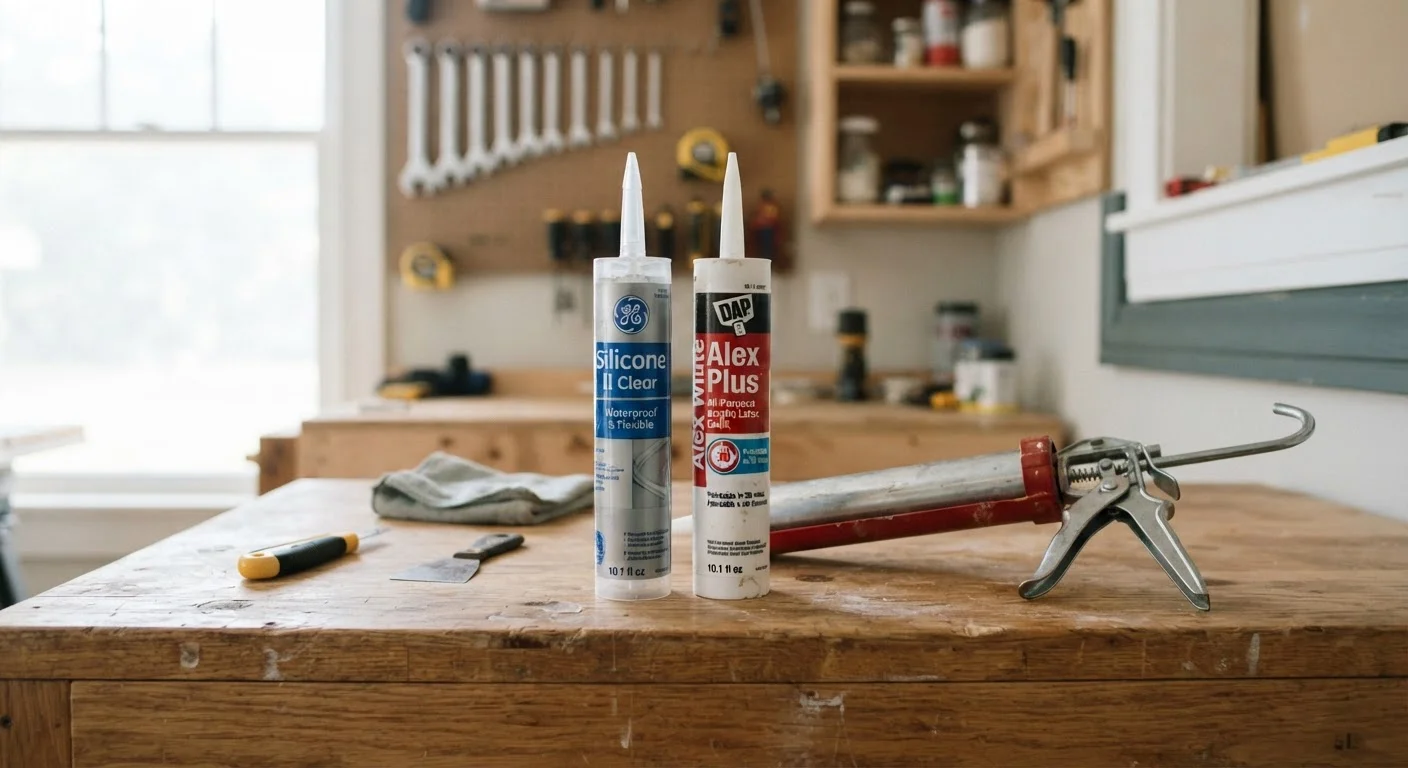
Option A
Silicone Caulk
The waterproof, flexible workhorse for wet and outdoor zones.
Best for: Best for areas with constant moisture exposure, temperature swings, or movement — like bathtubs, showers, and exterior gaps.
Option B
Latex Caulk
The paintable, easy-to-work-with choice for interior finishing.
Best for: Best for interior trim, baseboards, and wall gaps where a smooth, paintable finish matters more than waterproofing.
What Makes These Two Caulk Types Fundamentally Different
Caulk is a general term for flexible sealant used to fill gaps, prevent drafts, and block moisture. But silicone and latex (also called acrylic latex or painter's caulk) achieve those goals through very different chemistries — and that's what determines where each belongs.
Silicone caulk is made from a silicone polymer base. Once cured, it stays permanently flexible, resists water entirely, and bonds well to non-porous surfaces like glass, ceramic tile, and metal. It handles temperature extremes without breaking down, which is why it's the default choice for bathrooms and exterior applications.
Latex caulk is water-based and made primarily from acrylic or vinyl compounds. It's more rigid once cured, but it sands, paints, and cleans up with plain water — properties that make it far friendlier for interior finish work. It's also generally less expensive and more forgiving for first-time users.
The key tradeoff: silicone lasts longer in tough conditions but is harder to work with and can't be painted. Latex is easier to use and finish, but degrades faster in wet or high-movement areas.
| Criterion | Silicone Caulk | Latex Caulk |
|---|---|---|
| Water resistance | Excellent — fully waterproof | Moderate — not for wet zones |
| Flexibility after curing | Permanently flexible | Rigid; prone to cracking under movement |
| Paintability | Cannot be painted over reliably | Fully paintable once cured |
| Ease of application | Requires more skill; short open time | Beginner-friendly; long open time |
| Cleanup | Mineral spirits before cure | Water cleanup before cure |
| Typical durability | 20+ years in proper conditions | 5–10 years in low-stress areas |
| Best environment | Wet, outdoor, high-movement joints | Dry interior finish work |
| General cost | Moderately higher per tube | Generally lower per tube |
Where Each Caulk Performs Best — and Where It Fails
Matching the caulk to the location isn't just about following directions — it directly affects how long your seal holds. Applying latex caulk around a bathtub, for example, is one of the most common reasons homeowners end up with cracking and mildew within a year. The constant moisture softens the latex bond, and the natural flex of a fiberglass tub causes it to peel away from the edges.
Use Silicone Caulk For:
- Bathtub and shower surrounds
- Kitchen sink edges (especially under-mount sinks)
- Exterior window and door frames
- Gaps between dissimilar materials (e.g., tile meeting drywall)
- Any joint that regularly flexes or shifts
Use Latex Caulk For:
- Interior baseboards and crown molding
- Gaps between drywall and window casings
- Nail holes and small wall imperfections
- Any surface that will be painted as part of a finish coat
If your caulk is already cracking, the cause is often a mismatch between product and location. See our guide to why caulk cracks for a deeper look at failure causes and fixes.
Application Tips and Common Mistakes to Avoid
Even the right caulk will fail if applied incorrectly. Here are the practical fundamentals that make a real difference:
Surface Preparation
Both caulk types require a clean, dry surface. Remove all old caulk completely before applying new sealant — layering new over old is a shortcut that leads to early failure. A caulk removal tool or utility knife, followed by rubbing alcohol on the surface, gives you the best bonding conditions.
Working with Silicone
Silicone has a shorter working window once applied — typically 5 to 10 minutes before it begins to skin over. Keep a damp fingertip or caulk smoothing tool ready to tool the joint immediately after applying. Mineral spirits (not water) are needed for cleanup before curing. Once cured, silicone cannot be effectively painted over, so color-match carefully at purchase.
Working with Latex
Latex is far more forgiving. You can smooth it with a wet finger, clean up mistakes with a damp cloth, and take your time working along a joint. Allow full cure time (typically 24 hours) before painting, even if it feels dry to the touch sooner.
Avoid this common mistake: Don't apply either caulk over a damp or freshly cleaned surface. Both need dry conditions to bond properly, or adhesion will fail within weeks.
Hybrid Caulks: A Middle-Ground Option
Some manufacturers offer siliconized latex or latex-silicone hybrid caulks, which blend properties of both types. These are paintable like latex but offer somewhat better moisture resistance than standard acrylic caulk. They can be a practical compromise for semi-wet areas like around a bathroom vanity (not the shower itself) or for an exterior painted surface where paintability is required. Read product labels carefully — hybrids still can't fully replace true silicone in high-moisture or fully submerged joint applications.
The content provided on our blog site traverses numerous categories, offering readers valuable and practical information. Readers can use the editorial team’s research and data to gain more insights into their topics of interest. However, they are requested not to treat the articles as conclusive. The website team cannot be held responsible for differences in data or inaccuracies found across other platforms. Please also note that the site might also miss out on various schemes and offers available that the readers may find more beneficial than the ones we cover.