

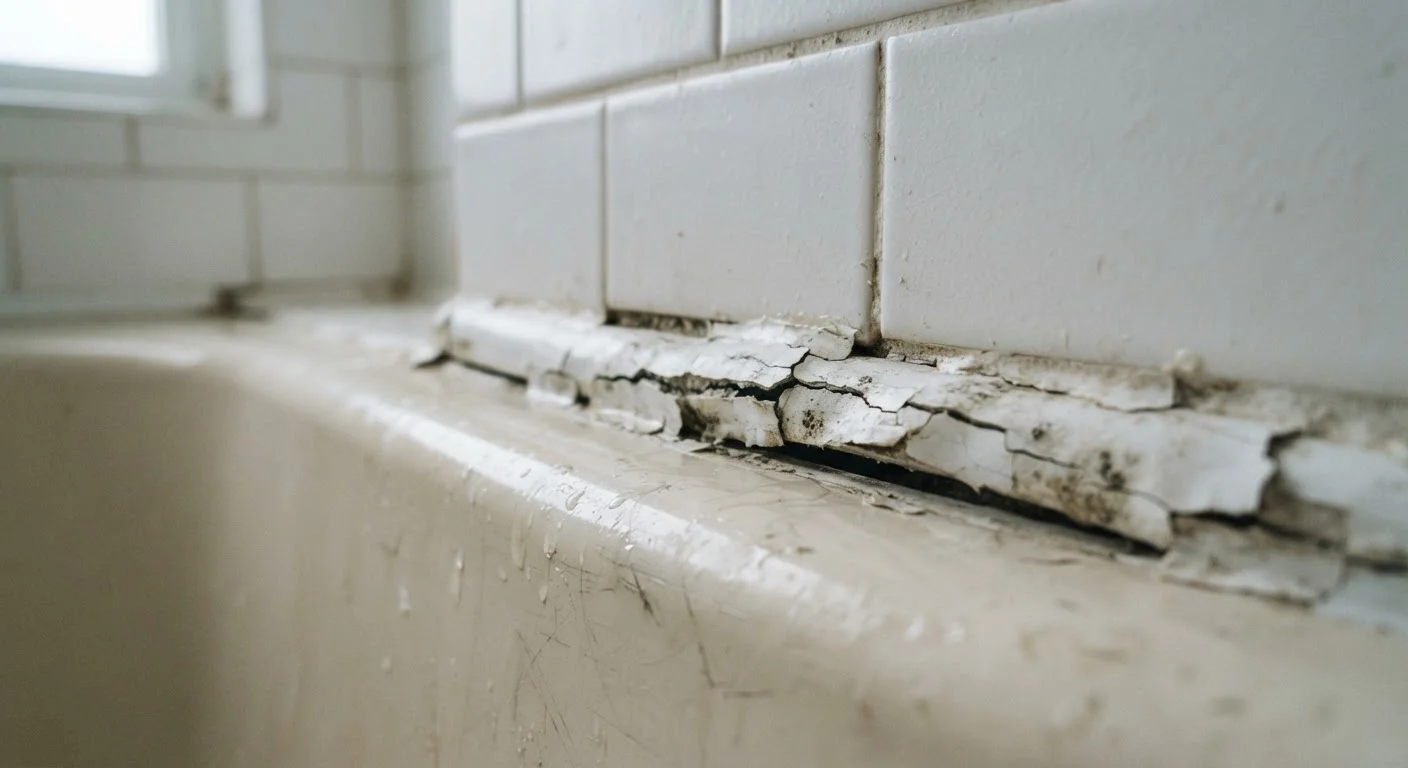
Why Caulk Keeps Letting You Down
Recaulking a tub surround or window frame feels like a simple Saturday fix — until the new bead starts cracking within weeks. This cycle of reapplication is frustrating, but it's almost always caused by a handful of repeatable, avoidable mistakes rather than bad luck or a defective product.
Understanding why caulk fails is the first step to making a seal that actually lasts. Whether you're dealing with a leaky bathroom, drafty window frame, or a gap around a kitchen backsplash, the same core principles apply. For a broader look at keeping cold air out of your home, see our guide to draught-proofing your home using low-cost materials.
Below are the most common caulking mistakes, why they happen, and exactly what to do differently.
Applying new caulk directly over old, cracked caulk without removing the existing material.
Why it happens: Removing old caulk is tedious, and the new bead looks fine at first — so it's tempting to skip straight to the fresh application.
Using the wrong caulk formulation for the surface or environment.
Why it happens: Caulk packaging can look similar across product types, and most people assume any caulk will work anywhere in the home.
Caulking over a damp or freshly cleaned surface.
Why it happens: Impatience after cleaning the joint is common — the surface looks ready, even if invisible moisture remains in porous materials like grout or drywall.
Overfilling or underfilling the joint, creating a bead that's too thick or too thin.
Why it happens: There's a natural tendency to push out extra caulk to "make sure it seals," or to apply a skimpy bead to stretch the tube further.
Disturbing or stressing the caulk before it has fully cured.
Why it happens: Many products skin over within 30 minutes, which looks and feels dry — but the internal cure is far from complete.
Getting Your Next Caulk Job Right
Most failed caulk jobs come down to rushing — skipping prep, ignoring product labels, or applying in less-than-ideal conditions. Slowing down and following a methodical approach pays off in seals that hold for years rather than weeks.
20%
Home heat loss through gaps and cracks
The U.S. Department of Energy estimates that air leaks through gaps, cracks, and openings can account for around 20% of heating and cooling losses in a typical home.
2–5 years
Average lifespan of poorly applied caulk
Industry guidance from sealant manufacturers generally suggests that improperly applied or mismatched caulk in wet areas can begin failing within two to five years, compared to ten or more for correctly applied product.
Start by completely removing all old caulk using a plastic scraper or dedicated caulk remover tool. Clean the joint thoroughly with isopropyl alcohol and allow it to dry for at least 24 hours. If you're working near a shower or tub, make sure the bathroom is unoccupied and ventilated to let humidity drop before you begin.
Choosing the right product matters just as much as application technique. Silicone caulk excels in wet, high-movement areas like tubs and sinks, while acrylic latex caulk is better suited for interior trim and window frames you plan to paint. Our silicone vs. latex caulk comparison breaks down which product fits each job. And if you're sealing gaps around doors and windows specifically, pairing fresh caulk with weatherstripping creates a more complete, durable barrier.
Apply caulk in one smooth, continuous pass at a consistent angle — typically 45 degrees. Wet your fingertip or use a caulk-smoothing tool to press and shape the bead before it skins over. Then leave it alone: resist the urge to test or use the area before the caulk has fully cured, which can take 24–72 hours depending on the product and ambient humidity.
This article is for general informational purposes. For structural, electrical, or gas-adjacent repairs, always consult a licensed professional and verify local permit requirements before beginning work.
The content provided on our blog site traverses numerous categories, offering readers valuable and practical information. Readers can use the editorial team’s research and data to gain more insights into their topics of interest. However, they are requested not to treat the articles as conclusive. The website team cannot be held responsible for differences in data or inaccuracies found across other platforms. Please also note that the site might also miss out on various schemes and offers available that the readers may find more beneficial than the ones we cover.