

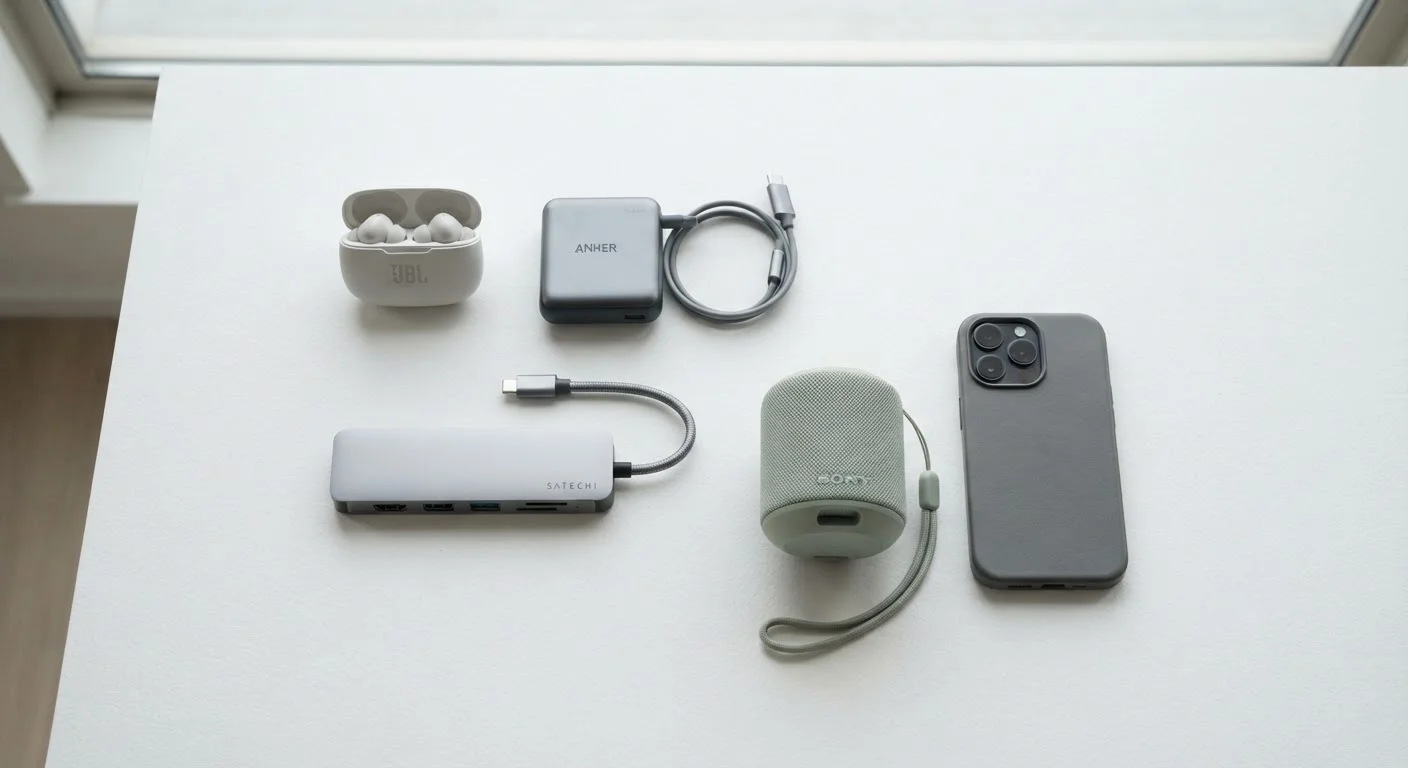
Why the Sub-£50 Category Is Especially Tricky
The under-£50 gadget shelf — whether physical or digital — is one of the noisiest corners of retail. Thousands of products compete for attention, many with near-identical specs sheets, near-identical packaging, and near-identical marketing copy. For a budget-conscious buyer, more choice does not equal better outcomes; it usually means more confusion and more risk of a wasted purchase.
The core problem is that price compression in this bracket is fierce. Manufacturers cut corners somewhere — it might be build materials, battery quality, firmware support, or after-sales service. The challenge is working out where the cuts were made before the item arrives at your door. A gadget that looks functional in a product photo can feel flimsy in your hand within a week.
This is also the bracket where marketing language is most detached from reality. Words like "pro-grade," "premium," and "studio quality" appear on products that cost less than a restaurant meal. Treating those claims as noise — rather than signal — is the first mental shift a savvy buyer needs to make. For a broader look at how cheap purchases can quietly cost more over time, see our guide to the sunk-cost trap in budget tech.
The Four-Question Evaluation Framework
Rather than evaluating every product from scratch, applying a repeatable framework saves time and reduces decision fatigue. Before any sub-£50 gadget gets a serious look, run it through these four questions:
- Does it solve a specific, real problem I have right now? Vague utility — "it might come in handy" — is not a justification. Name the exact task.
- Is the core function the primary use case, or is this a novelty? Gadgets built around a single, well-defined function (charging, audio output, connectivity) tend to outperform multi-feature hybrids at this price point.
- Does it need to work with other devices I own? Compatibility failures are common and expensive. Check the exact connector type, operating system requirements, and any app dependencies before committing.
- What happens when it breaks? Warranty terms, return windows, and availability of replacement parts are often worse in this bracket. Know the exit route before you enter.
These questions are deliberately blunt. They are designed to expose weak justifications quickly. For a more detailed pre-purchase process, the pre-purchase checklist for budget tech covers warranty terms, return policies, and compatibility in depth.
Before buying any app-dependent gadget, search the app store for the companion app and check when it was last updated. An app that hasn't been touched in over a year is a strong signal that the manufacturer has moved on.
Software abandonment is one of the most common ways budget smart gadgets lose functionality — and it's almost never disclosed in product listings.
Search the product name plus 'six months later' or 'long term review' in a search engine. Short-term reviewers rarely encounter the battery degradation or firmware issues that surface after regular use.
Initial reviews capture first impressions; longevity problems in budget hardware typically appear between three and twelve months of regular use.
Reading Reviews Without Getting Misled
Review scores on budget gadgets are among the least reliable signals in e-commerce. Incentivised reviews, review gating (only prompting happy customers to leave feedback), and fake accounts all skew averages upward. A 4.4-star rating on 2,000 reviews tells you far less than you might think.
More useful signals to look for:
- One- and two-star reviews: Read these first. Look for patterns — repeated mentions of the same failure (battery dies within a month, connection drops, app stops working) are meaningful. One angry outlier is not.
- Review recency: A product that earned strong reviews two years ago may have since had firmware updates abandoned or a component supplier changed. Filter for reviews from the past three to six months.
- Verified purchase labels: On major platforms, these at least confirm a transaction occurred, though they don't guarantee honesty.
- Photo and video reviews: These require more effort from the reviewer and are harder to fake. They often reveal build quality details that written reviews miss.
Independent tech forums and enthusiast communities — subreddits, Discord servers focused on specific categories — frequently provide more candid assessments than any retail platform. A five-minute search there before buying is rarely wasted.
Longevity and the Real Cost of Cheap
A £20 item that lasts eight months costs more annually than a £45 item that lasts three years. This is straightforward arithmetic, but it is easy to ignore at the moment of purchase when the upfront saving feels tangible and the future replacement feels abstract.
Two longevity factors are particularly relevant in the sub-£50 bracket:
- Battery degradation: Products with non-replaceable batteries — wireless earbuds, portable speakers, small wearables — have a functional lifespan tied directly to battery health. In cheaper units, cell quality is often lower, meaning noticeable capacity loss can occur within 12 to 18 months of regular use.
- Software and firmware abandonment: Smart gadgets that depend on a companion app are only as durable as the app's maintenance. At the lower end of the market, manufacturers may discontinue app support within a year or two of a product's release, rendering the device partially or fully non-functional.
Neither of these factors shows up in a spec sheet. They require looking at the manufacturer's track record — how long have previous products received updates? — and reading longer-term reviews from users who have owned the product for a year or more. For context on how this plays out in smart home devices specifically, our smart home on a shoestring guide is worth reviewing.
Categories That Tend to Deliver Value
Not all gadget categories behave the same way at low price points. Some have benefitted from years of commoditisation — the technology is mature, component costs have fallen, and even budget manufacturers can produce a reliably functional product. Others remain genuinely hard to execute well at this price.
Categories where sub-£50 often works:
- USB hubs and docking accessories (passive components, few failure points)
- Basic wired audio (headphones, earphones — no battery, no firmware)
- Cable management and organisation tools
- Portable power banks from established segments (though capacity claims need scrutiny)
- Basic smart plugs and timers, particularly those using widely-supported protocols
Categories that tend to underperform at this price:
- Wireless earbuds (audio tuning, codec support, and battery quality all suffer)
- Action or security cameras (sensor quality and compression algorithms matter enormously)
- Smartwatches (health sensor accuracy is hard to achieve cheaply)
- Anything requiring ongoing cloud infrastructure to function
These are general tendencies, not guarantees. Individual products within any category can outperform or underperform their peers. But knowing which categories carry structural risk at this price point helps narrow the field before the evaluation even begins. If you're assessing a specific purchase, the self-assessment questions guide offers a practical starting point.
~60%
Budget gadgets replaced within two years
Consumer research consistently suggests a substantial share of lower-cost electronics are replaced or discarded within 24 months, often due to failure or dissatisfaction rather than obsolescence.
30–40%
Estimated fake or incentivised reviews in some categories
Studies examining online marketplace reviews, including analysis by academic researchers, have estimated that a significant proportion of reviews in competitive product categories are unreliable.
When to Walk Away
The most underused purchasing tool is restraint. Several signals should prompt a pause — or a definitive pass — on a sub-£50 gadget:
- No identifiable manufacturer: If the brand has no website, no customer service contact, and no presence outside the listing page, the after-purchase experience is likely to be non-existent.
- Spec claims that defy physics or engineering norms: Battery capacities, range figures, or audio specifications that sit far outside what comparable products offer at similar price points usually indicate exaggerated or outright false marketing.
- Return windows shorter than 14 days or restocking fees: Consumer rights in the UK provide some protection, but understanding the specific seller's returns policy before purchase avoids friction later.
- App-dependent functionality with no offline mode: If the gadget is non-functional without a connected app that requires account creation, you are also agreeing to an ongoing data relationship and a dependency on that company's continued operation.
Walking away is not a failure. At this price point, the cost of a bad purchase is not just the money — it is the time spent researching, buying, waiting, testing, and potentially returning. That time has real value, and preserving it is part of the budget calculation. For broader strategies on managing tech spending, explore the resources collected in our Tech Money Tips hub.
This article is for general informational and educational purposes only. It does not constitute financial advice, and individual circumstances will vary. Always verify product specifications, warranty terms, and consumer rights directly with the seller or manufacturer before making a purchase.
The content provided on our blog site traverses numerous categories, offering readers valuable and practical information. Readers can use the editorial team’s research and data to gain more insights into their topics of interest. However, they are requested not to treat the articles as conclusive. The website team cannot be held responsible for differences in data or inaccuracies found across other platforms. Please also note that the site might also miss out on various schemes and offers available that the readers may find more beneficial than the ones we cover.