

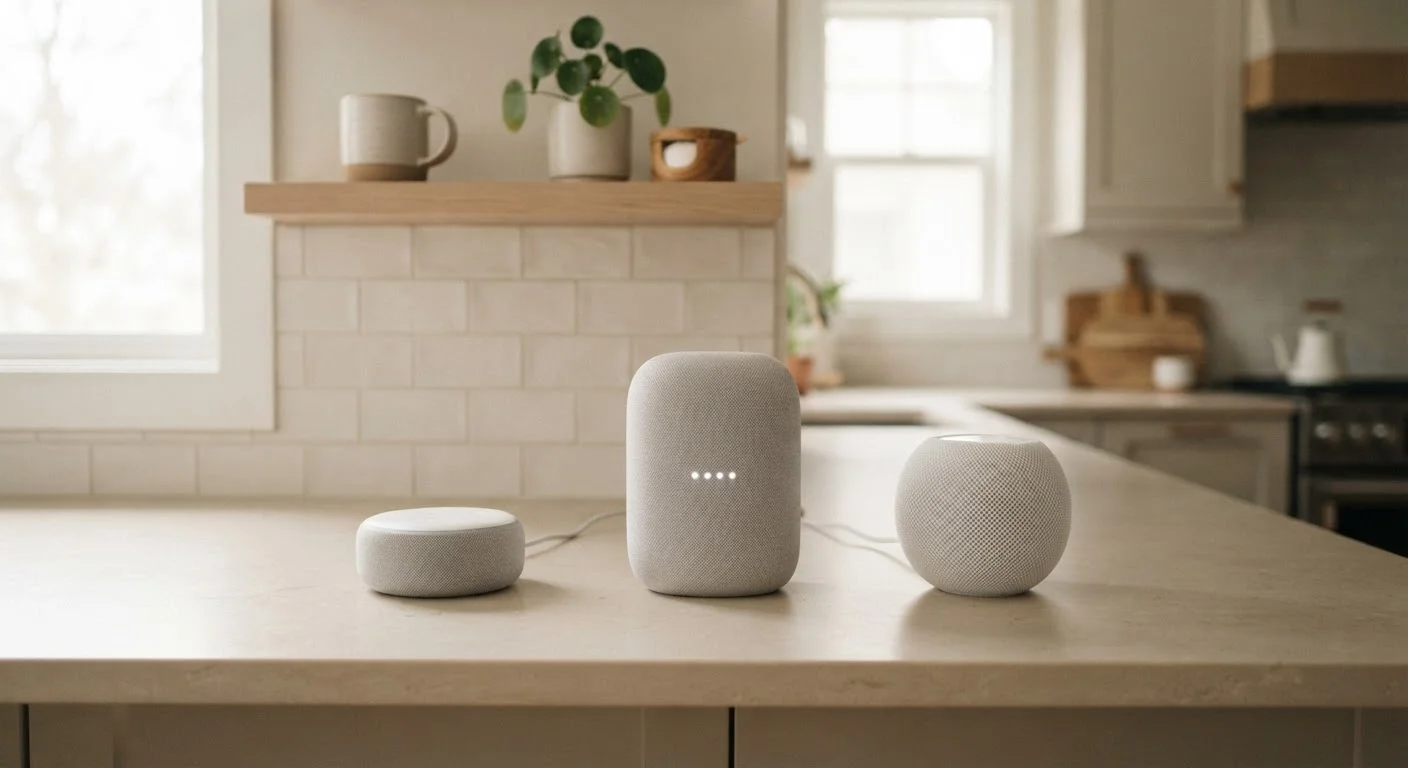
Our Verdict
No single voice assistant is objectively superior — the right choice depends almost entirely on the devices and services you already use. Alexa suits those who want broad device compatibility on a budget. Google Assistant is the strongest fit for people embedded in Google's ecosystem. Siri makes sense only for committed Apple users willing to accept a narrower device library.
| Best for | Recommended |
|---|---|
| Budget-first buyers who want maximum device compatibility | Alexa |
| Heavy users of Google services like Gmail, Maps, or Calendar | Google Assistant |
| iPhone and Mac users who want deep device integration | Siri |
| Those who prioritize natural conversational AI responses | Google Assistant |
Why Your Voice Assistant Choice Is Really an Ecosystem Decision
Picking a voice assistant isn't just about which one answers trivia questions better. It's about committing to a smart home ecosystem — a connected platform that determines which devices, apps, and automations will work together in your home. Lock yourself into the wrong one early and you may face compatibility dead ends or redundant spending later.
If this is your first time exploring smart home tech, it's worth reading a plain-language explainer on smart home basics before diving into platform comparisons. The short version: Alexa (Amazon), Google Assistant (Google), and Siri (Apple) each act as the hub that ties your smart devices together. The assistant you choose shapes every purchase that follows.
Alexa, Google Assistant, and Siri: How They Actually Differ
Each platform has a distinct set of strengths shaped by the company behind it.
Alexa has historically supported the largest catalog of third-party smart home devices. This matters for budget shoppers because compatible devices tend to include more affordable, off-brand options — not just premium hardware. Alexa also has an extensive Skills library (think: add-on voice apps), though quality varies. Its weaknesses include comparatively weaker conversational AI and heavy reliance on Amazon's own services.
Google Assistant stands out for search-based queries and tight integration with Google's services — think reminders, calendar entries, navigation, and real-time information. If your digital life runs through Gmail, Google Calendar, or YouTube, the Assistant handles those tasks more naturally than its competitors. Device compatibility is strong, though not quite as broad as Alexa's.
Siri is Apple's assistant and works most seamlessly on Apple hardware — iPhone, iPad, Mac, HomePod, and Apple TV. Its smart home integration relies on Apple's HomeKit framework, which is among the more privacy-conscious approaches but limits compatible devices to a smaller, typically pricier pool. If you're not primarily an Apple user, Siri's value drops sharply.
| Alexa | Google Assistant | Siri | |
|---|---|---|---|
| Third-party device support | Very broad | Broad | Limited (HomeKit only) |
| Best ecosystem fit | Amazon / neutral | Google services users | Apple device users |
| Conversational AI quality | Moderate | Strong | Moderate |
| On-device processing (privacy) | Limited | Partial | More extensive |
| Budget device availability | Wide range | Moderate range | Narrow, pricier |
| Works without brand's phone | Yes | Yes | Limited |
Privacy: What You Should Actually Know
All three platforms collect voice data to varying degrees. None should be assumed fully private. Amazon, Google, and Apple have each faced scrutiny over how voice recordings are stored and reviewed. Apple's approach is generally considered more privacy-forward — Siri processes more requests on-device — but no platform is immune to the trade-offs that come with always-on microphones.
Before setting up any smart speaker, it's worth reviewing the common misconceptions about smart home privacy. Understanding what's actually happening with your data helps you make informed adjustments to settings rather than relying on assumptions.
Making the Right Call Before You Spend
The most common mistake first-time buyers make is purchasing a smart speaker based on price alone, without considering what else they'll need to buy for it to be useful. A $30 smart speaker is a poor deal if it forces you into a $200 ecosystem of proprietary devices.
Before committing to any platform, work through a smart device compatibility checklist that covers connectivity, compatibility, and ongoing costs. And if you're building a setup on a limited budget, understanding which entry-level devices integrate reliably can save you from costly do-overs.
The decision framework is straightforward: start with the devices and services you already use, then choose the assistant that fits around them — not the other way around.
The content provided on our blog site traverses numerous categories, offering readers valuable and practical information. Readers can use the editorial team’s research and data to gain more insights into their topics of interest. However, they are requested not to treat the articles as conclusive. The website team cannot be held responsible for differences in data or inaccuracies found across other platforms. Please also note that the site might also miss out on various schemes and offers available that the readers may find more beneficial than the ones we cover.