

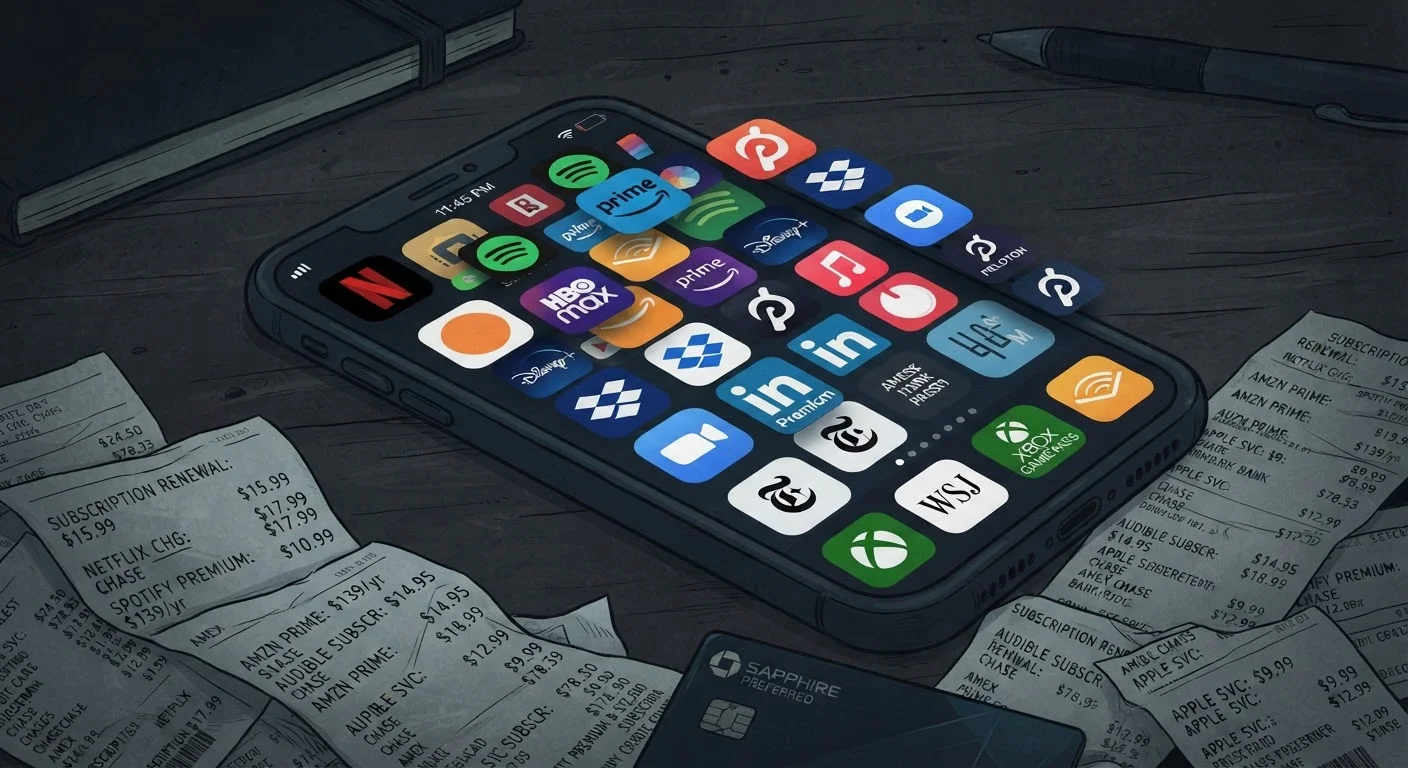
How Subscription Creep Takes Hold
No one decides to waste money on subscriptions. The process is far more subtle than that. A free trial converts to a paid plan when you forget to cancel. A streaming service raises its price by $2, and you barely notice. You upgrade a cloud storage tier after your phone warns you're running out of space, then never think about it again. Each decision feels small and reasonable in the moment — and that's exactly why subscription creep is so effective at draining budgets.
The structure of modern subscription billing is designed to minimize friction at signup while making cancellation feel like an afterthought. Auto-renewal is the default. Free trials require credit card details upfront. Annual plans are pitched as savings even when you might stop using the service in three months. The result: most people are paying for more than they realize.
Subscription creep also benefits from the small-amount illusion — the cognitive tendency to treat a $9.99 charge as negligible. But ten $9.99 charges equal nearly $1,200 a year. That framing shift matters when you're trying to protect a tight budget.
Set a Calendar Reminder to Review Subscriptions
Pick one day each quarter — the first of January, April, July, and October works well — and block 30 minutes to scan your bank statements for recurring charges. Treat it like a utility bill check-in. Catching even one forgotten subscription per review can save $50–$150 a year without any sacrifice in the services you actually value.
The Mechanics Behind the Buildup
Three specific patterns drive most subscription creep in tech spending:
- Trial-to-paid conversion: Services offer 7- or 30-day free trials, betting that inertia will prevent cancellation. If you sign up for multiple trials during a busy month, it's easy to lose track.
- Plan upgrades: Many apps nudge you toward higher tiers with in-app prompts, usage warnings, or artificial limits on free features. As our article on paying for features you never use explains, most people use only a fraction of what they're paying for.
- Device transitions: Switching phones or laptops can trigger duplicate purchases or new subscriptions for tools you already own. Rolling over to a new device without a plan often means paying twice for the same software.
Tech subscriptions aren't the only culprit — household services follow the same pattern. If you recognize this dynamic in your home bills too, our piece on recurring household subscription costs covers that ground directly.
$219/mo
Average estimated US household subscription spend
A 2022 survey by C+R Research found US consumers estimated spending $86/month on subscriptions, but their actual average was $219 — more than double their self-estimate.
2.5x
How much people underestimate their subscription costs
The same C+R Research survey found respondents underestimated their total monthly subscription spending by a factor of roughly 2.5 on average.
4 in 10
Subscribers paying for unused services
Multiple consumer finance surveys have found that roughly 40% of subscribers report paying for at least one service they no longer actively use.
Spotting and Stopping It Before It Compounds
The most effective defense against subscription creep is a regular, honest review of every recurring charge. This isn't a one-time fix — it needs to become a habit, ideally every quarter. The process doesn't have to be complicated: pull up your last two months of bank and credit card statements and flag every recurring charge, no matter how small.
Ask one question about each: Did I use this enough in the past 30 days to justify the cost? If the answer is no or uncertain, that's your cancellation candidate. For services you do use, check whether you're on the right tier — downgrading or switching to a free alternative often costs nothing in real utility.
For a structured walkthrough, our subscription audit guide covers the full process, and the end-to-end tech cost playbook goes further into building long-term spending habits that prevent creep from returning.
This article is for general informational purposes only and does not constitute personalized financial advice. For guidance specific to your financial situation, consult a qualified financial adviser.
Frequently Asked Questions
Subscription creep is the slow buildup of recurring charges across apps, platforms, and services. It happens because subscriptions are easy to start, auto-renew by default, and feel small individually — making them easy to overlook until they collectively become a real budget problem.
Research consistently shows that consumers significantly underestimate how much they spend on subscriptions each month — often by $100 or more. The gap exists because many charges are small, infrequent (annual), or billed to cards people don't actively monitor.
Start by scanning your bank and credit card statements for recurring charges. Check your email for subscription confirmation messages and look in your phone's app store account settings, which often list active billing. Our <a href="/tech-on-a-budget/tech-money-tips/auditing-your-subscriptions-a-step-by-step-spending-review">step-by-step subscription audit guide</a> walks through the full process.
Annual plans often offer a discount, but they can also lock you into services you stop using. Before committing, calculate the true cost difference and honestly assess how often you use the service. See our breakdown of <a href="/tech-on-a-budget/tech-money-tips/annual-vs-monthly-billing-the-real-cost-difference-over-time">annual vs. monthly billing</a> for a practical comparison.
Cloud storage upgrades, antivirus software, music streaming, password managers, VPN services, and productivity app tiers are frequently forgotten. Annual plans are especially easy to lose track of because you only see the charge once a year.
Yes. Even $50–$100 per month in unnecessary subscriptions adds up to $600–$1,200 per year — money that could go toward savings, debt repayment, or other goals. This article is for general informational purposes and is not personalized financial advice; consider speaking with a financial adviser about your specific situation.
The content provided on our blog site traverses numerous categories, offering readers valuable and practical information. Readers can use the editorial team’s research and data to gain more insights into their topics of interest. However, they are requested not to treat the articles as conclusive. The website team cannot be held responsible for differences in data or inaccuracies found across other platforms. Please also note that the site might also miss out on various schemes and offers available that the readers may find more beneficial than the ones we cover.