

Our Verdict
Shared dorms deliver genuine savings and social opportunity that private rooms and hotels simply can't match at the same price point. The trade-offs — broken sleep, limited privacy, shared bathrooms — are real and shouldn't be minimized. Whether the math works in your favor depends almost entirely on how lightly you sleep and how long you plan to stay.
Ideal for solo travelers on short trips who prioritize budget and social connection over privacy and uninterrupted rest.
What You're Actually Paying For
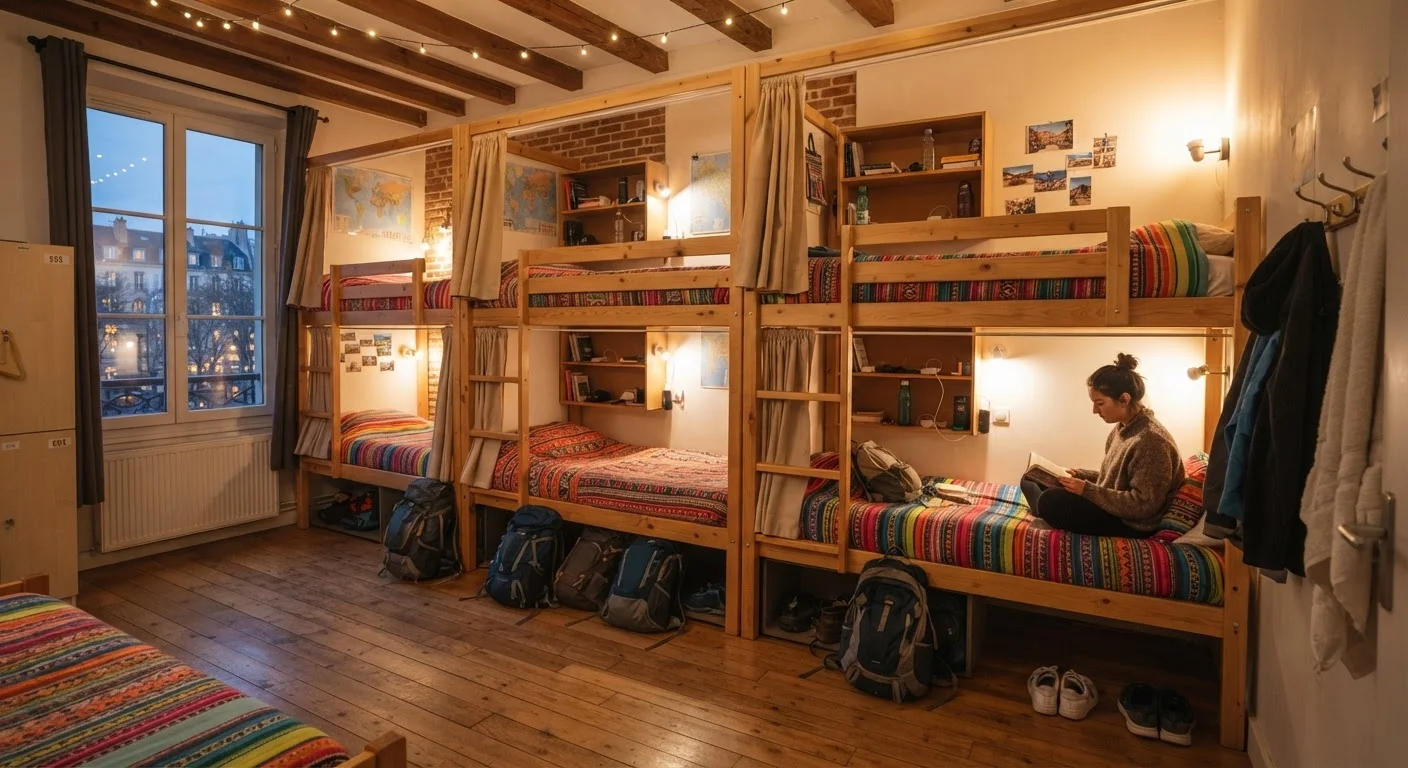
A shared dorm bed is, at its core, a cost-splitting arrangement. You share a room — typically with 4 to 12 strangers — and in exchange pay a fraction of what a private room in the same building would run. In many popular destinations, the price difference between a dorm bed and the cheapest private room in the same hostel can be 50–70%, which adds up fast on a multi-week trip.
But the cheaper rate doesn't just buy you a mattress. Most hostels bundle in amenities that solo hotel stays don't include at comparable prices: communal kitchens that let you avoid eating out every meal, common areas that double as informal co-working spaces, and built-in social infrastructure that can be genuinely useful when you're traveling alone. For a fuller comparison of how dorms stack up against other budget lodging types, see how hostels compare to guesthouses and vacation rentals.
The Real Advantages
Dramatically lower nightly cost than private rooms
In many cities, dorm beds run 40–70% less than the cheapest private room in the same property. For a two-week trip, that gap can represent several hundred dollars redirected toward experiences, food, or transportation.
Built-in social connection for solo travelers
Dorms create natural opportunities to meet other travelers without effort. Many solo travelers cite this as the single biggest advantage over cheaper but isolated alternatives like budget motels.
Communal amenities often included in the rate
Hostel dorm rates typically include kitchen access, Wi-Fi, common areas, and sometimes breakfast — amenities that eliminate separate daily expenses and add tangible value beyond just the bed.
Useful local knowledge from fellow guests
Travelers who have just arrived from your next destination or who have been in the city longer often share practical, current information that guidebooks and apps don't capture.
Flexibility with short booking windows
Dorm beds are more widely available last-minute than private rooms or rental properties, giving travelers with loose itineraries more flexibility without a significant price penalty.
The social dimension of dorm stays is worth taking seriously, not just as a feel-good perk. Travelers in dorms consistently report meeting people who share itinerary tips, split cab fares, or become actual travel companions. That informal network has practical value — local restaurant recommendations, transportation hacks, and safety check-ins that no travel app replicates.
The Real Disadvantages
Sleep disruption is a near-constant risk
Late arrivals, snoring, early departures, and phone alarms set by inconsiderate roommates are among the most reported problems. Even one disruptive night can affect the following day's plans significantly.
Minimal privacy at any point
Dressing, storing medications, making phone calls, or simply having quiet time requires either timing around others or using shared bathrooms and common areas, which isn't always possible.
Shared bathroom bottlenecks during peak times
Most dorm rooms share bathrooms with other rooms, and morning rush periods — particularly before 9 a.m. — can involve real wait times that complicate early-departure logistics.
Security requires active management
Valuables left unattended in shared sleeping spaces are a theft risk. While most hostels provide lockers, you typically need your own padlock, and electronics or passports require constant attention.
Poor fit for longer stays or recovery travel
The absence of personal space makes dorms mentally taxing over multiple days. Travelers recovering from illness or navigating stressful trips often find the lack of a private retreat more costly than the room savings.
Sleep disruption is the most commonly cited problem with dorm stays, and it's worth being honest about. A single late-arriving roommate or a loud snorer can wreck a night's rest — and unlike a noisy hotel room, you have no recourse beyond earplugs. If you're a light sleeper or have an early morning commitment, this isn't a minor inconvenience. For strategies on protecting sleep quality while keeping costs low, sleeping cheap without sleeping badly covers practical tactics that work in shared settings.
How to Reduce the Downsides
Most of the friction points in dorm stays are manageable with small adjustments. Booking a smaller dorm — 4 to 6 beds rather than 10 or 12 — meaningfully reduces the odds of disruption. Requesting a lower bunk if you wake easily reduces the risk of being jolted awake when a top-bunk neighbor climbs in at 2 a.m.
Security anxiety is often cited as a deterrent, but it's largely addressable. Bringing your own padlock covers most hostel lockers, and a lightweight dry bag or packing cube under your pillow handles small valuables overnight. Most incidents in hostels involve opportunistic theft of unattended items, not confrontation.
When the Dorm Math Stops Working
A dorm bed's cost advantage narrows when you factor in compounding sleep loss, the daily effort of securing belongings, and the absence of space to decompress. For stays longer than five or six nights in one place, it's worth running the numbers on a private room or guesthouse. A modest extra spend per night may cost less overall than the productivity and wellbeing hit of accumulated disrupted rest.
If dorm dynamics feel like too much but a private room blows your budget, there's a useful middle ground worth exploring. Comparing private rooms to shared dorms lays out the cost-comfort spectrum clearly, including when the upgrade is actually worth paying for. Alternatively, lesser-known lodging alternatives — from monastery stays to work exchanges — can offer private sleeping arrangements at near-dorm prices.
Who Should Think Twice
Dorm stays work poorly for a predictable set of travelers: those with early morning flights or meetings requiring reliable rest, anyone with medical needs that require nighttime privacy, and travelers staying in one location for more than a week, where the cumulative fatigue of disrupted sleep compounds. Parents traveling with children and couples should also weigh the dynamic carefully — most dorms aren't designed for groups staying together, and the social architecture skews toward solo travelers.
For longer-term stays, the cost-per-night savings of a dorm bed may be offset by reduced productivity, the stress of managing belongings in a shared space daily, and the absence of any space to decompress privately. At that point, home-sharing and couchsurfing arrangements may actually deliver better value despite their own trade-offs.
This article provides general travel information for educational purposes. Prices, availability, and conditions vary by location and change over time. Always verify current lodging policies, safety measures, and entry requirements with official sources before booking.
The content provided on our blog site traverses numerous categories, offering readers valuable and practical information. Readers can use the editorial team’s research and data to gain more insights into their topics of interest. However, they are requested not to treat the articles as conclusive. The website team cannot be held responsible for differences in data or inaccuracies found across other platforms. Please also note that the site might also miss out on various schemes and offers available that the readers may find more beneficial than the ones we cover.