

Our Verdict
Bolivia edges ahead for pure budget travel, with lower daily costs across nearly every category and a genuinely off-the-beaten-path feel. Peru offers more tourism infrastructure and a wider range of experiences, but that convenience comes at a cost. Neither destination is inherently superior — your priorities, comfort threshold, and itinerary flexibility will determine which fits better.
| Best for | Recommended |
|---|---|
| Travellers prioritizing the lowest possible daily spend | Bolivia |
| First-time South America visitors who want smoother logistics | Peru |
| Those drawn to iconic archaeological sites like Machu Picchu | Peru |
| Adventure travellers seeking dramatic, less-touristed landscapes | Bolivia |
Daily Costs: What Your Dollar Actually Buys
Bolivia consistently ranks among the most affordable countries in South America for US travellers. Budget hostel dorms in La Paz and Sucre typically run $8–$14 per night, and a filling set lunch (almuerzo) at a local restaurant costs roughly $2–$4. Intercity buses are cheap and extensive, with overnight routes often running under $15.
Peru is more expensive, though still well below Western travel costs. Hostel dorms in Cusco or Lima range from $12–$20, and tourist-area meals average $5–$10. The meaningful price gap shows up in entry fees: Machu Picchu now costs $45–$60 depending on the circuit, and the Inca Trail requires a guided permit that can run $500 or more. These are fixed costs you cannot easily route around.
A realistic daily budget for Bolivia is $30–$45 covering accommodation, food, and local transport. In Peru, budget for $45–$65 per day, rising sharply if major sites are on the list. If maximizing what your dollar buys matters most, other affordable regions offer similar purchasing power dynamics worth understanding.
| Bolivia | Peru | |
|---|---|---|
| Average hostel dorm rate | $8–$14/night | $12–$20/night |
| Budget daily food cost | $5–$10 | $10–$18 |
| Realistic daily budget | $30–$45 | $45–$65+ |
| Major site entry fees | Low to moderate | High (Machu Picchu $45–$60+) |
| Tourism infrastructure | Developing, functional | Well-developed tourist circuit |
| English widely spoken | Limited outside cities | Common in tourist areas |
| Crowd levels at top sites | Lower, less commercialised | High at peak season |
| Altitude considerations | Significant (La Paz, Uyuni) | Significant (Cusco, Titicaca) |
Infrastructure, Safety, and Getting Around
Peru's tourism infrastructure is considerably more developed. Cusco has a well-worn backpacker circuit, reliable airport connections, and a strong network of hostels, tour operators, and English-speaking services. This lowers the friction of independent travel, which has real value for first-timers navigating a new continent.
Bolivia is less polished. Road conditions outside major cities can be rough, border crossings require patience, and English is less common in smaller towns. That said, the Bolivian tourist trail — La Paz, Uyuni, Sucre, Potosí — is well-established and manageable for travellers with some independent travel experience.
Altitude is a factor in both countries. Cusco sits at about 11,150 feet; La Paz at over 11,900 feet; Lake Titicaca straddles both nations above 12,500 feet. Building in acclimatization time is not optional — it affects both your health and your itinerary pacing.
For either destination, verify visa, vaccination, and insurance requirements well before departure. Requirements change, and official government sources are the only reliable reference.
Experiences: Overlap and What Sets Each Apart
Both countries deliver ancient ruins, indigenous cultures, dramatic highland landscapes, and colonial-era cities. The overlap is genuine — visitors crossing from Copacabana (Bolivia) to Puno (Peru) via Lake Titicaca do so routinely, and a two-week trip combining both is a classic South American circuit.
Peru's signature draws are the Sacred Valley, Machu Picchu, and the colonial grandeur of Cusco. These are legitimately world-class sites, but heavy tourism means higher costs, permit queues, and crowds during peak season (June–August). The Amazon region around Puerto Maldonado offers a less-touristed alternative within Peru.
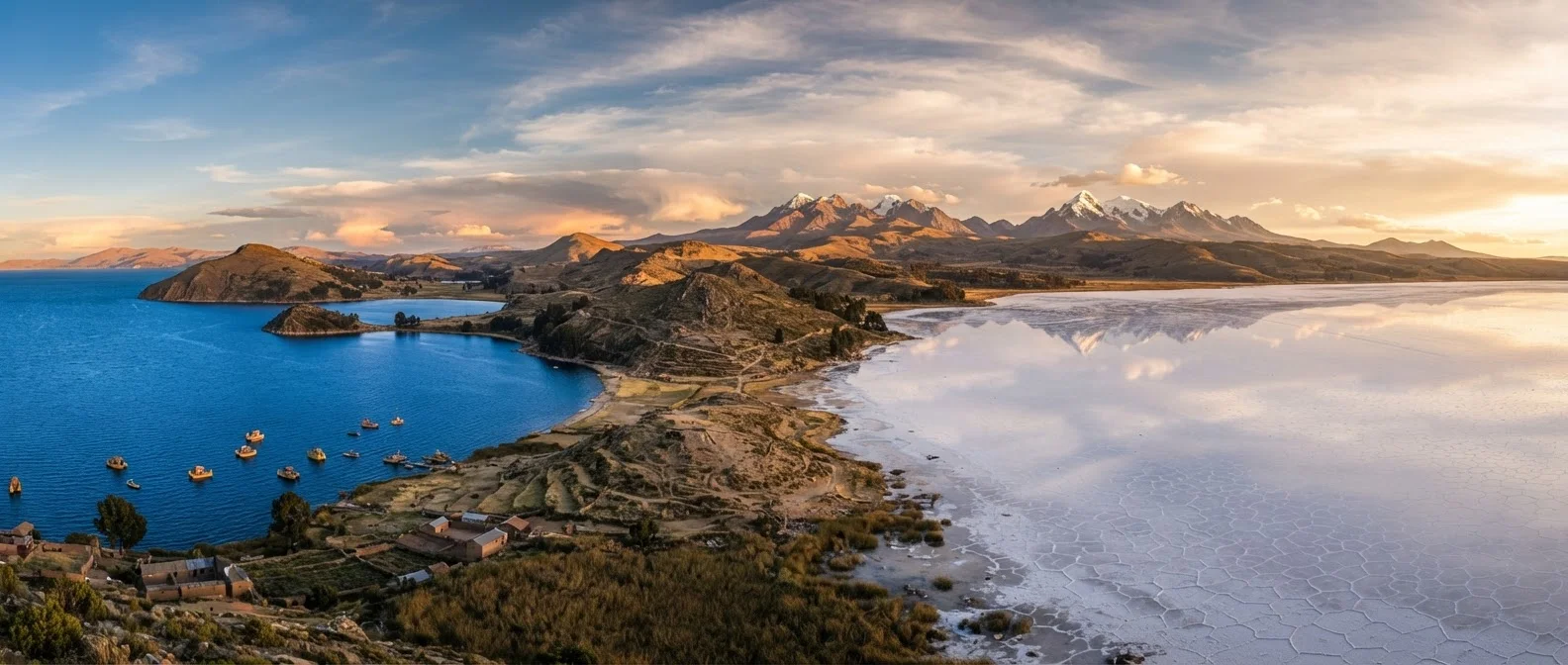
Bolivia's standouts are harder to replicate anywhere else: the Salar de Uyuni (the world's largest salt flat), the surreal landscapes of Eduardo Avaroa Reserve, the witch markets of La Paz, and the well-preserved colonial architecture of Sucre. These experiences draw far fewer visitors than comparable Peruvian sites, which generally means lower prices and a less commodified atmosphere.
How you structure your itinerary also affects what you spend. Slowing down in fewer locations typically reduces daily costs and deepens the experience in either country. And however you travel, spending in ways that support local economies matters in destinations where tourism income is significant.
All prices cited are general estimates based on publicly available traveller data and are subject to change. Verify current conditions and costs before travel through official tourism and government sources.
The content provided on our blog site traverses numerous categories, offering readers valuable and practical information. Readers can use the editorial team’s research and data to gain more insights into their topics of interest. However, they are requested not to treat the articles as conclusive. The website team cannot be held responsible for differences in data or inaccuracies found across other platforms. Please also note that the site might also miss out on various schemes and offers available that the readers may find more beneficial than the ones we cover.