

Start here
Why Georgia Deserves a Spot on Your Radar
Next
Understanding the Cost of Traveling Georgia
Then
Where to Go: Regions Worth Your Time
Plan your route
Getting There and Getting Around
Before you book
Practical Tips Before You Go
Why Georgia Deserves a Spot on Your Radar
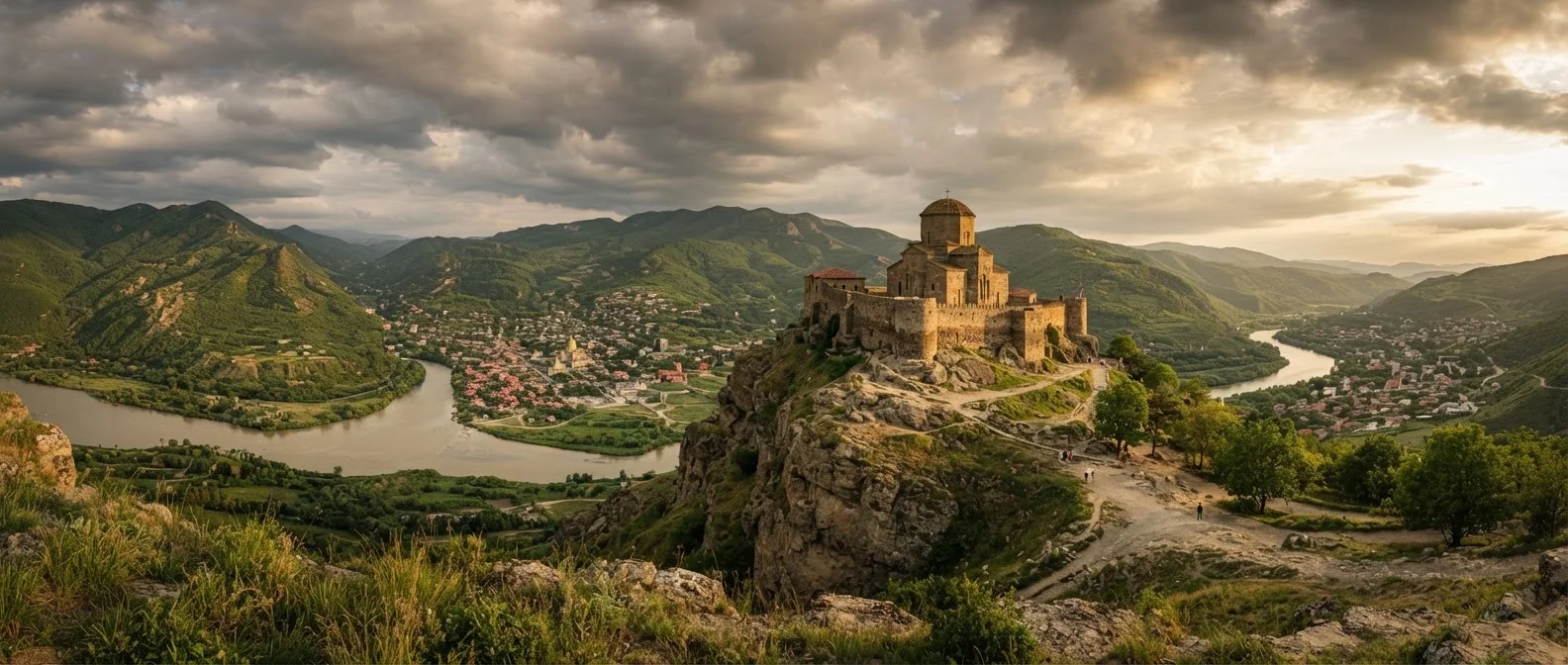
Georgia — the country, not the US state — is one of those rare destinations that delivers outsized experiences relative to what it costs to get there and stay. Tucked between the Greater Caucasus mountains to the north and Turkey to the southwest, it combines 1,500-year-old monasteries, a thriving wine culture dating back 8,000 years, and some of the most dramatic mountain scenery in Europe, all at prices that are genuinely accessible on a tight budget.
While destinations like Thailand and Portugal dominate millennial bucket lists, Georgia remains comparatively undiscovered — which works in your favor. Fewer crowds, more authentic interactions, and lower prices in guesthouses and restaurants follow naturally. For context on how Georgia fits into the wider budget-travel picture, see our comparison of regional budget travel options.
If you've been scanning Europe for affordable alternatives, Georgia punches harder than most. It rewards curious travelers who are willing to step just outside the well-worn path.
Understanding the Cost of Traveling Georgia
Budget travelers can realistically cover accommodation, three meals, local transport, and entry fees for many sites on $35–$55 USD per day, depending on travel style and season. Tbilisi skews slightly higher; rural areas and smaller towns skew lower.
Marshrutka
A shared minibus that operates on fixed routes across Georgia and the wider Caucasus. It's the most common and affordable way for locals and budget travelers to travel between towns.
Khachapuri
Georgia's national bread dish — a boat-shaped or round flatbread filled with melted cheese, sometimes topped with an egg and butter. It's inexpensive and filling.
Khinkali
Georgian dumplings filled with spiced meat and broth, twisted at the top. A staple street and restaurant food, typically eaten by hand.
Lari (GEL)
The official currency of Georgia. Abbreviated GEL, it's the currency used for all transactions in the country.
Qvevri wine
Wine fermented and aged in large clay vessels buried underground, a traditional Georgian method with roots going back thousands of years. Often described as natural or amber wine.
Georgian Military Highway
A historic mountain road connecting Tbilisi to the Russian border via Kazbegi. It's the main route for reaching the high Caucasus mountains and passes through dramatic gorge scenery.
- Accommodation: Hostel dorm beds in Tbilisi run roughly $8–$14/night. Private guesthouse rooms — often family-run, with breakfast included — range from $20–$40/night outside the capital.
- Food: A full sit-down meal at a local restaurant costs $5–$10. Street khachapuri (cheese-filled bread) is rarely more than $2. Self-catering from Tbilisi's covered markets is even cheaper.
- Wine: Georgia is one of the world's oldest wine-producing countries. A bottle of natural Rkatsiteli or Saperavi from a local wine shop can cost $3–$7.
- Entrance fees: Most monasteries and historical sites are free to enter, though donations are welcomed.
These figures are general estimates and will vary based on exchange rates, season, and individual spending habits. Prices change — always cross-check current costs through traveler forums or recent trip reports.
Where to Go: Regions Worth Your Time
Georgia is compact enough to see multiple distinct regions in 10–14 days without feeling rushed.
Tbilisi
The capital is your natural starting point. The Old Town (Dzveli Tbilisi) layers Persian, Russian, and Soviet architecture around winding cobblestone streets. The sulfur baths in Abanotubani, the hilltop Narikala fortress, and the covered Dezerter Bazaar market are all walkable and free or very low cost. Tbilisi's cafe culture is thriving — excellent filter coffee for under $2 is easy to find.
Kazbegi (Stepantsminda)
Four hours north of Tbilisi via the Georgian Military Highway, Kazbegi is where the mountains take over completely. The Gergeti Trinity Church — perched at 2,170 meters with 5,047-meter Mount Kazbek behind it — is the country's most iconic image. Hiking to the church is free and takes about 2–3 hours round-trip from the village. Guesthouses here are basic but inexpensive.
Kakheti Wine Region
East of Tbilisi, Kakheti is Georgia's wine heartland. The towns of Sighnaghi and Telavi make good bases. Many family wineries offer free or low-cost tastings if you visit directly. The landscape — rolling vineyards backed by the Alazani Valley — is striking without a price tag attached.
If you're comparing underrated European destinations, Albania offers a similar value proposition on the Mediterranean side.
Getting There and Getting Around
Most international flights into Georgia land at Tbilisi International Airport (TBS). Routing through Istanbul, Warsaw, or Riga often surfaces lower fares than direct connections from major US hubs — though flight search results vary significantly by date and season. No airline or booking platform is specifically recommended here; compare options using general flight search tools and check a range of routing combinations.
Getting Around Inside Georgia
The marshrutka — a shared minibus — is the backbone of Georgian domestic transport. Routes connect Tbilisi to Kazbegi, Kutaisi, Batumi, and most major towns. Fares are low (often $1–$5 for regional routes) and departures are frequent. They leave when full rather than on a fixed timetable, so build flexibility into your plans.
Negotiate Day-Trip Transport in Advance
For routes not well-served by marshrutkas — such as the back roads of Kakheti or remote monasteries — arranging a shared taxi or driver the night before through your guesthouse is often the most practical option. Agreeing on a price upfront avoids ambiguity. Group up with other travelers at your hostel to split costs further.
Taxis and ride-hailing apps operate in Tbilisi and are affordable by Western standards, but agree on a fare before getting in if using a street taxi. Intercity car hire with a driver can be arranged for day trips to areas with limited marshrutka service — negotiate directly with guesthouses or local drivers for current rates.
Practical Tips Before You Go
A few realities that will save you friction on the ground:
- Language: Georgian script (Mkhedruli) is unique and bears no resemblance to any other alphabet. Download an offline translation app before arriving. English is spoken in tourist areas of Tbilisi; less so in rural regions.
- Cash matters: Carry Lari for markets, marshrutkas, and guesthouses outside the capital. ATMs in Tbilisi are reliable; rural ATMs are sparse.
- Dress codes at religious sites: Shoulders and knees should be covered when visiting churches and monasteries. Many sites loan scarves at the entrance, but bringing your own is more practical.
- Entry requirements and advisories: Always verify current visa rules, border crossing status, and any regional travel advisories with your government's official travel portal and Georgia's official immigration authority before booking. Conditions near certain borders can change without much notice.
- Travel insurance: Given the mountain activities many visitors pursue — hiking at altitude, road travel on mountain passes — having appropriate travel insurance is sensible. What constitutes adequate coverage depends on your plans; consult policy documents carefully.
This article provides general travel information for educational purposes only. Prices, visa rules, safety conditions, and entry requirements change. Verify all critical details with official government sources and qualified advisers before making any travel decisions.
Frequently Asked Questions
Georgia is generally considered safe for solo travelers, including solo women, though standard precautions apply. Petty crime exists in crowded areas of Tbilisi. Always check your government's current travel advisory before departure, as conditions near certain border regions can change.
Georgia uses the Georgian Lari (GEL). Card payments are accepted in most Tbilisi restaurants, hotels, and larger shops, but cash is essential in rural areas, markets, and for marshrutka fares. ATMs are widely available in cities.
Citizens of most Western countries, including the US, can enter Georgia visa-free for up to 365 days. However, visa rules change, so verify your eligibility with official Georgian government sources or your country's embassy before traveling.
May through June and September through October offer the most favorable weather — warm temperatures, fewer crowds, and accessible mountain roads. July and August are peak season with higher prices. Winter can be rewarding for ski travelers but mountain passes may close.
A meal at a local Georgian restaurant typically costs between $4 and $10. Street food like khachapuri (cheese bread) can cost under $2. Even in Tbilisi's Old Town tourist restaurants, a full meal with wine rarely exceeds $15 per person.
Georgia sits at the crossroads of Eastern Europe and Western Asia, in the South Caucasus region. Culturally and politically it identifies closely with Europe, and it's a candidate for EU association, but geographically it straddles both continents.
The content provided on our blog site traverses numerous categories, offering readers valuable and practical information. Readers can use the editorial team’s research and data to gain more insights into their topics of interest. However, they are requested not to treat the articles as conclusive. The website team cannot be held responsible for differences in data or inaccuracies found across other platforms. Please also note that the site might also miss out on various schemes and offers available that the readers may find more beneficial than the ones we cover.