

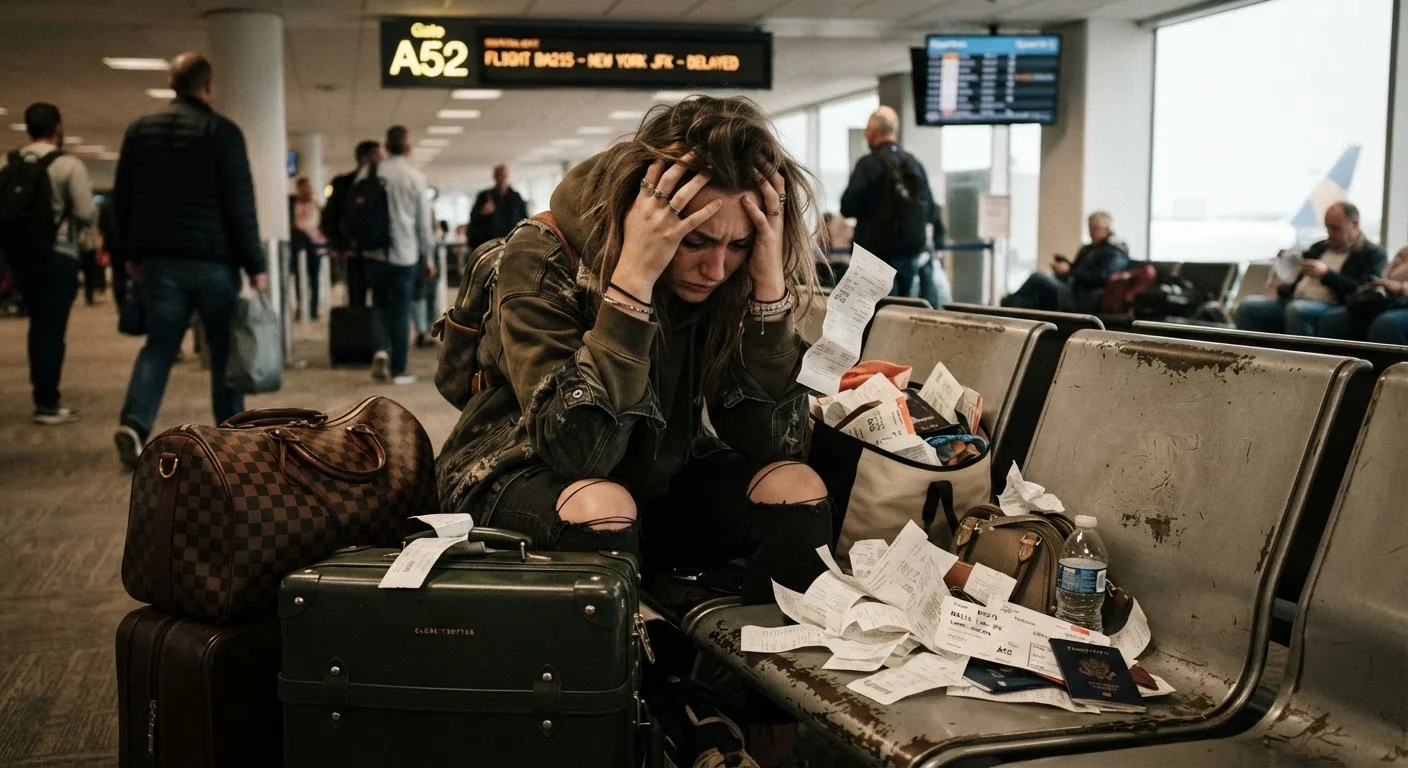
The Gap Between Thinking Cheap and Travelling Cheap
Most budget travellers start with good intentions: hunt for a low fare, find a cheap hotel, and call it a plan. But frugal travel is a system, not a single decision. The gap between thinking cheap and actually spending less comes down to a cluster of recurring, avoidable mistakes that quietly inflate costs trip after trip.
None of these errors are unique to novices. Experienced travellers make them too — often because the travel industry is structured to profit from inattention. Understanding why these patterns happen is the first step to breaking them. If you're also planning your first international trip, the step-by-step framework for budget travel abroad is a solid complement to this guide.
Booking flights without checking total baggage costs first.
Why it happens: Fare comparison tools typically display the base ticket price, making a low-cost carrier look far cheaper than a full-service airline — until bags are added.
Exchanging currency at airport kiosks or hotel desks.
Why it happens: Convenience drives the decision — travellers arrive without local cash and accept whatever rate is on offer at the nearest counter.
Choosing a destination based on headline cost without researching daily spend.
Why it happens: A cheap flight to a popular city can anchor the perception that the whole trip will be affordable, regardless of local accommodation and food costs.
Booking accommodation, transport, or tours at the last minute under time pressure.
Why it happens: Planning fatigue leads to procrastination; travellers assume they'll find deals on the ground, or simply run out of time to research properly.
Staying in cheap accommodation located far from where you actually want to be.
Why it happens: The nightly rate looks compelling, and travellers underestimate the cost and time of repeated commutes to central areas.
Moving between cities too frequently on a tight budget.
Why it happens: The urge to see as much as possible — especially on a first trip to a region — leads to rapid multi-city itineraries with compounding transport and accommodation-switching costs.
Where the Real Money Leaks Happen
Beyond individual mistakes, there's a structural problem: budget travellers often optimize one cost while ignoring a larger one sitting right next to it. Locking in a cheap fare only to absorb a resort fee, an airport transfer, or a currency conversion surcharge is a pattern so common it has its own psychology — the sunk-cost relief of having "already saved" on the flight.
~$25–$60
Typical airport currency exchange markup per $200 converted
Exchange rate spreads and service fees at airport kiosks commonly add 10–30% above interbank rates, depending on the provider and currency pair.
2–3x
Cost multiplier of last-minute vs. advance accommodation bookings
Industry data consistently shows that booking popular accommodation within a week of arrival can cost significantly more than booking weeks in advance, particularly in high-demand areas.
$50–$150
Average checked-bag fees on budget carriers (round trip, one bag)
Budget airline baggage fees vary widely by carrier and route, but on many low-cost routes a single checked bag can approach or exceed the base fare itself.
Accommodation is a particularly fertile ground for this. As our analysis of budget hotel costs explains, advertised rates frequently exclude fees that only appear at checkout. Parking charges, resort fees, and remote locations that require daily taxi rides can push a "cheap" hotel above the cost of a well-located mid-range one. The lodging myths guide separates fact from assumption on what affordable accommodation actually looks like today.
Speed also costs money. Moving quickly across multiple cities — changing accommodation every two nights, buying intercity transport repeatedly — is almost always more expensive than staying longer in fewer places. The slow travel versus itinerary-hopping comparison breaks down the financial trade-offs clearly. Daily spending benchmarks by region are available in the average daily costs reference guide — use it to stress-test your budget before you book anything.
The habits that drain a travel budget aren't entirely different from those that drain an everyday one. The same inattention to cumulative small costs that hits at the grocery store — covered in depth in the grocery shopping habits that drain budgets — shows up on the road with surcharges, convenience markups, and impulse spending driven by unfamiliarity. And for travellers concerned that cheap automatically means compromised safety or comfort, the evidence on budget travel safety is worth reading before you write off lower-cost options.
This article is for general informational purposes only. Prices, fees, and travel conditions vary widely and change over time. Always verify costs directly with providers and check official government sources for entry requirements, safety advisories, and visa rules before you travel.
The content provided on our blog site traverses numerous categories, offering readers valuable and practical information. Readers can use the editorial team’s research and data to gain more insights into their topics of interest. However, they are requested not to treat the articles as conclusive. The website team cannot be held responsible for differences in data or inaccuracies found across other platforms. Please also note that the site might also miss out on various schemes and offers available that the readers may find more beneficial than the ones we cover.