

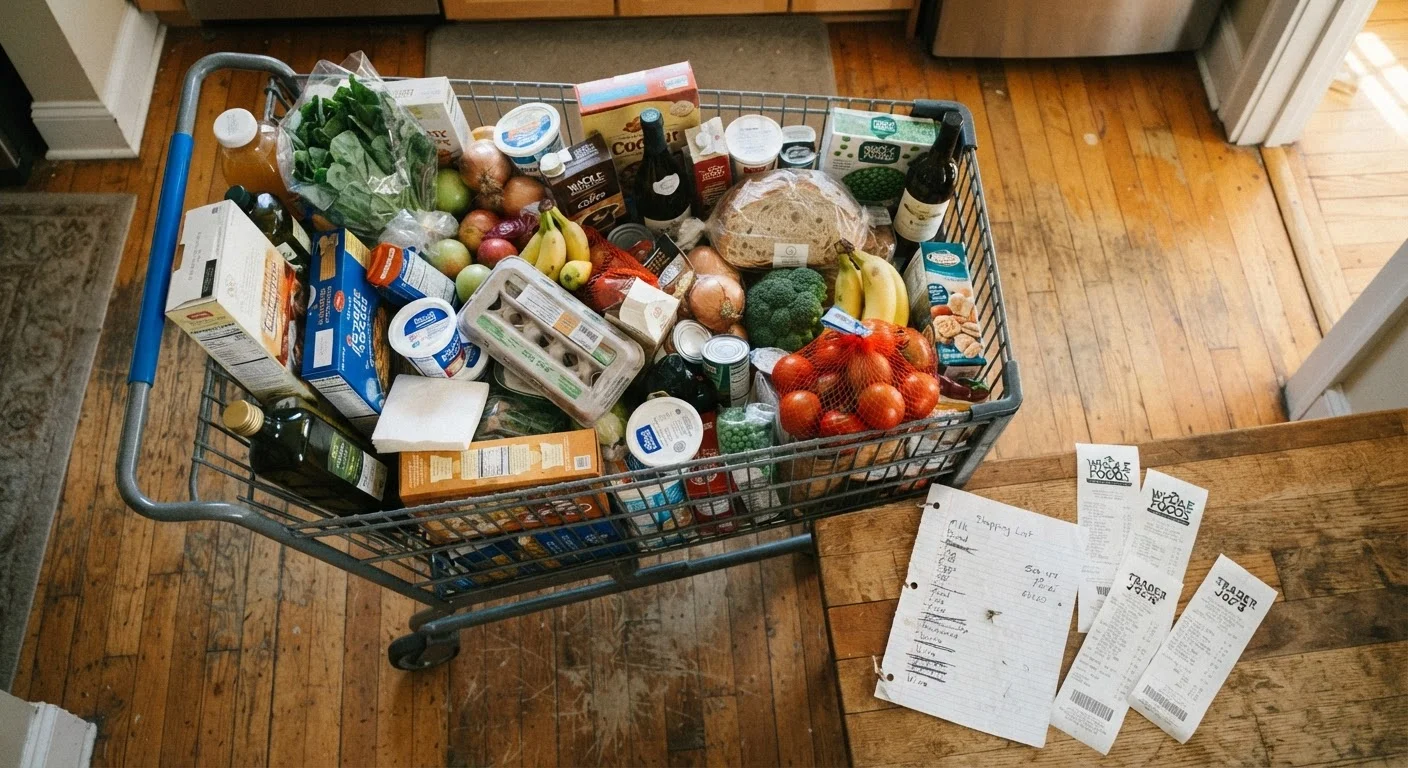
Why Grocery Habits Cost More Than Price Tags
If your grocery bill keeps climbing even when you feel like you're being careful, the culprit is often less about prices and more about patterns. Stores are designed to encourage spending — wide aisles, strategic placement of premium products, and promotions that create urgency. Understanding that environment is the first step to pushing back against it.
The mistakes below aren't rare or embarrassing. They're the default behaviour for most shoppers, which is exactly why they're worth naming. Each one is a small leak — manageable on its own, but collectively responsible for the steady creep in food spending that catches so many households off guard.
Your Habits Matter More Than Prices
Grocery prices do rise — but research consistently shows that shopper behaviour accounts for a significant share of food budget overruns. Changing what you do before and during a shop often yields more savings than hunting for sales. This article is general financial information, not personalised advice; your own results will vary based on household size, location, and spending patterns.
The Six Habits Quietly Costing You at the Register
Shopping without a list and no clear meal plan in mind.
Why it happens: Life gets busy, and it feels faster to just grab what looks good in the moment. Without a plan, the store's layout and promotions guide your cart instead of your actual needs.
Defaulting to name-brand products without checking store-brand alternatives.
Why it happens: Brand familiarity creates a sense of reliability. Many shoppers assume the national brand is higher quality without ever testing that assumption.
Shopping hungry, which reliably leads to impulse buys.
Why it happens: Hunger distorts decision-making. Studies in consumer behaviour suggest that shopping while hungry increases the likelihood of adding unplanned, often higher-calorie and higher-cost items to the cart.
Ignoring unit pricing and comparing only the sticker price of different pack sizes.
Why it happens: The larger package looks like the obvious deal, but that's not always the case. Without checking the price per ounce, pound, or count, shoppers often pay more than they realise.
Making multiple small grocery trips per week instead of one planned shop.
Why it happens: Running out of one or two items feels urgent, and a quick trip seems harmless. But each visit to the store is a fresh opportunity for unplanned spending.
Buying pre-cut, pre-portioned, or heavily packaged convenience items at a significant price premium.
Why it happens: Pre-washed salad greens or pre-diced onions save time, and time feels scarce. The cost difference per item seems minor in isolation.
Changing even two or three of these habits can make a noticeable difference in your monthly food spend. If you want a structured starting point, the pre-shop checklist is a practical tool you can use before every trip. And if bulk buying sounds like a solution to some of these habits, it's worth reading when bulk buying actually saves money — it helps more in some situations than others.
Eating well on a tight budget is genuinely possible. The evidence and practical strategies behind that claim are laid out in why eating cheap doesn't mean eating badly. The habits here are the starting point — fix the leaks first, then build from there.
The content provided on our blog site traverses numerous categories, offering readers valuable and practical information. Readers can use the editorial team’s research and data to gain more insights into their topics of interest. However, they are requested not to treat the articles as conclusive. The website team cannot be held responsible for differences in data or inaccuracies found across other platforms. Please also note that the site might also miss out on various schemes and offers available that the readers may find more beneficial than the ones we cover.