

Our Verdict
Envelope budgeting is a genuinely effective tool for building spending awareness, especially in categories where overspending is habitual. Its digital adaptations make it more practical for a cashless lifestyle, though the system demands consistent attention and doesn't handle every financial scenario gracefully.
Envelope budgeting works best for people who know they overspend in specific areas — like dining out or entertainment — and want a clear, hard stop built into their monthly plan.
What Envelope Budgeting Actually Is
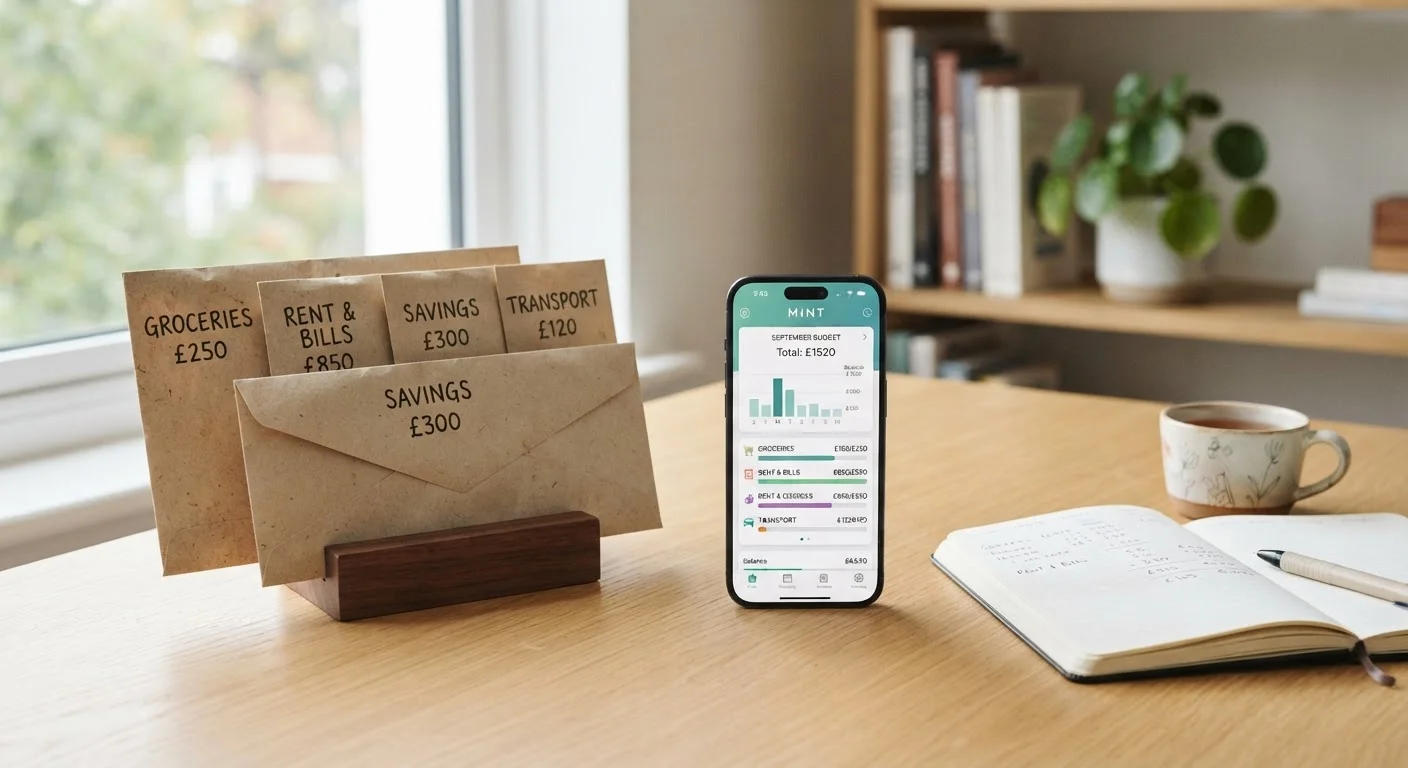
Envelope budgeting is straightforward in its original form: you take your paycheck in cash, divide it into labeled envelopes — groceries, gas, dining, clothing, and so on — and spend only what's in each envelope. When an envelope is empty, spending in that category stops for the month. No transfers, no exceptions.
The system was built on a simple psychological truth: physical cash feels more real than a card swipe. Handing over bills creates a moment of friction that tapping a phone does not. That friction is the whole point. It makes you pause before spending, which is exactly where most budget leaks happen.
Today, very few people operate exclusively in cash. But the core logic of the envelope method — pre-committing a fixed amount to each category before money hits your account — translates directly to digital tools. Apps can simulate envelopes using virtual categories, and some people use multiple checking or savings accounts to achieve the same separation. See other budgeting frameworks worth knowing if you want context on where envelope budgeting fits among alternative methods.
The Real Advantages
The envelope method has stuck around for decades because it genuinely solves a problem that more abstract budgeting systems don't: it makes limits concrete and immediate.
Forces category-level spending limits before month begins
By pre-allocating money to each category, you can't accidentally drain your grocery budget on takeout. The limit is set before the spending decision happens.
Builds genuine awareness of where money goes
Tracking a physical or virtual envelope balance creates a running mental tally that passive bank statements don't. Most people find they notice patterns within the first month.
Simple enough to start without any tools
At its most basic, the system needs cash and envelopes — no app subscription, no spreadsheet skills. That low barrier makes it accessible to anyone who wants to start immediately.
Reduces end-of-month budget surprises
Because spending is capped by what's physically or digitally available in each category, the system structurally prevents the kind of overspending that shows up as a shock on a monthly statement.
Adaptable to digital tools and apps
Several budgeting apps replicate envelope logic with virtual categories and real-time balance tracking, making the system usable without cash in a card-and-phone world.
Unlike a monthly budget you review after the fact, envelope budgeting gives you real-time visibility. You can see how much is left in any category without logging into a spreadsheet or an app dashboard. That immediacy is hard to replicate with a traditional budget tracker. For a different take on pre-committing money before you spend it, the pay-yourself-first approach uses similar front-loading logic, though with a different priority order.
Where It Falls Short
The envelope method is not a perfect system, and its friction-based design — a strength in some contexts — becomes a liability in others.
Awkward fit with automatic digital payments
Subscriptions, utilities, and automatic transfers don't wait for your envelope to have enough cash. Managing these alongside the envelope system requires a separate process, which adds complexity.
Requires consistent manual upkeep
Unlike a set-and-forget savings strategy, envelope budgeting demands regular attention — tracking spending, refilling envelopes each pay cycle, and adjusting for irregular expenses.
Can feel rigid when life doesn't follow a plan
An unexpected car repair or a medical co-pay doesn't fit neatly into a pre-set envelope. Without a dedicated buffer category, the system can break down under real-world pressure.
Physical cash version is impractical for many purchases
Online shopping, bill payments, and most subscription services don't accept cash. Using the physical version of the method means maintaining a parallel digital system for these transactions anyway.
Doesn't naturally address savings goals or debt payoff
The envelope method focuses on controlling spending categories, not on building wealth or reducing debt. Those goals require layering in additional strategies on top of the basic framework.
If you're weighing whether envelope budgeting or a more flexible framework fits your life better, the 50/30/20 rule versus zero-based budgeting comparison is a useful reference point. Envelope budgeting shares DNA with zero-based budgeting — both require you to assign every dollar a purpose — but they differ in structure and flexibility.
Digital Envelopes Aren't Identical to Cash Ones
When you use a virtual envelope in an app, the psychological friction is lower than with physical cash — swiping a card still feels abstract even when a category balance is visible. This doesn't make digital envelope budgeting ineffective, but it does mean you may need to build in additional checkpoints, like a weekly five-minute review, to get the same awareness benefit. The system works best when you interact with it regularly, not just at the start of the month.
Making It Work in a Digital-First Life
If you want to use envelope budgeting without handling physical cash, the most practical approach is to use a dedicated budgeting app that supports virtual categories, or to open separate accounts for your highest-risk spending categories. The key is treating each digital envelope with the same discipline you'd apply to a paper one — no borrowing from other categories without a deliberate, conscious decision.
Irregular income complicates any budget system, and envelope budgeting is no different. If your pay varies month to month, consider building your envelopes from a conservative baseline and treating anything above that as a separate decision. That keeps the system functional without forcing you to restructure everything each cycle.
Envelope budgeting pairs well with zero-based budgeting principles, since both methods insist that every dollar has a destination before the month begins. Using both frameworks together can close the gaps that each has on its own.
This article is for general informational purposes only and does not constitute personalised financial advice. For guidance specific to your situation, consider speaking with a qualified financial adviser.
The content provided on our blog site traverses numerous categories, offering readers valuable and practical information. Readers can use the editorial team’s research and data to gain more insights into their topics of interest. However, they are requested not to treat the articles as conclusive. The website team cannot be held responsible for differences in data or inaccuracies found across other platforms. Please also note that the site might also miss out on various schemes and offers available that the readers may find more beneficial than the ones we cover.