

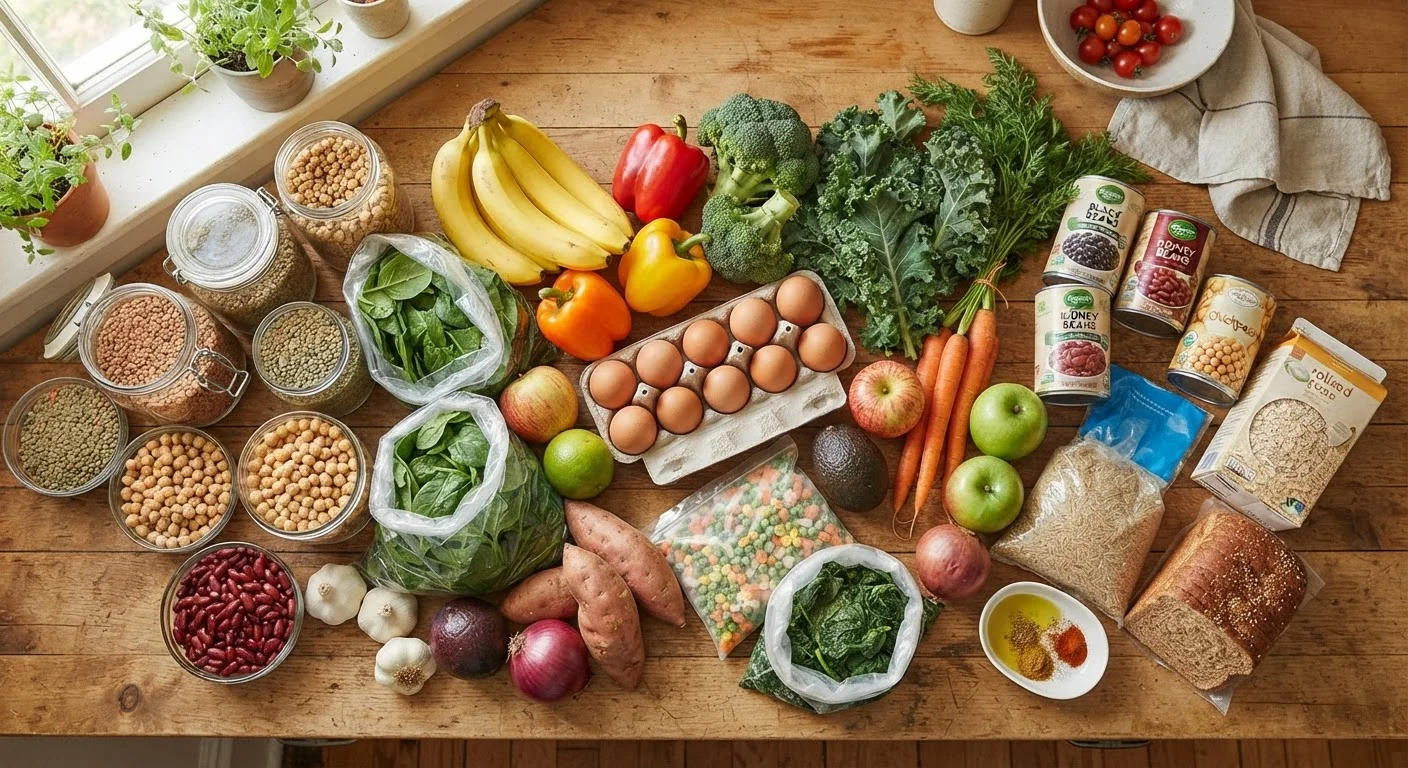
The Persistent Myth That Healthy Equals Expensive
The idea that eating well requires a bigger grocery budget is deeply embedded in how many people approach food. It shows up when someone skips the produce aisle because it "costs too much," or reaches for a fast-food meal because cooking from scratch feels out of reach financially. The belief is understandable — but it doesn't consistently hold up to scrutiny.
Research from institutions like the USDA has found that when food costs are measured per serving or per unit of nutrition rather than per package, many whole foods — dried legumes, eggs, oats, canned fish, frozen vegetables — rank among the most affordable options in any store. The perception of expense often traces back to comparing a prepared or packaged product against an equivalent unprocessed one, which skews the math.
Understanding where the myth comes from is the first step. The sections below break down the most common misconceptions, paired with what the evidence actually shows. For a closer look at the habits that quietly inflate grocery spending, see our article on grocery shopping habits that quietly drain your budget.
Myth
Eating healthy is inherently more expensive than eating cheap processed food.
Fact
When measured by cost per serving or nutritional value per dollar, many whole foods are cheaper than heavily processed alternatives.
A bag of dried lentils, a carton of eggs, or a can of beans routinely provides multiple servings at a lower per-serving cost than most packaged snacks or convenience meals. The confusion often comes from comparing a single fresh item (like a bunch of kale) to a single cheap item (like a bag of chips) without accounting for how many meals each produces or what nutrition each delivers. Cost-per-nutrient is a more useful measure than cost-per-package.
Myth
Frozen vegetables are nutritionally inferior to fresh ones and not worth buying.
Fact
Frozen vegetables often retain comparable — and sometimes higher — levels of certain nutrients compared to fresh produce that has been in transit or on a shelf.
Most vegetables destined for freezing are processed within hours of harvest, locking in vitamins at close to their peak levels. Fresh produce, by contrast, can lose significant nutrient content during the days it spends in transit and on display. This doesn't make fresh produce bad — both have a place — but the assumption that frozen means nutritionally inferior is not supported by the science. Frozen options also tend to be cheaper and generate less waste.
Myth
You need meat at every meal to get enough protein on a tight budget.
Fact
Plant-based proteins like lentils, chickpeas, tofu, and eggs provide substantial protein at a fraction of the cost of most meat cuts.
A pound of dried lentils can cost under two dollars and yields roughly ten servings, each providing around 18 grams of protein when cooked. Eggs remain one of the most complete and affordable protein sources available. These options don't replicate the exact experience of eating meat, but for budget-conscious households, reducing meat frequency rather than eliminating it can cut grocery spending meaningfully without compromising overall protein intake.
Myth
Cooking from scratch takes too much time to be practical for everyday meals.
Fact
With basic batch cooking and simple recipes, home cooking can take less active time per meal than ordering or driving to pick up food.
The time perception around home cooking often overstates actual hands-on effort. A pot of soup, a tray of roasted vegetables, or a batch of rice and beans requires minimal active attention — most of the time is passive cooking. Preparing larger quantities once or twice a week distributes that time across multiple meals, making the per-meal effort quite low. The financial difference between a home-cooked meal and a restaurant or takeout equivalent is typically substantial.
Myth
Store brands and generic products are lower quality and less nutritious than name brands.
Fact
Store-brand products are often produced by the same manufacturers as name brands and are subject to the same food safety standards.
Grocery store private-label products — canned goods, frozen vegetables, dairy, dried staples — frequently come off the same production lines as their branded counterparts. The ingredient lists are often nearly identical. While this isn't universal, the assumption that a higher price signals meaningfully better nutrition or safety is generally not supported. Comparing ingredient labels is a straightforward way to evaluate the actual difference before deciding.
Practical Strategies That Hold Up in Real Kitchens
Correcting a myth is only useful if it leads somewhere actionable. A few approaches consistently help people eat better while spending less:
- Build meals around plant proteins. Lentils, chickpeas, black beans, and eggs deliver solid protein and micronutrients at costs that rarely exceed a dollar per serving. Our guide on protein on a budget walks through the nutrition profiles and cooking basics for each.
- Use the freezer strategically. Frozen vegetables are harvested and frozen at peak ripeness, which preserves most of their nutrients. For a detailed look at the science, see frozen vs. fresh produce. Buying frozen spinach, peas, or broccoli routinely costs less than fresh and generates far less food waste.
- Reduce waste before expanding your budget. The average American household discards a significant portion of the food it buys. Meal planning, proper storage, and using up odds and ends before shopping again can meaningfully reduce what you spend without changing what you eat.
- Batch cook staple ingredients. Cooking a large pot of grains or legumes once and using it across multiple meals during the week reduces both cooking time and the temptation to reach for something more expensive and convenient.
None of these strategies require a dramatic lifestyle change. They work incrementally — one adjusted habit at a time — which is precisely why they're sustainable on a real budget. For broader household money-saving ideas, the Low-Cost Home Life hub is worth exploring.
$1,500+
Average annual food waste per US household
USDA estimates suggest the average American family discards a substantial portion of purchased food, making waste reduction one of the most direct routes to lower grocery spending.
~$0.25
Approximate cost per serving of dried lentils
Based on typical US retail pricing, a pound of dried lentils — which yields roughly 10 cooked servings — frequently costs under $2.50, making it one of the most affordable high-protein foods available.
3–4x
Cost difference between eating out vs. cooking at home
Research from the USDA Economic Research Service has consistently found that food prepared away from home costs substantially more per meal than equivalent home-cooked food.
The content provided on our blog site traverses numerous categories, offering readers valuable and practical information. Readers can use the editorial team’s research and data to gain more insights into their topics of interest. However, they are requested not to treat the articles as conclusive. The website team cannot be held responsible for differences in data or inaccuracies found across other platforms. Please also note that the site might also miss out on various schemes and offers available that the readers may find more beneficial than the ones we cover.