

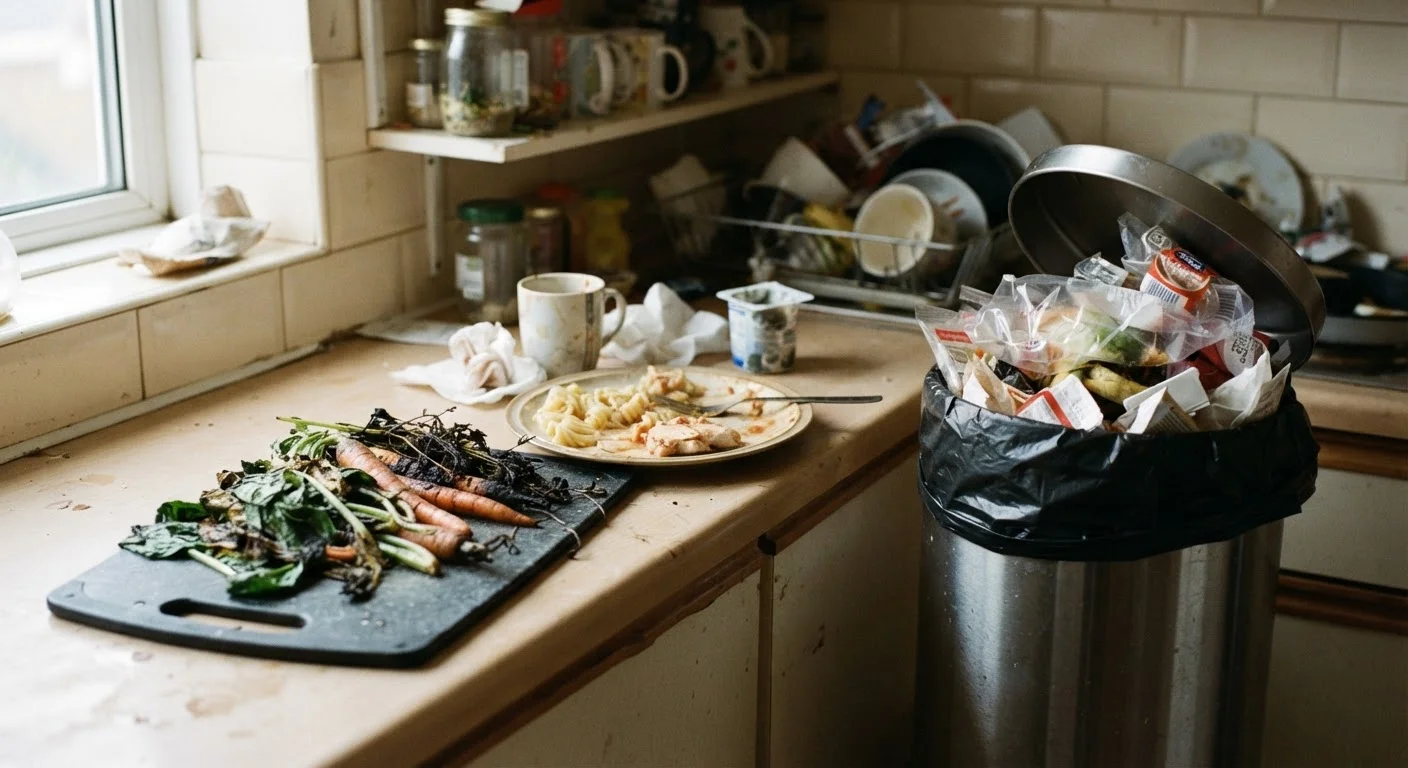
Why Food Waste Is a Budget Problem First
Most conversations about food waste focus on environmental impact. That matters — but for households on a tight budget, the financial angle is more immediately motivating. When you throw away a bag of spinach or a container of leftover rice, you're not just wasting food. You're discarding money you already spent.
Research from the USDA estimates that consumers waste roughly 30 to 40 percent of the food supply at the retail and consumer level. For a household spending $150 a week on groceries, that could mean $45 to $60 worth of food ends up in the trash every single week. Annualized, that's thousands of dollars in meals that were never eaten.
The core issue isn't that people are careless — it's that waste tends to happen in small, invisible increments. A forgotten herb bunch here, a half-used can of tomatoes there. None of it feels significant in the moment. But it compounds fast. Understanding which grocery shopping habits quietly drain your budget is a useful starting point, because many waste patterns begin at the store, not at home.
30–40%
Of the U.S. food supply wasted at consumer level
According to USDA estimates, roughly one-third of food produced for consumption is lost or wasted, with households accounting for a significant share.
$1,500+
Estimated annual food waste cost per household
Various food policy researchers estimate the average American household discards over $1,500 worth of food annually, though the figure varies by household size and spending.
~80%
Of food waste that occurs in the home
The Natural Resources Defense Council has noted that homes are responsible for the largest share of consumer-level food waste compared to restaurants or retail.
The Three Root Causes of Kitchen Waste
Before you can fix a problem, you need to know what's actually causing it. Food waste at home typically comes from three overlapping patterns:
- Buying without a plan. When you shop without knowing what you'll cook, you tend to buy aspirationally — picking up ingredients for meals you imagine making but never get around to. Produce is especially vulnerable here.
- Misreading date labels. The U.S. has no standardized system for food date labels, so 'sell by,' 'best by,' and 'use by' are often confused. Most of these dates reflect peak quality, not safety. Discarding food that's still perfectly edible because of a date label is one of the most common and costly waste behaviors.
- Poor storage habits. Ethylene-sensitive produce stored together ripens faster. Leftovers buried behind condiments get forgotten. Bread left on the counter goes stale before it's used. Small storage decisions quietly accelerate spoilage.
Fixing all three simultaneously is overwhelming. The weekly fridge audit targets all of them through a single, low-effort habit.
The Weekly Fridge Audit: How It Works
A fridge audit is a brief, structured check-in with what you already have — done once a week, ideally the evening before you normally shop. It takes under 10 minutes and directly informs your shopping list, your cooking plan, and what needs to be used first.
Here's how to run one:
- Pull everything forward. Move items toward the front so you can see them. Check the back of shelves — that's where forgotten food hides.
- Sort by urgency. Group items by how soon they need to be used: today or tomorrow, this week, or longer-term. Anything in the first group goes into meals before anything else.
- Check the freezer and pantry too. Note what you have that could anchor a meal this week. This feeds directly into a pantry-first cooking approach, which you can explore further in our pantry-first cooking guide.
- Write your shopping list based on gaps, not habits. Buy what you actually need to complete meals using what you already have — not what you usually buy.
The audit works because it makes waste visible before it happens. Most food gets thrown away because it was simply forgotten, not because it went bad quickly.
Use the 'First In, First Out' Rule
When restocking your fridge or pantry, place newer items behind older ones so the older items get used first. This simple rotation method — the same one grocery stores use — dramatically reduces the chance that something gets forgotten until it's too late. It costs nothing and takes seconds.
Building the Habit So It Actually Sticks
One audit won't change much. A weekly audit practiced consistently will. The challenge is making it automatic rather than a chore you talk yourself out of.
Habit research consistently shows that new routines stick best when attached to existing ones — what's often called 'habit stacking.' Pair your fridge audit with something you already do every week: putting away groceries, cleaning the kitchen on a set evening, or making your weekend shopping list. The audit becomes part of that routine rather than a separate task.
Tracking results also helps. If you notice that you're consistently throwing away the same item — say, fresh herbs or a specific vegetable — that's a signal to either stop buying it, buy less, or change how you store it. Small data from your own kitchen beats general advice.
For a broader habit-building framework, consider pairing this with a weekly money review habit — a brief financial check-in that keeps the whole budget in view, not just grocery spending.
This article is for general informational purposes only and does not constitute financial or dietary advice. For guidance tailored to your specific financial situation, consider consulting a qualified financial adviser.
Frequently Asked Questions
Estimates vary, but research from the USDA and various food policy organizations suggests U.S. households waste between $1,300 and $1,800 worth of food annually. The exact figure depends on household size and spending habits, but even conservative estimates make food waste one of the largest controllable household budget drains.
'Best by' and 'use by' dates are manufacturer quality estimates, not safety deadlines — with the exception of infant formula, which is federally regulated. Most foods remain safe to eat after these dates if they've been stored correctly and show no signs of spoilage. Misreading these labels is one of the top drivers of unnecessary food disposal.
Once a week is the practical sweet spot for most households. Tying it to a specific moment — like Sunday evening before grocery shopping — builds the habit and ensures you're shopping with full awareness of what you already have.
Formal meal planning helps, but it isn't strictly required. Even a loose idea of what you'll cook each week — based on what's already in your fridge — reduces impulse buys and forgotten ingredients. Structured meal planning amplifies results, and you can read more about that approach in our <a href="/budget-living/low-cost-home-life/meal-planning-as-a-financial-habit-not-just-a-cooking-strategy">guide to meal planning as a financial habit</a>.
Fresh produce — particularly leafy greens, berries, and herbs — tops the list, followed by bread, dairy, and cooked leftovers. These are also among the higher-cost-per-serving categories, which is why targeting them first gives the biggest financial return.
Yes, directly. Every item you use instead of discard effectively reduces the cost-per-meal of your grocery spending. Households that track their waste and adjust shopping accordingly typically see a noticeable drop in weekly grocery spending within a few weeks, without changing what they eat.
The content provided on our blog site traverses numerous categories, offering readers valuable and practical information. Readers can use the editorial team’s research and data to gain more insights into their topics of interest. However, they are requested not to treat the articles as conclusive. The website team cannot be held responsible for differences in data or inaccuracies found across other platforms. Please also note that the site might also miss out on various schemes and offers available that the readers may find more beneficial than the ones we cover.