

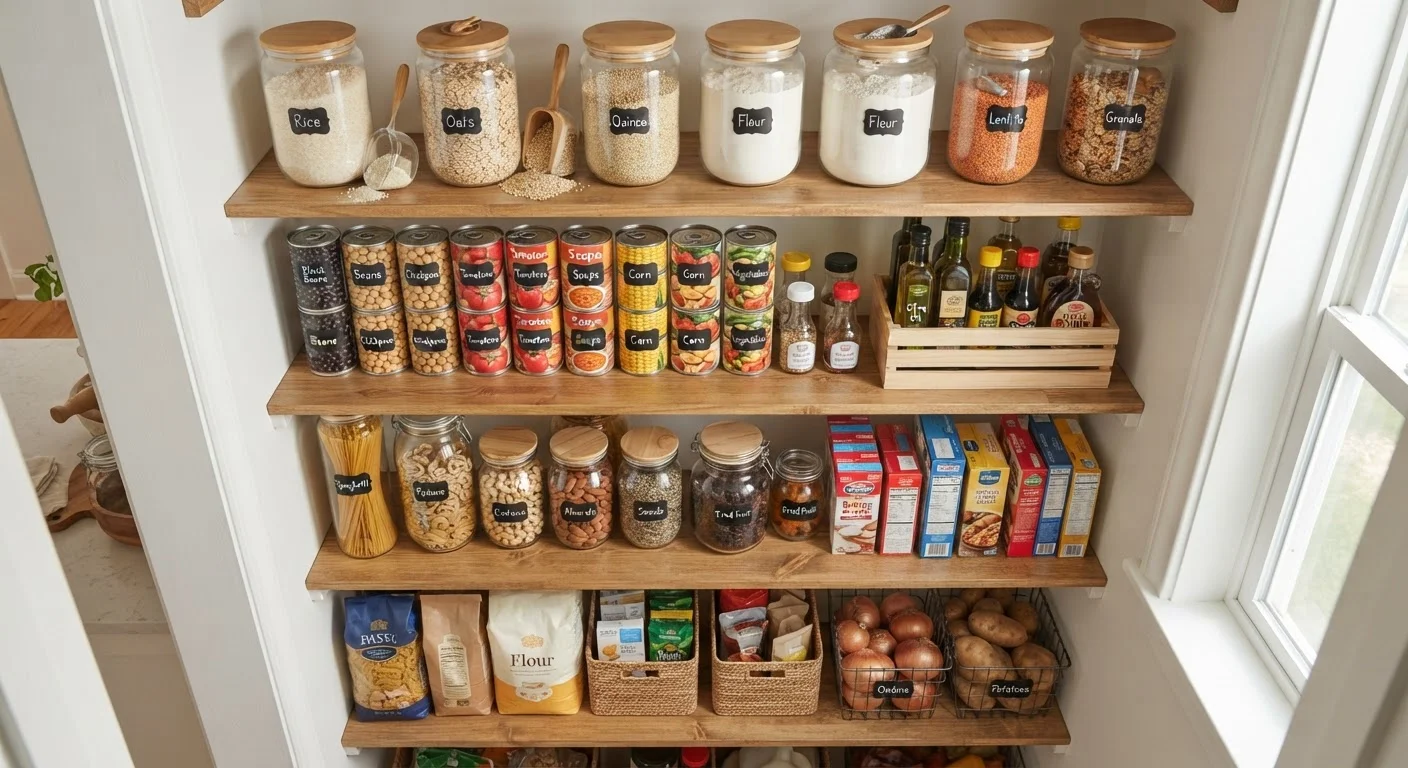
What Pantry-First Cooking Actually Means
Most grocery shopping starts with a recipe or a craving. You decide what you want to eat, write a list, and head to the store — often without checking what's already sitting in your cabinet. That habit is one of the main reasons household food waste adds up so fast.
Pantry-first cooking flips that sequence. Before you plan meals or write a list, you take stock of what you already have. Meals are built around existing ingredients, and you only buy what's genuinely missing. It's less of a cooking technique and more of a decision framework — one that happens before you ever open a recipe.
The payoff is twofold: you spend less because you're not buying things you already own, and you waste less because food actually gets used before it expires. If you want a broader system around this, this end-to-end meal planning framework covers how to tie it all together. For now, here's how to build the pantry-first habit step by step.
What You'll Need Before You Start
This method doesn't require apps, subscriptions, or special equipment. A few basic tools make it easier to stay consistent.
What you will need
Notepad or notes app
Record what you have on hand, what's running low, and what you actually need to buy.
Whiteboard or magnetic notepad on the fridge
Lets every household member update the running list in real time without needing a shared app.
Airtight storage containers
Keep opened dry goods fresh longer, reducing spoilage of bulk or partially used ingredients.
Step-by-Step: Building the Pantry-First Habit
Work through these steps once to establish the habit, then repeat the lighter version each week. The first run takes the longest — usually 30 to 45 minutes — but ongoing maintenance drops to under 10.
Do a full pantry, fridge, and freezer audit
Pull everything out of one storage area at a time. Group similar items together — all grains in one spot, canned goods in another, proteins together in the freezer. Note what you have, how much, and whether anything is close to its use-by date. This is the foundation: you can't cook from what you don't know you own.
Flag items that need to be used soon
Separate anything that's close to expiring or that's been sitting untouched for a while. These items form the starting point for your meal planning this week — not an afterthought. Write them down in a dedicated "use first" list so they stay visible.
Build meals around what you already have
Before opening a recipe app or meal plan template, look at your "use first" list and your general stock. Ask: what complete or near-complete meals can I assemble from this? A can of chickpeas, a half-bag of pasta, and some canned tomatoes already suggests dinner. Fill gaps with simple, flexible ingredients rather than buying everything a new recipe calls for. Planning meals around what's already in your kitchen goes deeper on this approach.
Write a grocery list based only on true gaps
Once you know what meals you're making and what you already have, build your shopping list around what's genuinely missing. Avoid restocking items you still have plenty of. If you're low on something but it's not needed this week, note it separately so you can add it when you're actually running out — not before.
Rotate stock when you put groceries away
When you return from shopping, put new items at the back and move older ones to the front. This simple habit — called FIFO, or first in, first out — ensures older stock gets used before newer purchases. It takes about two minutes per grocery run and prevents the slow accumulation of expired goods at the back of shelves.
Run a lighter audit each week going forward
After the first full audit, you only need a quick five-to-ten minute check each week before planning meals. Glance at what's low, what needs using, and whether anything new has been added. Keeping this a consistent weekly touchpoint is what turns pantry-first cooking from a one-time effort into a lasting habit that keeps trimming your grocery bill.
Common Pitfalls and How to Avoid Them
The most common stumbling block is treating the pantry audit as optional when life gets busy. Skipping it for two or three weeks is usually what causes an overcrowded pantry and forgotten food.
A second issue is buying pantry staples in bulk without a rotation plan. Items pushed to the back of a shelf tend to expire before they're used. Learning which staples give you the most meal variety helps you keep a leaner, more intentional stock rather than accumulating things you rarely cook with.
Finally, don't overlook the freezer. It's an extension of your pantry and often holds proteins, bread, or batch-cooked portions that can anchor a meal. Freezer rotation strategies can help you use what's in there before it develops freezer burn and becomes a loss.
If you want to connect this habit to a broader financial routine, meal planning as a financial habit explains how structured planning reduces both waste and overall grocery spend over time.
The content provided on our blog site traverses numerous categories, offering readers valuable and practical information. Readers can use the editorial team’s research and data to gain more insights into their topics of interest. However, they are requested not to treat the articles as conclusive. The website team cannot be held responsible for differences in data or inaccuracies found across other platforms. Please also note that the site might also miss out on various schemes and offers available that the readers may find more beneficial than the ones we cover.