

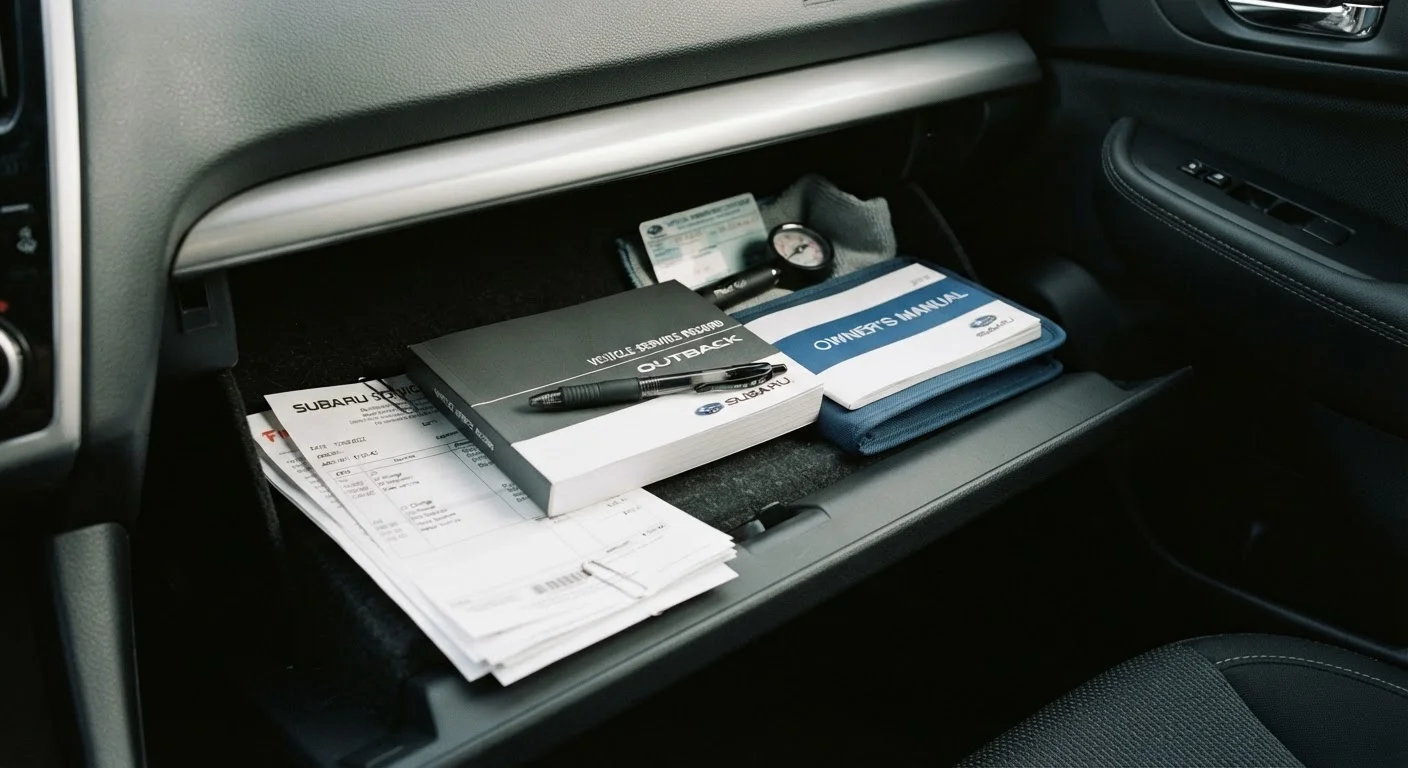
Why Your Service History Is a Financial Asset
Most drivers think of maintenance records as paperwork — something to deal with, maybe, when it's time to sell. In practice, a well-documented service history functions more like a financial asset. It signals to buyers, lenders, and insurers that a vehicle has been cared for, and that reduces uncertainty — which is what drives used-car prices up or down.
According to data from vehicle valuation sources, cars with verifiable, complete service histories tend to command higher prices in private sales and trade-ins than comparable vehicles without documentation. The exact premium varies by vehicle age, make, and market conditions, but the principle is consistent: records reduce risk for the buyer, and they'll often pay for that reassurance.
There's a less obvious benefit too. Maintaining your own log means you're never relying on memory to answer questions like: When did I last change the brake fluid? Are these tires due for rotation? That kind of clarity makes it easier to prioritise repairs when money is tight — because you know what's actually overdue, not just what feels overdue. For more on understanding what maintenance genuinely can't wait, see Car Maintenance on a Budget: What Actually Matters.
If you've ever been caught off guard by a repair bill, the lack of a service log may be part of the reason. Why Maintenance Costs Catch So Many Car Owners Off Guard covers exactly how these gaps add up — and how to stop the cycle.
What you will need
How to Build and Maintain Your Record-Keeping System
You don't need special software or a complex system. What matters is consistency. The steps below walk you through setting up a simple service log from scratch — whether you have a folder full of receipts or almost nothing to start with.
Don't Toss Those Receipts
Every invoice from a mechanic, oil change shop, or parts store is a piece of your car's financial record. Lost receipts are nearly impossible to recover later. Make scanning or filing a same-day habit from your very next service visit.
Physical accordion folder or binder
Stores paper receipts, service invoices, and your owner's manual in one place in the car or at home.
Spreadsheet (e.g. Google Sheets or Excel)
Logs service dates, mileage, costs, and work performed in a searchable, sortable format.
Smartphone camera or scanner app
Creates digital copies of paper receipts so records aren't lost if originals are damaged or misplaced.
Free vehicle maintenance app
Tracks service history, sends reminders for upcoming maintenance, and stores receipts digitally.
Gather every record you already have
Dig out all existing paperwork: invoices from mechanics, dealer service printouts, oil change stickers, emissions inspection certificates, tire receipts, and any notes you've made yourself. Check your glove compartment, home filing cabinet, and old emails. Even incomplete records are worth keeping — a partial history is always better than nothing.
Record your current mileage and date
Write down today's odometer reading and the date. This becomes your baseline. Going forward, you'll log the mileage at every service event. Mileage-based tracking is often more reliable than date-based tracking, since driving habits vary widely between owners.
Set up your chosen tracking system
Choose one system and commit to it. A physical accordion folder works well if you prefer paper — label a slot for each category (oil changes, tires, brakes, inspections, etc.). A spreadsheet works well if you want to sort and search records quickly. Columns to include: date, mileage, service performed, shop name, cost, and next due date or mileage. A maintenance app can work too, but review the warning below about digital-only storage.
[warning_callout]Log your existing records into the system
Go through the documents you gathered in Step 1 and enter each service event into your log — oldest to newest. For each entry, note the date, mileage, what was done, who did it, and what it cost. If you're missing details, record what you do know and leave the gaps blank rather than guessing.
Cross-reference with your manufacturer's service schedule
Open your owner's manual to the maintenance schedule section and compare it against your log. Identify any services that appear overdue by mileage or time — common ones include engine oil, cabin air filter, engine air filter, spark plugs, brake fluid, and transmission fluid. Make a short list of anything that needs attention. This is the moment when many drivers discover deferred maintenance that's been quietly accumulating.
[tip_callout]Make scanning new receipts part of your routine
After every future service — whether it's a $20 oil change or a major repair — scan or photograph the receipt the same day and add a line to your log. It takes about two minutes. This small habit is what keeps the system alive and useful over the life of the vehicle.
Once your system is running, folding it into your annual financial review makes sense. Annual Car Ownership Audit: Are You Spending More Than You Should? offers a structured way to review all your car costs — fuel, insurance, servicing, and finance — in one sitting. And if you want to understand what each service level actually covers before your next appointment, Annual Service vs. Interim Service: What's the Real Difference? breaks it down clearly.
This article is for general informational purposes only and does not constitute personalised financial or mechanical advice. Consult a qualified mechanic for guidance specific to your vehicle's condition and needs.
The content provided on our blog site traverses numerous categories, offering readers valuable and practical information. Readers can use the editorial team’s research and data to gain more insights into their topics of interest. However, they are requested not to treat the articles as conclusive. The website team cannot be held responsible for differences in data or inaccuracies found across other platforms. Please also note that the site might also miss out on various schemes and offers available that the readers may find more beneficial than the ones we cover.