

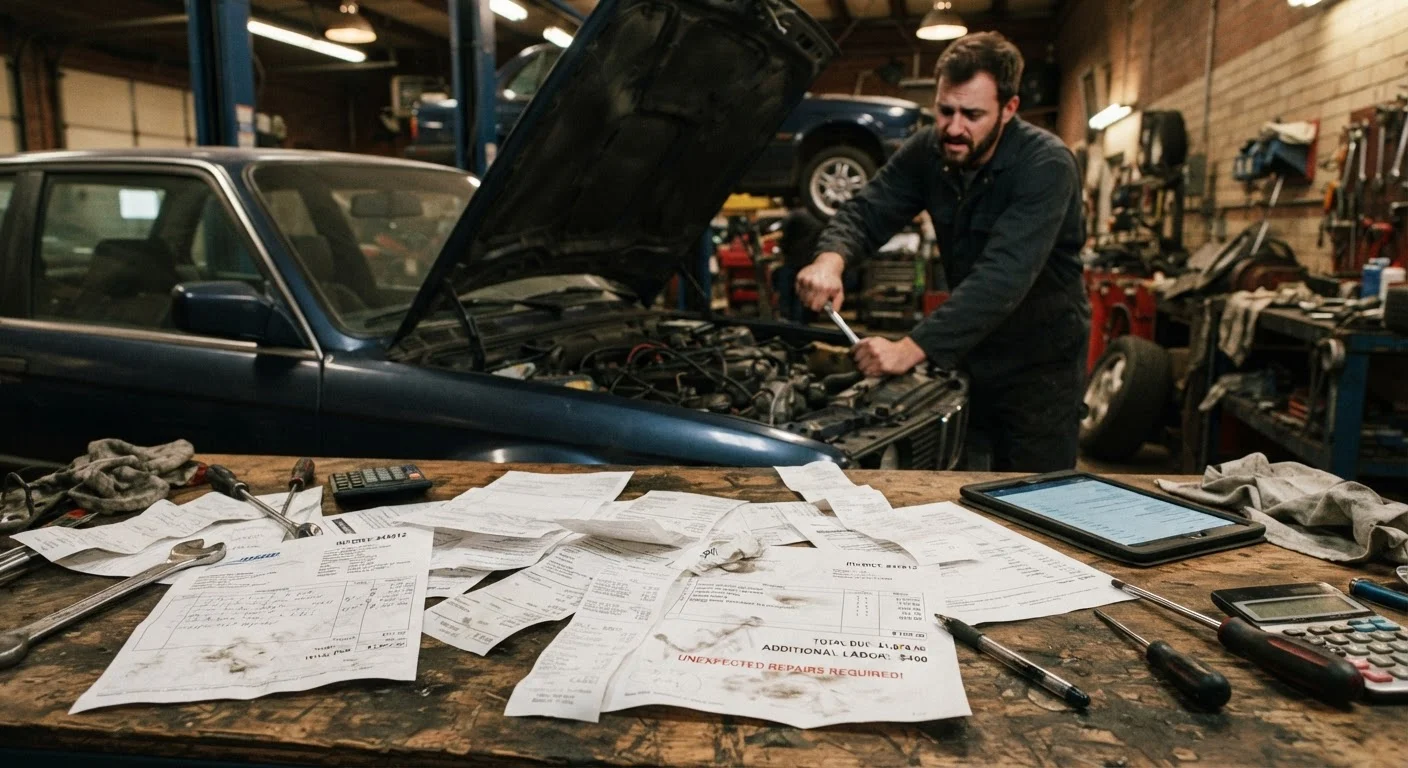
Why Maintenance Costs Blindside Even Careful Budgeters
Most drivers have a general sense that owning a car costs more than the monthly payment. Fuel, insurance, registration — those are hard to miss. But routine maintenance is different. It arrives in irregular, unpredictable-feeling chunks: a tyre replacement here, a brake job there, a timing belt that can't wait any longer. Because the bills don't land on a schedule you can easily predict, they feel like surprises even when they're entirely foreseeable.
The result is a gap between what drivers think maintenance will cost and what it actually costs. That gap tends to show up at the worst possible time — when there's already pressure on the budget. Understanding why this happens is the first step toward closing it.
For a broader look at what drivers commonly misunderstand about ongoing ownership expenses, see common myths about car ownership costs.
The Most Common Maintenance Planning Mistakes
The errors below aren't about negligence — most drivers making them are genuinely trying to manage their money responsibly. They're gaps in knowledge and planning, and they're fixable.
Budgeting only for oil changes and ignoring everything else.
Why it happens: Oil changes are the most visible, most-advertised maintenance item, so drivers treat them as the whole story. The less frequent but far costlier services — tyres, brakes, belts, coolant flushes — slip off the mental budget entirely.
Treating the owner's manual as optional reading.
Why it happens: Service advisors, quick-lube shops, and well-meaning friends all offer confident opinions on service intervals — and drivers often follow those instead of the manufacturer's actual specifications.
Having no dedicated savings buffer for car maintenance.
Why it happens: When money is tight, saving feels like a luxury. Drivers assume they'll handle maintenance bills when they arrive — then find themselves without the cash when a $700 brake job shows up unexpectedly.
Ignoring tyres and brakes until there's an obvious problem.
Why it happens: Neither tyres nor brakes fail dramatically at first — they degrade gradually, and drivers normalise the slow change. By the time the issue is obvious, the cost is usually higher and the safety risk is real.
Assuming a newer or newer-to-you car won't need much maintenance.
Why it happens: There's a widespread belief that newer vehicles are low-maintenance. While modern cars are more reliable than older ones, they still follow service schedules — and some modern services (cabin filters, brake fluid, transmission fluid) are easy to overlook precisely because they're infrequent.
Not keeping a service history, so you lose track of what's been done.
Why it happens: Receipts get lost, apps go unused, and verbal promises from previous owners can't be verified. Without a record, drivers either repeat services unnecessarily or — more dangerously — skip them entirely because they assume someone else already handled it.
If you're newer to vehicle ownership and want a plain-language foundation before diving deeper, car maintenance for complete beginners is a solid starting point. And if you're sorting out which tasks are truly non-negotiable when money is tight, car maintenance on a budget breaks that down clearly.
Building a Plan That Actually Works
Deferred Maintenance Compounds Fast
Skipping or delaying scheduled services rarely saves money — it typically shifts a small, planned expense into a large, unplanned one. A neglected timing belt that fails, for example, can cause engine damage costing several times the price of replacement. Treat maintenance as a recurring cost of ownership, not an optional line item you can cut when cash is tight.
The most effective thing you can do right now is treat maintenance as a predictable, recurring cost rather than a series of emergencies. Pull your owner's manual, list every scheduled service and its approximate mileage interval, then assign a rough dollar estimate to each. Divide the annual total by 12. That's your monthly maintenance contribution — put it somewhere you won't accidentally spend it.
It's also worth doing a periodic review of all your car-related spending. An annual car ownership audit can surface costs you've been absorbing without realising how much they add up to. And for habits that keep costs from creeping upward in the first place, keeping running costs low without cutting corners on safety offers practical, safety-conscious guidance.
This article provides general information about vehicle maintenance costs and is not a substitute for advice from a qualified mechanic. Costs vary by vehicle, region, and individual driving conditions. Always consult your owner's manual and a licensed professional for guidance specific to your situation.
The content provided on our blog site traverses numerous categories, offering readers valuable and practical information. Readers can use the editorial team’s research and data to gain more insights into their topics of interest. However, they are requested not to treat the articles as conclusive. The website team cannot be held responsible for differences in data or inaccuracies found across other platforms. Please also note that the site might also miss out on various schemes and offers available that the readers may find more beneficial than the ones we cover.