

Summary
22 items · 30–60 minutes
Why Seasonal Checks Pay for Themselves
Most car problems don't appear overnight. They develop quietly between oil changes — a slow tire pressure drop in autumn, a battery weakened by summer heat, wiper blades that crack before the first winter storm. By the time a dashboard light appears, the damage is already done and the repair bill is already growing.
According to AAA, roughly one in three drivers will experience a vehicle breakdown they didn't see coming. A significant portion of those breakdowns are traceable to maintenance items that a quick seasonal check would have caught. If you've ever wondered why costs pile up without warning, this breakdown of common maintenance surprises explains the pattern in detail.
The good news: most seasonal checks are visual, take under an hour, and require no special equipment. This checklist is organized by vehicle system so you can work through it logically — either on your own or as a reference before a shop visit.
Tires
Battery
Fluids
Lights and Visibility
Belts and Hoses
Brakes and Suspension
Emergency Preparedness
What to Keep Nearby and When to Call a Professional
You don't need a mechanic's toolkit to work through this checklist, but having a few basics on hand makes it faster and more accurate. See the tools list below for what's genuinely useful.
Tire pressure gauge
Accurately measures PSI so you can inflate tires to the correct level for the season.
Flashlight or work light
Illuminates engine bay components, tire sidewalls, and under-vehicle areas for a thorough visual check.
Owner's manual
Provides vehicle-specific fluid specs, service intervals, and torque specs so you're checking against the right standards.
Battery load tester
Measures how much power the battery can deliver under load — available free at many auto parts stores.
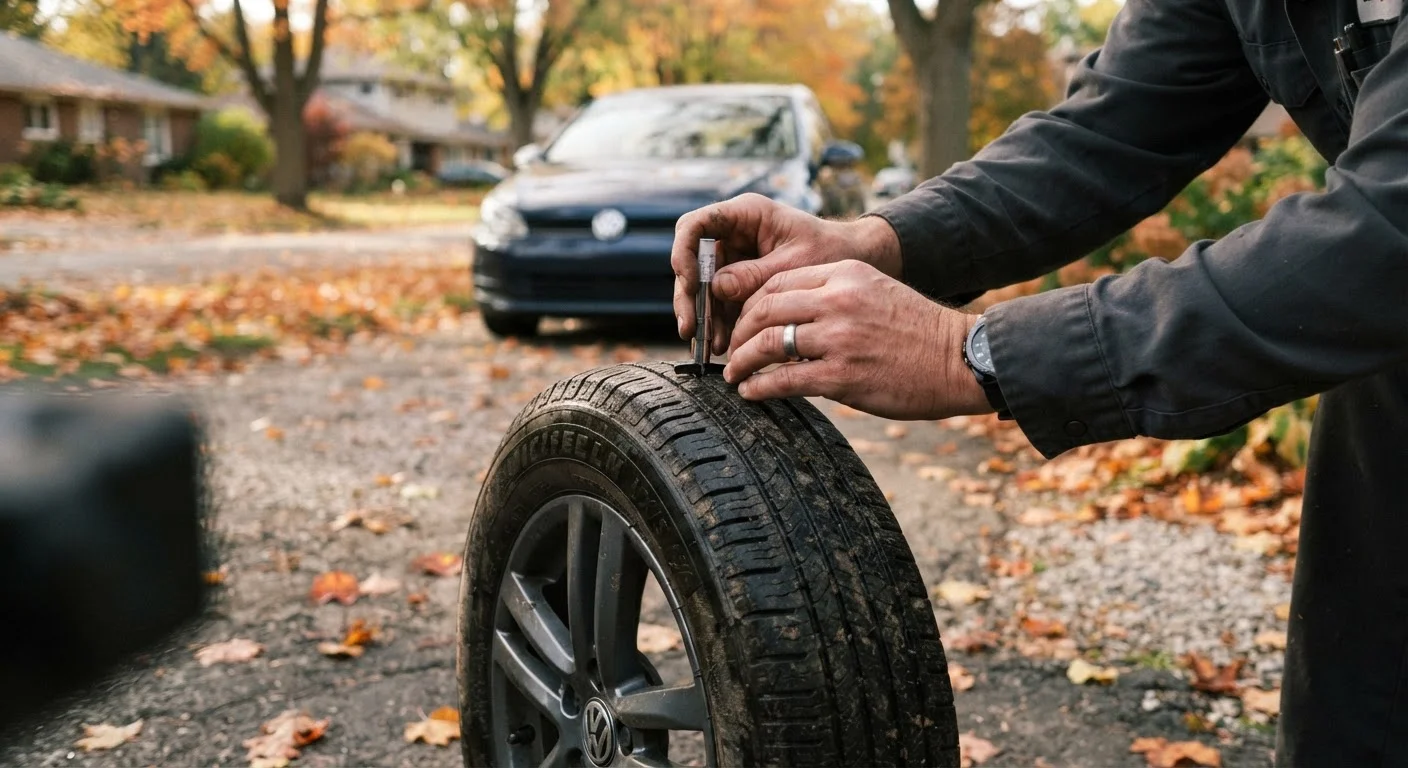
Tread depth gauge
Gives a more precise tread reading than the coin test alone, useful if tires are borderline.
A clear rule of thumb: if a visual check reveals something you can't confidently identify or fix — an unusual fluid color, a crack in a belt, a battery terminal with heavy corrosion — stop there and consult a licensed mechanic. Attempting repairs beyond your skill level can void warranties, create safety hazards, or turn a $50 fix into a $500 one. For a practical breakdown of which tasks are genuinely DIY-friendly and which aren't, this guide on budget-friendly maintenance priorities is a solid starting point.
Don't Skip Brake and Suspension Checks
Brake and suspension problems are among the most safety-critical issues a car can develop, and they're also among the most commonly ignored during DIY checks. If you notice any grinding, pulling, or unusual noise when braking, do not defer this to your next scheduled service — have a qualified mechanic inspect the system promptly. Driving on compromised brakes is a safety risk to you and everyone around you.
Overlooked Items Add Up Fast
Cabin air filters, brake fluid intervals, and wheel alignment are easy to skip because they rarely trigger warning lights. Over time, neglecting these items quietly inflates your maintenance bill. Learn which overlooked items cost drivers the most before your next seasonal check.
Once you've completed your seasonal check, it's worth stepping back and looking at your car costs as a whole. The annual car ownership audit checklist helps you spot where money is quietly leaking across fuel, insurance, and servicing — not just maintenance.
This article is for general informational purposes only and does not constitute professional mechanical or financial advice. Always consult a qualified, licensed mechanic before performing repairs that could affect vehicle safety. Costs and conditions vary by vehicle, region, and individual circumstances.
The content provided on our blog site traverses numerous categories, offering readers valuable and practical information. Readers can use the editorial team’s research and data to gain more insights into their topics of interest. However, they are requested not to treat the articles as conclusive. The website team cannot be held responsible for differences in data or inaccuracies found across other platforms. Please also note that the site might also miss out on various schemes and offers available that the readers may find more beneficial than the ones we cover.