

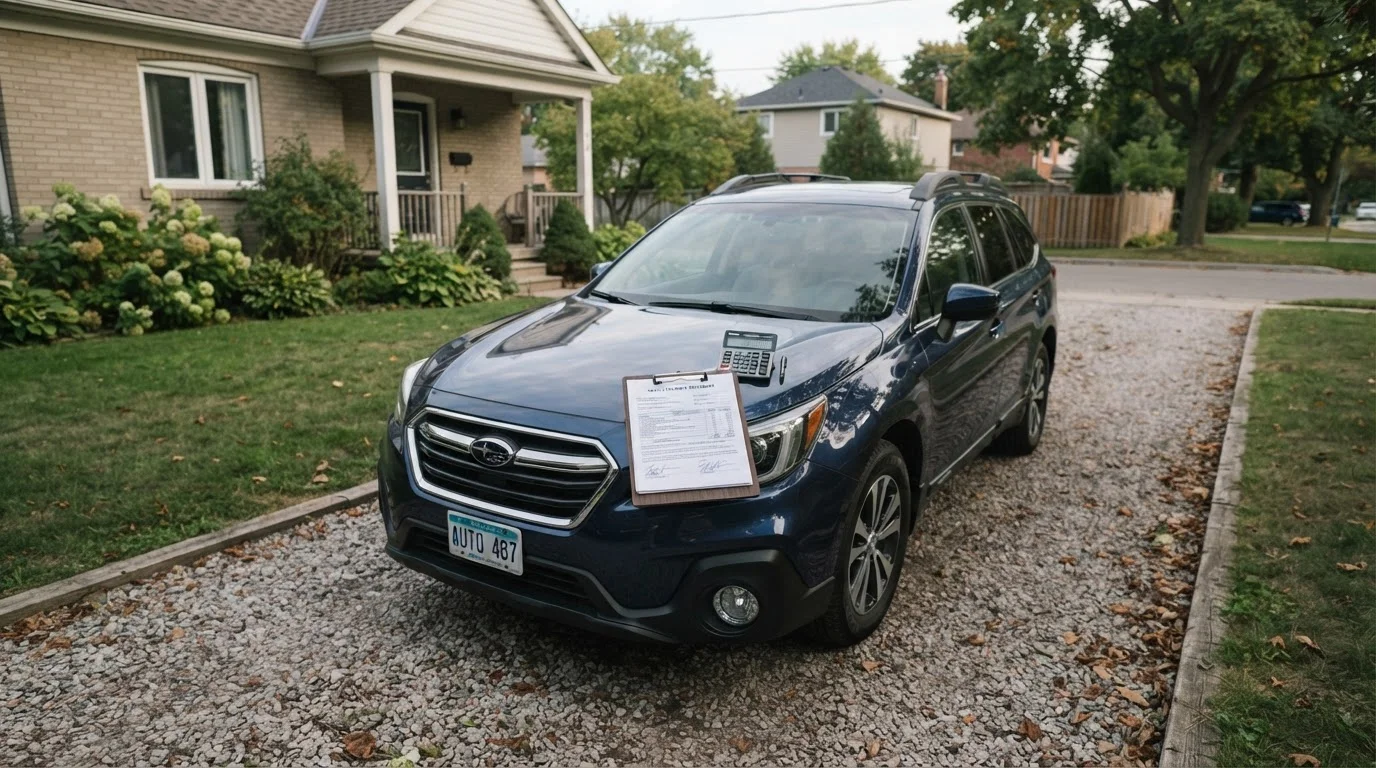
Why the Monthly Payment Is the Wrong Number to Watch
When most people ask "can I afford this car?", they're really asking "can I afford this monthly payment?" That's understandable — it's the number dealerships and lenders put front and center. But a car payment only covers the financing portion of what you're spending. The full picture is a lot bigger.
The sticker price doesn't tell you about owning a car — and neither does the monthly loan amount. Taxes, registration, dealer fees, insurance, fuel, and maintenance all show up after you've already signed the paperwork. For budget-conscious drivers, these costs can meaningfully change whether a vehicle is truly affordable.
This article breaks down each major expense category so you know exactly what to expect over a full year of ownership.
The Six Major Cost Categories
Car ownership costs generally fall into six buckets. Each one matters, and ignoring any of them distorts your budget.
$10,000+
Average annual cost to own a new vehicle
According to AAA's Your Driving Costs study, when all expenses are included — depreciation, fuel, insurance, maintenance, and fees.
15–20%
Typical first-year depreciation on a new car
Industry estimates suggest new vehicles lose this share of their market value within the first 12 months of ownership.
~$3,500
Average annual depreciation cost
AAA's cost breakdowns consistently identify depreciation as the single largest component of total annual ownership cost.
1. Depreciation
Depreciation is the decline in your vehicle's market value over time. It's the largest cost most drivers never consciously pay — because it doesn't come as a bill. A new vehicle typically loses around 15–20% of its value in year one, with the rate slowing as the car ages. If you plan to sell or trade in your car eventually, that lost value is a real cost.
2. Fuel
Fuel costs depend on how much you drive, your vehicle's fuel efficiency, and local gas prices — all of which fluctuate. The U.S. Department of Energy's fueleconomy.gov provides real-world fuel cost estimates you can use to model annual spending based on your expected mileage.
3. Insurance
Auto insurance premiums vary significantly based on your driving history, location, age, and the vehicle itself. Budget for this cost annually, not just monthly, and revisit your coverage each renewal period. For more on managing this expense, see our hub on fuel and insurance strategies.
4. Maintenance and Repairs
Routine maintenance — oil changes, filters, brake pads, tire rotations — adds up steadily. Unexpected repairs add more on top. AAA recommends setting aside a maintenance fund rather than treating these as surprise expenses. Our hub on car maintenance savings covers practical ways to keep these costs manageable.
5. Tires
A full set of replacement tires typically runs several hundred dollars, and most drivers replace tires every three to five years depending on mileage and driving conditions. This cost is easy to forget until the moment it hits.
6. Registration, Taxes, and Fees
Annual registration fees, emissions testing, and in some states personal property taxes on vehicles are fixed costs that recur every year. These vary widely by state and vehicle value.
What the Numbers Actually Look Like
AAA's Your Driving Costs study — one of the most cited industry benchmarks — consistently finds that average annual ownership costs for a new vehicle exceed $10,000 when all categories are included. For a medium-sized sedan driven roughly 15,000 miles per year, the breakdown typically includes roughly $3,000–$4,000 in depreciation, $1,500–$2,000 in insurance, $1,500–$2,000 in fuel, and several hundred dollars each in maintenance, tires, and fees.
Used vehicles change the math on depreciation considerably — but not always on other costs. Common myths about car ownership costs include the belief that newer cars are always cheaper to run. An older vehicle with a higher repair frequency can close that gap quickly.
These figures are averages and will vary based on your specific situation. They are provided here as general context, not a forecast of what you personally will spend.
This article is for general informational purposes only and does not constitute personalized financial advice. For guidance tailored to your individual circumstances, consult a qualified financial professional.
Turning Awareness Into a Budget
Knowing the categories is step one. Step two is estimating your own numbers. Start by pulling together what you actually paid last year: fuel receipts, insurance statements, any repair invoices, and registration fees. Then estimate depreciation using vehicle valuation tools.
If you've never done this before, our article on building a car ownership budget that holds up walks through a practical framework for estimating each cost category on a monthly basis. And if you want to audit what you're currently spending, our annual car ownership audit checklist can help you spot where money is going unnecessarily.
Build a Simple Annual Car Cost Tracker
Open a spreadsheet with one row for each expense category: loan or lease payment, fuel, insurance, maintenance, tires, registration, and depreciation estimate. Update it each time a bill comes in. After 12 months, you'll have a reliable baseline — and a much clearer sense of where to look for savings.
For newer drivers still building their financial picture, what new drivers get wrong about car maintenance costs covers the missteps that lead to avoidable bills in the first year of ownership.
Frequently Asked Questions
According to AAA's annual Your Driving Costs study, the average annual cost to own and operate a new vehicle has exceeded $10,000. This includes depreciation, fuel, insurance, maintenance, finance charges, and fees. Costs vary considerably based on vehicle type, how much you drive, and where you live.
Depreciation — the loss in a vehicle's value over time — is typically the largest single cost of ownership. A new car can lose 15–20% of its value in the first year alone. Because it's not a direct out-of-pocket payment, most drivers overlook it entirely.
Often, but not always. A used vehicle avoids the steepest depreciation curve and usually carries a lower purchase price. However, older vehicles may require more frequent or costly repairs, and financing rates for used cars can be higher than for new ones. The total picture depends on the specific vehicle and your circumstances.
The most commonly overlooked costs include depreciation, annual registration and emissions fees, tire replacement, and unexpected repairs. Many drivers budget for fuel and insurance but are caught off guard when a set of tires or a brake job arrives.
Driving fewer miles, keeping up with preventive maintenance, shopping around for insurance annually, and avoiding frequent vehicle upgrades all help. Choosing a vehicle with a lower cost-per-mile profile when you buy is one of the most effective long-term strategies.
The content provided on our blog site traverses numerous categories, offering readers valuable and practical information. Readers can use the editorial team’s research and data to gain more insights into their topics of interest. However, they are requested not to treat the articles as conclusive. The website team cannot be held responsible for differences in data or inaccuracies found across other platforms. Please also note that the site might also miss out on various schemes and offers available that the readers may find more beneficial than the ones we cover.