

Our Verdict
Envelope budgeting's core principle — spend only what you've pre-allocated — remains as sound as ever. The cashless era adds friction, but it doesn't break the method; it just requires a more deliberate digital workaround. Adapted thoughtfully, the envelope framework can still deliver meaningful spending awareness and category discipline.
Ideal for budget-conscious millennials who feel their spending 'disappears' each month and want a structured, visual system to reclaim control over discretionary categories.
What Envelope Budgeting Actually Is
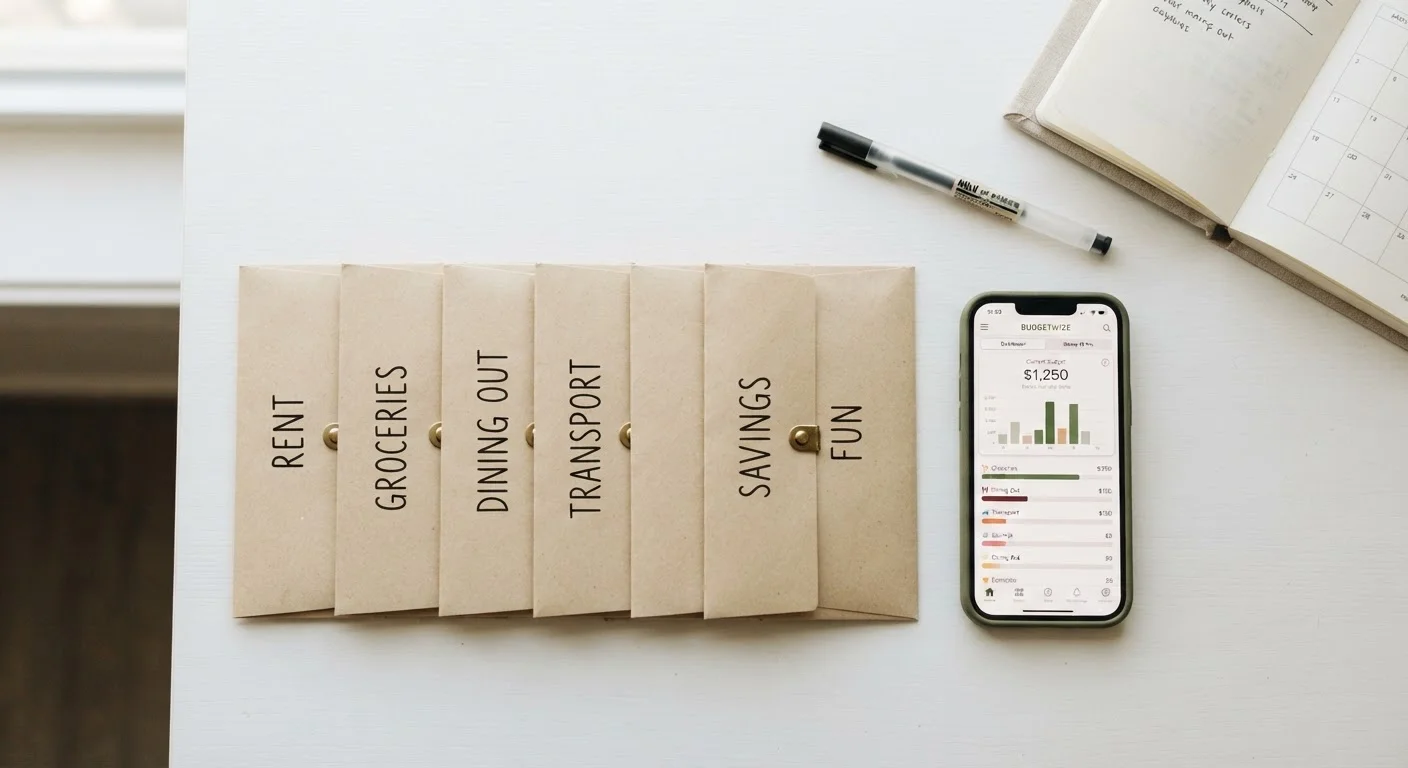
The envelope method is a cash-based budgeting system in which you divide your take-home pay into physical envelopes — one per spending category. Label them: groceries, gas, dining out, entertainment, personal care. Each envelope holds exactly what you've budgeted for that category. When the cash is gone, spending in that category stops until the next pay period.
The method's power comes from its immediacy. Physically handing over cash and watching a stack of bills shrink creates a spending awareness that swiping a card simply doesn't replicate. Behavioral economists sometimes call this the "pain of paying" — cash transactions feel more real than digital ones, which can curb impulse spending.
It's worth knowing that the envelope system is often associated with zero-based budgeting principles, where every dollar of income is assigned a job. If you're curious how the two frameworks compare, see our guide to zero-based budgeting for a deeper breakdown.
The Core Challenge: Most Spending Is Now Digital
Here's the problem: the average US consumer increasingly pays with debit cards, credit cards, and mobile wallets. Withdrawing hundreds of dollars in cash each month — then spending carefully from envelopes — is genuinely inconvenient for most millennials. Online purchases, subscription renewals, and tap-to-pay transactions don't fit neatly into a physical envelope system.
That said, inconvenience isn't the same as impossibility. Many people adapt the envelope method by using digital envelopes: dedicated bank accounts or budgeting app categories that mirror the physical envelope structure. You allocate a set dollar amount per category at the start of the month, track every transaction against that category, and treat the digital limit as a hard cap.
Digital Envelope Apps: What to Know
Several budgeting apps allow you to create named spending categories that function like digital envelopes, flagging when you approach or exceed each limit. The core mechanics mirror the physical method, but the psychological impact of 'empty envelope' is softer on screen than in hand. To offset this, some users set category notifications to trigger at 80% spent rather than 100%, giving themselves a warning window. For a side-by-side look at how digital adaptation changes the method's feel and effectiveness, this companion article covers the digital translation in greater depth.
For a side-by-side look at how digital adaptation changes the method's feel and effectiveness, this companion article covers the digital translation in greater depth.
Advantages of the Envelope Approach
Spending limits are set before money leaves your account
Pre-committing to category caps curbs the tendency to rationalize overspending in the moment. Research in behavioral economics consistently shows that pre-commitment strategies outperform reactive spending reviews.
Overspending becomes instantly visible
When a category balance hits zero, there's no ambiguity — you've reached your limit. Traditional bank statements bury this signal inside a long transaction list.
Flexible enough to start small and scale
You don't need to envelope every dollar on day one. Starting with two or three high-leakage categories (like dining or entertainment) builds the habit before expanding the system.
Adaptable to digital tools and apps
Several budgeting apps replicate envelope logic digitally, allowing you to maintain the method's structure without handling physical cash at all.
Encourages intentional trade-offs between categories
If you want to spend more on dining, you have to consciously reduce another category. That deliberate trade-off builds financial awareness over time.
Even in a digital context, the envelope method offers structural advantages that looser budgeting styles don't. The pre-commitment mechanism — deciding limits before the month starts rather than reviewing damage afterward — is one of the most evidence-supported principles in behavioral finance. The system also scales well: you can start with just three or four categories and expand gradually without overhauling your entire financial setup.
Disadvantages to Weigh Honestly
Requires consistent daily or near-daily transaction logging
Digital envelopes only reflect reality if every purchase is recorded promptly. A few days of skipped entries can render category balances meaningless, undermining the whole system.
Cash-back and rewards credit cards complicate the system
Using credit cards — even responsibly — means money doesn't leave your account at the moment of purchase, making it harder to feel the real-time impact of spending that the envelope method relies on.
Irregular or surprise expenses don't fit neatly
A medical co-pay, emergency car repair, or annual insurance renewal can destabilize monthly envelope allocations if a dedicated buffer category isn't included.
Can feel rigid and demotivating for variable-income earners
Freelancers and gig workers whose monthly income fluctuates significantly may find fixed category allocations difficult to maintain without recalibrating every pay period.
Subscription and recurring charges require extra tracking
Streaming services, gym memberships, and software subscriptions auto-charge without a manual action, so they can quietly drain a category balance before you realize it.
The method's limitations are real and shouldn't be minimized. Maintaining digital envelopes demands consistent bookkeeping; skip a few days of logging transactions and your category balances become unreliable quickly. It also doesn't naturally account for irregular expenses — a car repair or medical bill doesn't fit any pre-labeled envelope and can derail an otherwise disciplined month. For practical strategies on tracking spending without burning out on the process, this spending-tracker guide offers sustainable alternatives and complements.
How to Make It Work in a Digital-Payment Era
Adapting envelope budgeting for a cashless lifestyle takes a few deliberate steps:
- Choose your categories carefully. Focus the envelope system on discretionary, variable spending — groceries, dining, personal care, entertainment. Leave fixed bills (rent, loan payments, subscriptions) outside the envelope structure, since those amounts don't flex month to month.
- Use a dedicated tracking method. Whether that's a budgeting app with built-in envelope categories or a simple spreadsheet, the tool matters less than the consistency of logging. Record purchases the same day you make them.
- Build a miscellaneous envelope. A small buffer category — say, 3–5% of your discretionary budget — absorbs one-off expenses that don't belong elsewhere. This prevents the whole system from feeling shattered by an unexpected expense.
- Review weekly, not monthly. A brief weekly check-in (10–15 minutes) keeps categories accurate and catches overspending before it compounds. Monthly reviews often arrive too late to change behavior.
If you're exploring how this fits among other frameworks, the overview of budgeting approaches provides useful context on when envelope budgeting tends to outperform simpler methods — and when other systems might suit you better.
This article is for general informational and educational purposes only. It does not constitute personalized financial advice. Please consult a qualified financial professional for guidance specific to your circumstances.
The content provided on our blog site traverses numerous categories, offering readers valuable and practical information. Readers can use the editorial team’s research and data to gain more insights into their topics of interest. However, they are requested not to treat the articles as conclusive. The website team cannot be held responsible for differences in data or inaccuracies found across other platforms. Please also note that the site might also miss out on various schemes and offers available that the readers may find more beneficial than the ones we cover.