

Start here
Why Tracking Spending Matters
Next
Choose a Tracking Method That Fits Your Life
Then
Setting Up Your Spending Categories
After that
Building the Habit: Making It Stick
Finally
What to Do With What You Find
Why Tracking Spending Matters
Most people have a rough sense of their big expenses — rent, car payment, groceries — but the smaller, irregular purchases are where budgets silently unravel. A $14 lunch here, a $9.99 subscription renewal there, and suddenly you're $200 short with no clear explanation. Tracking spending closes that gap between what you think you spend and what you actually spend.
This isn't about judgment or austerity. It's about information. When you know exactly where your money goes, you're in a position to make deliberate choices — keeping what you value, cutting what you don't. This guide is part of a broader framework covered in the complete roadmap to taking control of your monthly finances.
This article is for general informational purposes only and does not constitute personalized financial advice. For guidance specific to your circumstances, consult a qualified financial professional.
Choose a Tracking Method That Fits Your Life
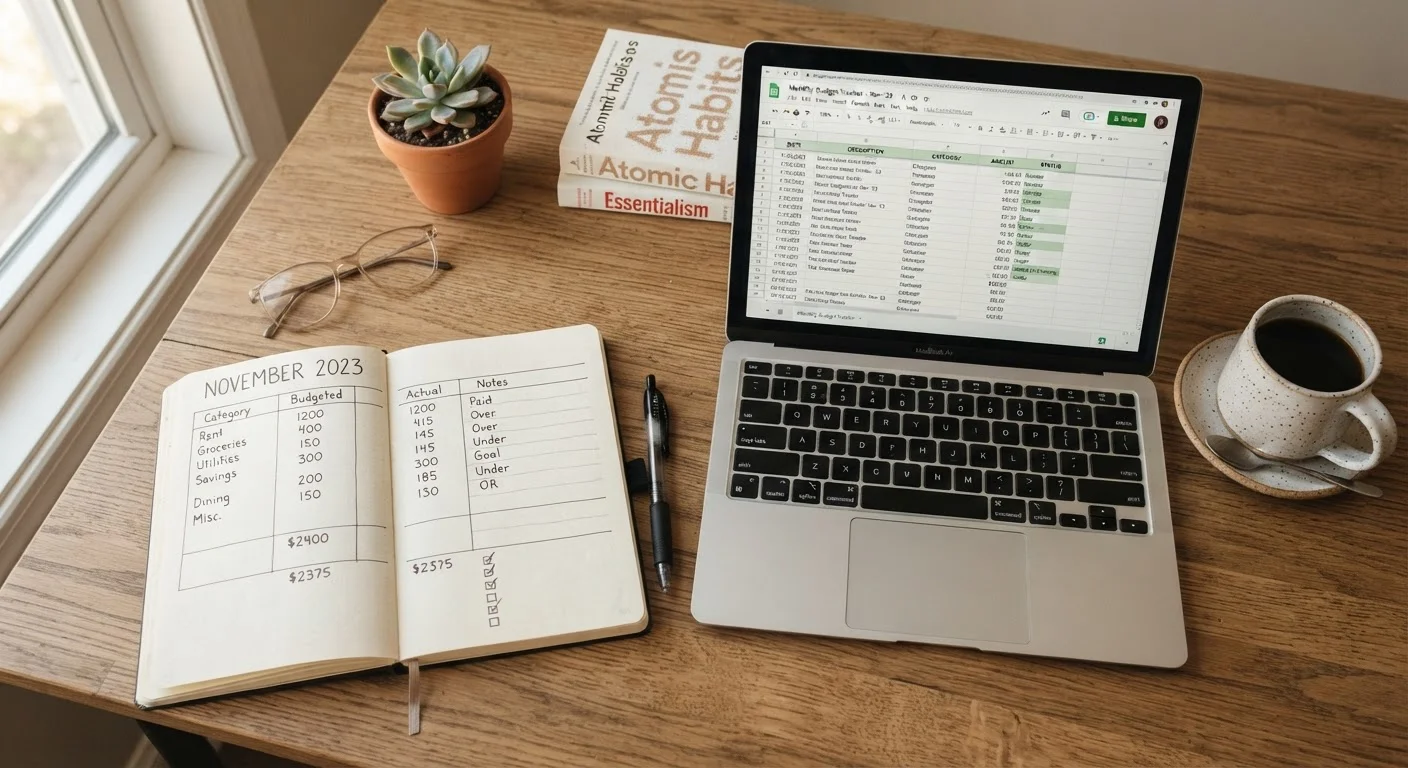
There is no single correct way to track spending. The right method is the one you will actually use. Below are three practical approaches, each suited to a different personality and lifestyle.
The Notebook Method
Write down every purchase in a small notebook or notes app immediately after spending. It requires zero setup and works anywhere. The physical act of writing also creates a mild psychological pause before spending. The downside: totaling categories takes manual effort at month's end.
The Spreadsheet Method
A simple spreadsheet with columns for date, merchant, amount, and category gives you sortable, searchable data. A free tool like Google Sheets requires no paid software — see our introduction to free productivity tools if you're new to working without paid software. Most people find a weekly 10-minute session to enter that week's transactions manageable and sustainable.
The Envelope (or Digital Envelope) Method
Allocate a set dollar amount to each spending category at the start of the month. When a category runs out, spending in it stops. Traditionally done with labeled cash envelopes, the same logic applies digitally. Envelope budgeting in a cashless world explores how this translates to digital payments in detail.
Start With Last Month's Bank Statement
Before creating any new system, pull your most recent bank and credit card statement and categorize every transaction manually. This one-time exercise reveals your actual baseline spending patterns — including the surprises — and gives you real data to build your tracking categories around.
Setting Up Your Spending Categories
Categories are the backbone of any tracking system. Start broad: housing, transportation, food, utilities, healthcare, personal care, entertainment, and savings are enough for most people. Resist the urge to create 25 sub-categories from day one — it becomes a chore you'll abandon.
The goal is categories that mirror your actual life, not a personal finance textbook. If you frequently spend on pet care or fitness, those deserve their own line. If you rarely travel, don't bother splitting travel into domestic and international. Spending categories: how to slice your budget without overcomplicating it walks through this process in full detail.
One often-overlooked category: subscriptions. They're easy to forget because they recur silently. Grouping them together makes auditing straightforward — a process covered step-by-step in auditing your subscriptions.
Building the Habit: Making It Stick
Tracking spending fails not because the method is wrong but because the habit never forms. Two practices consistently help.
Anchor It to Something You Already Do
Link your tracking session to an existing routine — morning coffee, Sunday meal prep, or a commute. Behavioral research consistently shows that attaching a new habit to an established one dramatically improves follow-through.
Schedule a Weekly Money Review
A brief weekly check-in — 10 to 15 minutes — lets you catch overspending before it compounds. You're not overhauling the budget; you're simply checking where you stand. Making a weekly money review a habit that actually sticks offers concrete practices to make this sustainable long-term.
Also useful: a no-spend week once a quarter can reset habits and sharpen your awareness of discretionary spending patterns.
What to Do With What You Find
Your first month of tracked data is a baseline — not a verdict on your character. Most people discover at least one spending area that surprises them. That surprise is valuable; it's the whole point.
Once you have a month or two of data, compare actuals against your category targets. Where you're consistently over, ask whether the target is unrealistic or the spending is genuinely avoidable. Adjust targets before writing off the category as a problem.
Grocery spending is a common culprit. If food costs keep running over, a structured approach before each trip helps — a pre-shop checklist to stop overspending offers a step-by-step framework. For a wider view of how tracking feeds into saving and debt reduction, see the savings and debt balancing act.
The most important output of tracking is not a perfect spreadsheet — it's spending decisions you make with open eyes. That shift alone is worth the effort.
Budget
A plan that assigns your expected income to specific spending categories before the month begins, so you decide where money goes rather than wondering where it went.
Spending tracker
Any tool — notebook, spreadsheet, app — used to record actual purchases so you can compare them against your budget plan.
Spending category
A labeled group of related expenses (such as 'groceries' or 'transportation') that makes it easier to spot patterns in how you spend.
Envelope method
A budgeting approach where you allocate a fixed dollar amount to each category and stop spending in that category once the allocation is used up.
Discretionary spending
Non-essential purchases you choose to make — like dining out, entertainment, or clothing — as opposed to fixed necessities like rent or utilities.
Budget drift
The gradual, often unnoticed creep of spending above planned limits, typically caused by skipping regular spending reviews.
Frequently Asked Questions
Daily logging is most accurate, but even a quick weekly batch review works well for many people. The key is consistency — pick a frequency you can realistically maintain and stick to it every week.
No. A simple notebook, a free spreadsheet, or even your bank's transaction history are all effective starting points. Software can add convenience, but the method matters less than the habit of reviewing regularly.
Treat it as data, not failure. Overspending consistently in one area often signals that the category limit is unrealistic rather than that you lack discipline. Adjust the budget to reflect your actual spending patterns.
Aim for 6–10 broad categories to start. Too few makes it hard to see patterns; too many turns into an administrative burden. You can refine over time as you learn where your money actually goes.
Yes, with adaptation. Digital envelope systems use separate sub-accounts or labeled savings buckets to replicate the logic of physical envelopes. The underlying principle — spending stops when the allocation runs out — remains fully valid.
Not exactly. Tracking records what you've spent; a budget sets targets for what you plan to spend. They work best together: tracking without targets is just observation, while a budget without tracking is just a plan you may never follow.
The content provided on our blog site traverses numerous categories, offering readers valuable and practical information. Readers can use the editorial team’s research and data to gain more insights into their topics of interest. However, they are requested not to treat the articles as conclusive. The website team cannot be held responsible for differences in data or inaccuracies found across other platforms. Please also note that the site might also miss out on various schemes and offers available that the readers may find more beneficial than the ones we cover.