

Start here
How to Know If a Repair Is Beginner-Safe
Next
Repairs You Can Confidently Tackle Yourself
Important boundary
What to Always Leave to a Licensed Professional
Level up
Building Your DIY Skillset Gradually
How to Know If a Repair Is Beginner-Safe
Not every home repair is created equal. Some tasks are genuinely low-stakes — straightforward, tool-light, and forgiving if you make a small mistake. Others carry real risk of injury, code violations, or expensive secondary damage. The key is learning to sort one from the other before you pick up a tool.
A beginner-safe repair typically passes three tests:
- No permit required. Cosmetic and maintenance-level work — patching walls, replacing fixtures, sealing drafts — generally falls outside permit territory. Structural, electrical, and plumbing work usually does not.
- Reversible if wrong. If you apply too much caulk, you can remove it. If you tighten a faucet handle the wrong way, you can back it off. A repair is less beginner-friendly when a mistake causes permanent damage or a safety hazard.
- No utility shutoff at the main. Repairs that require you to cut power at the breaker panel or shut off water at the street-level main are a signal that the task has escalated beyond DIY territory for most beginners.
Approach each repair with honest self-assessment. If something looks different from what a tutorial showed — unexpected wiring, discolored insulation, soft drywall — stop and consult a professional.
Permit
An official approval from your local government required before starting certain types of construction or renovation work. Without it, you may face fines or be required to undo completed work.
Load-bearing wall
A wall that supports the weight of the structure above it. Removing or modifying one without proper guidance can cause serious structural damage.
Flapper
The rubber valve at the bottom of a toilet tank that controls water flow into the bowl. A worn flapper is the most common cause of a constantly running toilet.
Weatherstripping
A strip of material — foam, rubber, or felt — applied around doors and windows to seal gaps that let in drafts, moisture, or pests.
Spackling compound
A lightweight paste used to fill small holes, cracks, or dents in drywall or plaster before painting. It dries hard and can be sanded smooth.
Licensed contractor
A tradesperson who has passed state or local licensing exams in their specialty — such as electrical, plumbing, or general contracting — and is authorized to perform regulated work legally.
Repairs You Can Confidently Tackle Yourself
The following repairs are well-documented, require only basic hand tools, and carry minimal risk when done carefully. They're a practical starting point for building both skill and confidence.
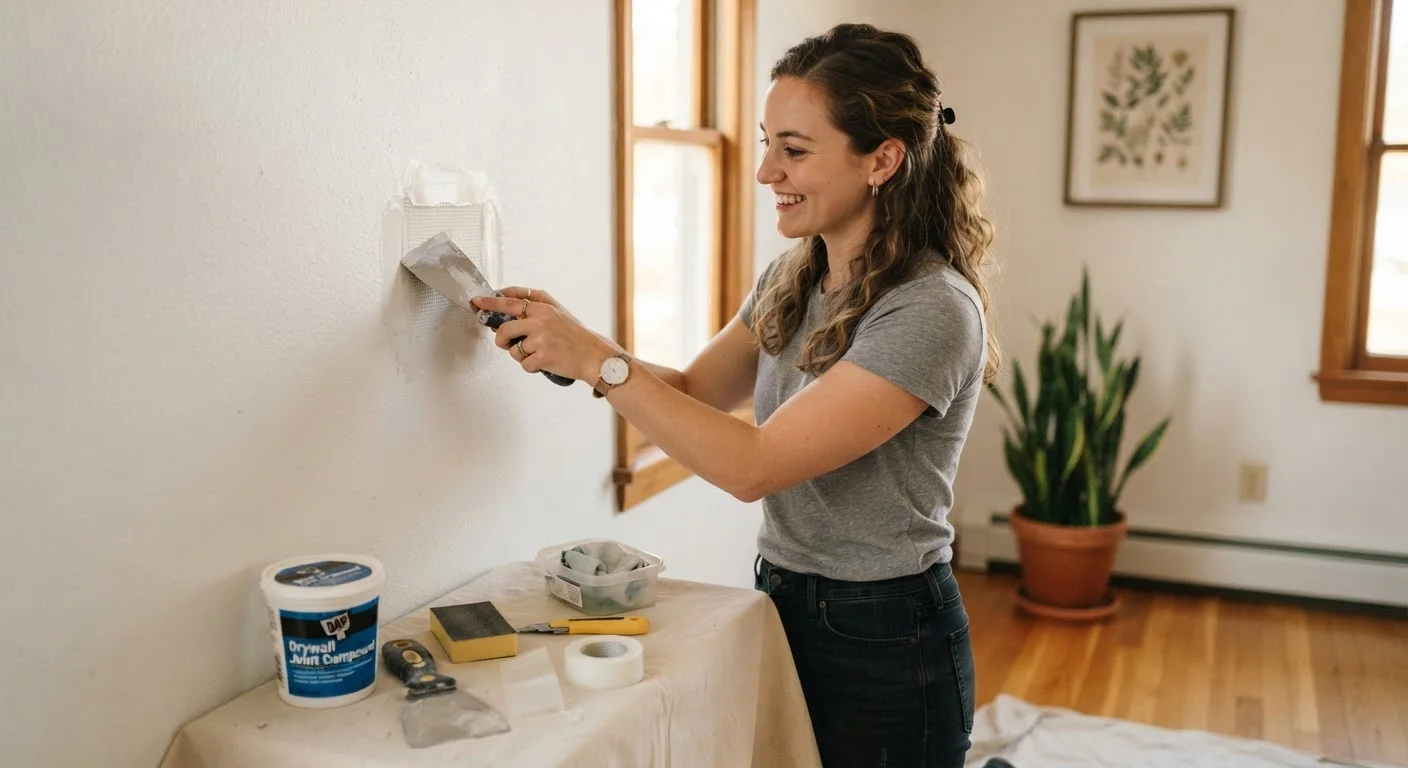
Patching Small Drywall Holes
Nail holes and minor scuffs from picture hooks or doorknobs are among the easiest repairs a beginner can make. A pre-mixed spackling compound, a putty knife, and fine-grit sandpaper are all you need for holes up to about a half-inch in diameter. For slightly larger holes — up to about four inches — mesh patch kits work reliably without requiring advanced technique. Sand flush when dry, prime, and paint.
Fixing a Running Toilet
A toilet that runs constantly almost always traces back to a worn flapper — the rubber seal at the bottom of the tank. Replacement flappers are inexpensive and universally sized. Turn off the water supply valve behind the toilet, flush to empty the tank, unclip the old flapper, and clip on the new one. The entire job typically takes under 20 minutes.
Replacing Outlet and Switch Cover Plates
Cracked or discolored cover plates are a cosmetic fix that requires only a flathead screwdriver and the replacement plate. Turn off the light switch before touching the switch itself — but for cover plates alone, the risk is minimal and no electrical knowledge is required.
Sealing Drafts Around Windows and Doors
Applying weatherstripping or rope caulk around drafty windows is a straightforward task with immediate impact on comfort and energy use. No specialized tools are needed, and the materials peel away cleanly if repositioned.
For a full list of tools that make these jobs easier, see The Renter's Toolkit. And if plumbing repairs are on your list, Common Myths About DIY Plumbing Repairs separates low-risk tasks from ones that can backfire.
What to Always Leave to a Licensed Professional
Knowing your limits isn't a weakness — it's the mark of a smart DIYer. Certain categories of work carry risks that no tutorial can fully mitigate, and attempting them without proper training can result in serious injury, costly structural damage, or code violations that affect your home's insurability or resale value.
Electrical Panel and Wiring Work
Anything involving your main breaker panel, running new circuits, or replacing wiring inside walls requires a licensed electrician. Incorrect wiring is a leading cause of residential fires and is invisible to inspection until something goes wrong. Most jurisdictions require a permit and inspection for this work.
Gas Lines and Appliances
Never attempt to move, extend, or repair a gas supply line yourself. Even small gas leaks create explosion and carbon monoxide risks. Gas appliance installation should always be handled by a licensed contractor, and local code typically mandates it.
Structural Modifications
Removing or altering walls — especially load-bearing ones — without engineering guidance can compromise a home's structural integrity. Always consult a structural engineer or licensed contractor before making any changes to walls, beams, or floor joists.
Roof Repairs Beyond Surface Patching
Working at roof height introduces fall risk that is serious even for experienced tradespeople. Replacing damaged shingles in an accessible spot may be manageable, but anything involving underlayment, flashing, or structural decking warrants professional attention.
When in Doubt, Stop and Consult a Pro
If a repair reveals something unexpected — discolored wiring, soft or wet drywall, a smell of gas, or visible mold — stop work immediately. These are signs of a larger underlying problem that a licensed professional needs to assess. Pushing forward without expertise can turn a small issue into a hazardous and expensive one.
Building Your DIY Skillset Gradually
The most capable DIYers didn't start with complex projects — they accumulated experience one repair at a time. Begin with the lowest-stakes tasks: patching, caulking, and replacing hardware. As those become second nature, you'll naturally develop the eye to recognize when a job has grown beyond your current level.
Document repairs as you go. A simple phone photo before and after helps you remember what you did and serves as a record if a landlord or future buyer has questions. Many local hardware stores and community colleges also offer free or low-cost hands-on workshops for homeowners — these are worth seeking out.
For a seasonal perspective on what maintenance tasks you can realistically handle yourself, Seasonal Home Maintenance Tasks You Can Handle Without a Handyman is a practical companion to keep bookmarked. And if you're curious how the same beginner-vs-pro calculus applies to vehicles, DIY vs. Mechanic: Which Car Jobs Are Worth Doing Yourself? offers a useful parallel framework.
The goal isn't to do everything yourself — it's to do the right things yourself, confidently and safely, while protecting your home and your wallet for the long run.
Frequently Asked Questions
It depends on your lease agreement. Most leases allow minor repairs like replacing light bulbs or unclogging drains, but require landlord approval for anything that alters fixtures or structures. Always check your lease and get written permission before making changes beyond basic maintenance.
Cosmetic repairs like patching drywall or painting never require permits. However, work that touches electrical wiring, plumbing supply lines, or load-bearing structures typically does. Permit requirements vary by municipality, so verify with your local building department before starting.
A basic starter set typically includes a hammer, flat and Phillips screwdrivers, an adjustable wrench, needle-nose pliers, a utility knife, and a tape measure. These cover the vast majority of beginner-friendly repairs without a significant upfront investment.
Stop if you encounter unexpected wiring, water damage behind walls, mold, or structural issues. Any repair that requires you to shut off a main utility — electricity at the panel, or water at the main shutoff — warrants a professional assessment first.
Some plumbing tasks are low-risk, such as replacing a faucet aerator, fixing a running toilet flapper, or unclogging a drain with a plunger. Tasks involving supply line connections, drain venting, or anything inside the wall should be left to a licensed plumber.
Underestimating the scope of a repair before starting is the most common pitfall. A hole in the wall might reveal mold; a dripping faucet might point to corroded pipes. Always investigate the full extent of an issue before committing to a fix.
The content provided on our blog site traverses numerous categories, offering readers valuable and practical information. Readers can use the editorial team’s research and data to gain more insights into their topics of interest. However, they are requested not to treat the articles as conclusive. The website team cannot be held responsible for differences in data or inaccuracies found across other platforms. Please also note that the site might also miss out on various schemes and offers available that the readers may find more beneficial than the ones we cover.