

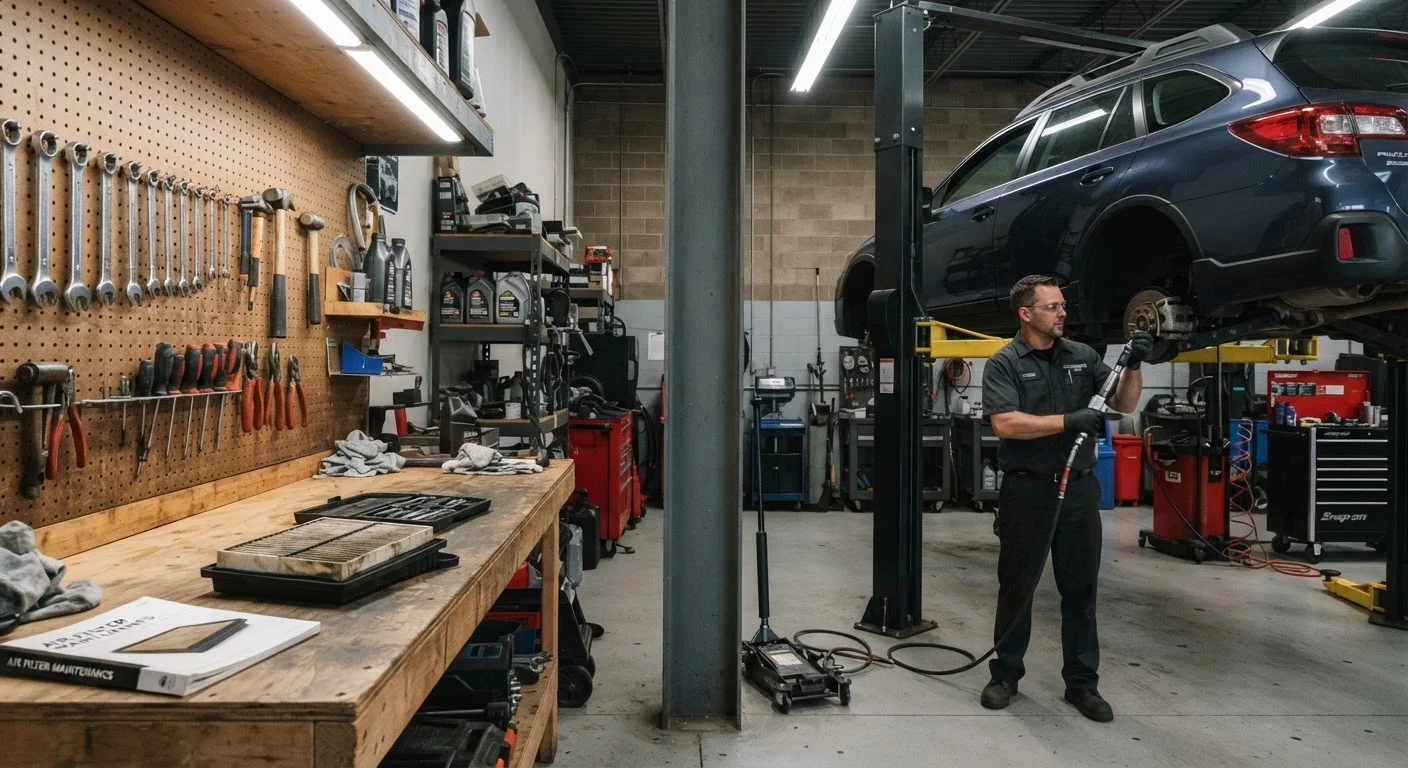
Option A
DIY Car Maintenance
The hands-on, cost-saving approach for straightforward tasks.
Best for: Budget-conscious drivers comfortable with basic tools who want to cut routine maintenance costs on simple, low-risk jobs.
Option B
Professional Mechanic
The safe, reliable choice when complexity or safety is at stake.
Best for: Jobs involving braking systems, electrical diagnostics, or anything requiring specialized tools and certifications.
Why This Decision Actually Matters for Your Budget
Car ownership costs more than most people expect. According to AAA's annual Your Driving Costs study, the average American spends well over $10,000 per year on vehicle ownership, with maintenance and repair representing a meaningful chunk of that. Labor rates at independent shops often run $80–$120 per hour; dealerships can charge significantly more.
That means even a simple oil change, priced partly on labor, costs far more than the parts themselves. The question isn't whether DIY saves money — it usually does. The question is which jobs are genuinely safe and practical to do yourself, and which ones become expensive mistakes when done without the right tools or knowledge.
For a broader look at where maintenance spending actually makes sense, see our guide on car maintenance priorities on a budget.
| Criterion | DIY | Professional Mechanic |
|---|---|---|
| Typical cost | Parts cost only | Parts + $80–$150/hr labor |
| Tools required | Basic hand tools | Specialty diagnostic equipment |
| Safety risk (if done wrong) | Low for simple tasks | Managed by trained technician |
| Best for | Filters, wipers, battery care | Brakes, suspension, electrical |
| Warranty considerations | May affect coverage | Usually preserves warranty |
| Learning curve | Low to moderate | Not applicable |
| Time investment | Variable; can take longer | Efficient with proper equipment |
Jobs That Are Genuinely Safe to DIY
Several routine maintenance tasks require nothing more than basic tools, a YouTube video, and a free Saturday afternoon. These are low-risk because a mistake is usually obvious, reversible, or inconsequential to safety:
- Engine air filter replacement: A $15–$25 part that usually snaps or screws into place. No tools required in most vehicles.
- Cabin air filter replacement: Often located behind the glove box. Takes under 10 minutes and costs about $15–$30 in parts.
- Wiper blade replacement: Blades attach via a simple clip. Most auto parts stores will show you how on the spot.
- Battery terminal cleaning: Corrosion on battery terminals can cause starting issues. Cleaning with a wire brush and baking soda solution is straightforward and safe.
- Tire pressure checks and inflation: A $15 gauge and access to air is all you need. Under-inflated tires reduce fuel economy and accelerate wear.
Our article on maintenance tasks you can genuinely do at home walks through these step by step.
Jobs That Belong in a Professional's Hands
Some repairs look approachable but carry real consequences if done incorrectly. These are the jobs where a professional is worth the cost:
- Brake pad and rotor replacement: Brakes are your primary safety system. Improper installation — wrong torque, uneven pad seating, or air in the hydraulic line — can cause brake failure. Most mechanics strongly recommend leaving this to a certified technician unless you have hands-on training.
- Suspension and steering components: Worn ball joints, tie rods, or control arms affect vehicle handling. Incorrect reassembly can make a car genuinely dangerous to drive.
- Electrical system diagnosis: Modern vehicles rely on complex, interconnected computer systems. Diagnosing a fault without a professional-grade OBD scanner and wiring knowledge often leads to replacing the wrong part.
- Timing belt or chain service: This is an engine-internal job. Getting it wrong can destroy an engine. Labor is expensive, but so is a new engine.
- Transmission service (fluid change or rebuild): Transmission fluid changes are possible DIY on some vehicles, but anything involving disassembly requires specialized knowledge.
Warranty and Insurance Considerations
Under the Magnuson-Moss Warranty Act, manufacturers generally cannot void a warranty simply because you performed your own maintenance — but there are exceptions, particularly if DIY work is linked to a specific failure. Some extended warranties have stricter language. Before doing your own oil changes or other maintenance on a vehicle still under warranty, review your warranty documentation carefully or contact the manufacturer directly.
This article is for general informational purposes only and is not a substitute for advice from a qualified automotive technician. Always consult a licensed mechanic before performing any repair that could affect vehicle safety.
How to Decide: A Practical Framework
Before picking up a wrench, run through these four questions:
- Do I have the right tools? A torque wrench, jack stands, and a reliable floor jack are the baseline for most underhood work. Improvising with unsafe substitutes is how injuries happen.
- Is this job safety-critical? If a mistake could make the vehicle unsafe to operate, defer to a professional.
- Does my warranty have conditions? Some manufacturer warranties require maintenance to be performed by certified technicians. Read your documentation or call the dealership's service department to confirm before proceeding.
- What does the parts-plus-labor math look like? If the part is $20 and the shop charges $40 in labor, DIY saves $40. If the part is $200 and a botched install means a $600 repair, the math shifts quickly.
The same logic applies in other areas of home upkeep — knowing the line between confident DIY and professional help is a skill worth developing. Our related coverage on beginner-safe DIY home repairs explores parallel thinking for household fixes.
The content provided on our blog site traverses numerous categories, offering readers valuable and practical information. Readers can use the editorial team’s research and data to gain more insights into their topics of interest. However, they are requested not to treat the articles as conclusive. The website team cannot be held responsible for differences in data or inaccuracies found across other platforms. Please also note that the site might also miss out on various schemes and offers available that the readers may find more beneficial than the ones we cover.