

Why Weatherstripping Matters
Drafts around doors and windows aren't just uncomfortable — they're a steady drain on your heating system. Air infiltration through gaps in the building envelope is one of the more common sources of energy loss in residential homes. Unlike structural insulation, which is expensive and disruptive to upgrade, weatherstripping is a low-cost, low-skill intervention that most renters and homeowners can handle in an afternoon.
It's worth understanding the difference between weatherstripping and caulk before you start. Caulk is used to seal static gaps — fixed joints between a window frame and wall, for example. Weatherstripping, by contrast, seals moving parts: the contact points where a door closes against its frame, or where a window sash meets its sill. If you're also dealing with cracked caulk around your window frames, see our guide on why caulk keeps cracking for a complementary fix.
This project fits neatly into a broader habit of proactive upkeep. For a fuller picture of accessible seasonal tasks, check the seasonal home maintenance checklist we've put together for DIY-minded homeowners.
Do a Draft Audit First
Before buying materials, walk through your home on a windy day and hold your hand near door and window edges to locate where air is actually entering. Prioritize exterior-facing doors and north- or west-facing windows first — these typically experience the greatest pressure differential. A targeted approach saves money and keeps the project manageable.
What You'll Need
Before purchasing any materials, inspect each door and window you plan to treat. Measure the total linear footage of the gaps you need to cover so you buy the right amount without overbuying. Different locations call for different products:
- Foam tape — best for irregular or lightly used gaps; compresses to fill uneven surfaces.
- V-strip (tension seal) — a folded plastic or metal strip that springs open to fill gaps along the sides of doors and double-hung windows. Very durable.
- Door sweeps — attached to the bottom interior edge of a door to block drafts from beneath.
- Reinforced felt — inexpensive and easy to cut, though less durable than foam or V-strip in high-traffic areas.
What you will need
Keep in mind that if your door or window frames are significantly warped or damaged, weatherstripping may not fully resolve the problem. In those cases, a licensed contractor should assess whether repair or replacement is warranted.
Step-by-Step Installation
Work through each door or window one at a time. The process below applies to most standard exterior doors; adapt it as needed for windows or interior doors.
Clean and dry the surfaces
Use a damp cloth to wipe down the door stop (the narrow strip of wood the door closes against) and any surfaces where you'll be applying adhesive-backed weatherstripping. Remove old adhesive residue with rubbing alcohol. Allow everything to dry completely — adhesive bonds poorly to damp or dusty surfaces.
Measure and cut the weatherstrip to length
Measure the top and both sides of the door frame separately; they are rarely identical. Cut V-strip or foam tape with sharp scissors or a utility knife, cutting at a 45-degree angle at corners so the pieces meet cleanly. Label each piece if you're working on multiple openings at once.
Install weatherstripping on the door stop
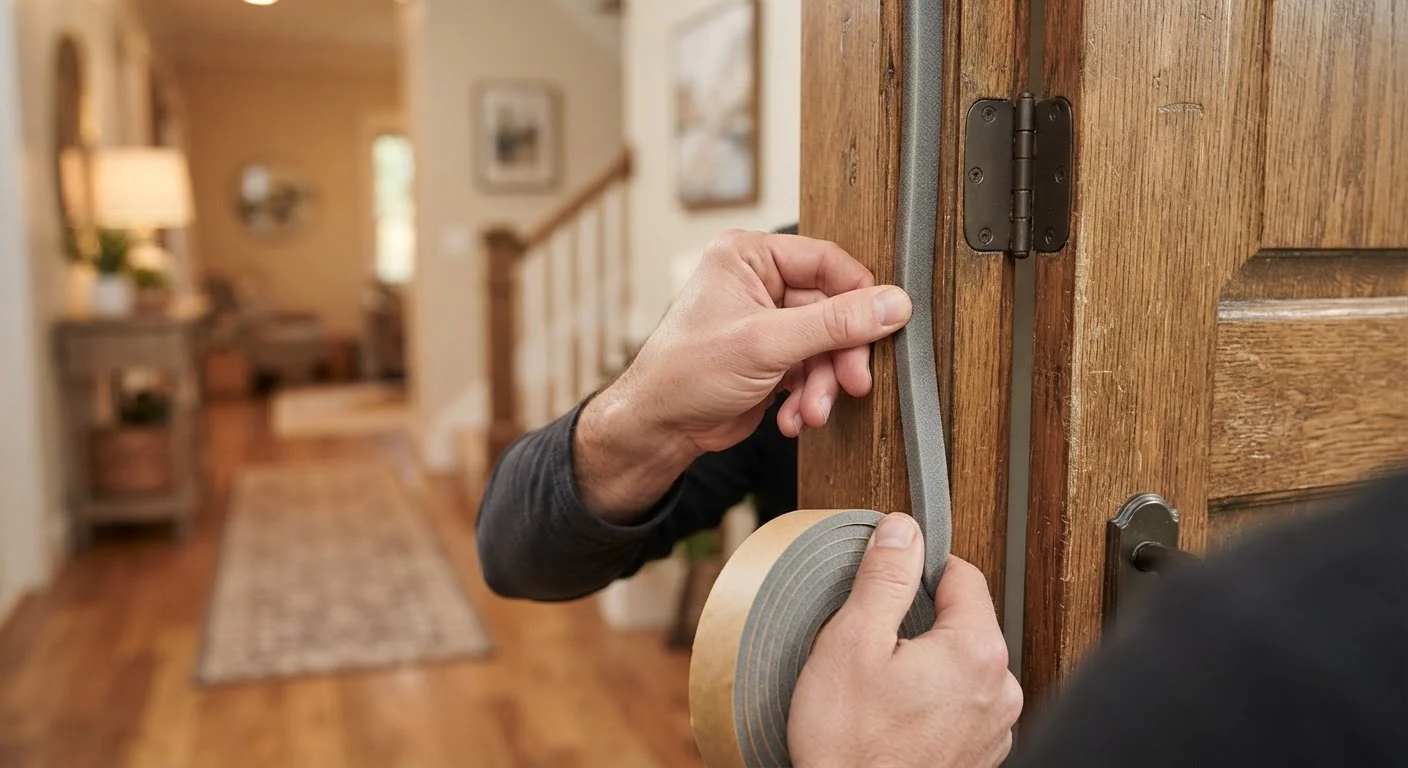
For foam or felt tape with a peel-and-stick backing, peel a few inches of the liner at a time and press the strip firmly into place along the door stop, working from one end to the other without stretching the material. For V-strip, position the open side of the V facing the outside (the side exposed to drafts), then nail or press into place per the manufacturer's instructions. Press firmly along the full length after installation.
Install the door sweep
Open the door and hold the sweep against the bottom inside face of the door, with the rubber or brush flap resting on the threshold. Mark the screw hole positions with a pencil. If the sweep needs to be trimmed to width, score and cut with a hacksaw or tin snips. Pre-drill pilot holes if working with a solid wood door, then attach with the provided screws.
Address window sashes
For double-hung windows, apply V-strip along the channels the sashes slide in (the vertical tracks on each side). Slide the strip in with the open side of the V facing outward, and press the flange flat against the channel. For the horizontal meeting rail — where the upper and lower sashes meet — foam tape applied to the lower sash's top edge is typically the most practical solution.
After You're Done: Testing and Troubleshooting
Once the weatherstripping is in place, test your work before calling it finished. Close the door or window and run your hand slowly along the frame — you should feel no air movement. Alternatively, hold a lit stick of incense near the seal on a windy day and watch for smoke disturbance.
If you still feel a draft, check whether the door or window closes evenly against the strip along its full length. A common issue is the door sagging slightly at the hinge side, creating an uneven gap on the latch side. In some cases, tightening hinge screws or inserting longer screws into the wall stud is enough to correct this without purchasing anything new.
For a broader look at gap-sealing techniques beyond weatherstripping — including floors and loft hatches — the draught-proofing guide covers additional methods using similarly accessible materials.
Plan to inspect your weatherstripping each fall before heating season begins. Foam tape in particular compresses over time and loses its effectiveness; V-strip and door sweeps tend to last longer but should still be checked for tears or detachment.
The content provided on our blog site traverses numerous categories, offering readers valuable and practical information. Readers can use the editorial team’s research and data to gain more insights into their topics of interest. However, they are requested not to treat the articles as conclusive. The website team cannot be held responsible for differences in data or inaccuracies found across other platforms. Please also note that the site might also miss out on various schemes and offers available that the readers may find more beneficial than the ones we cover.