

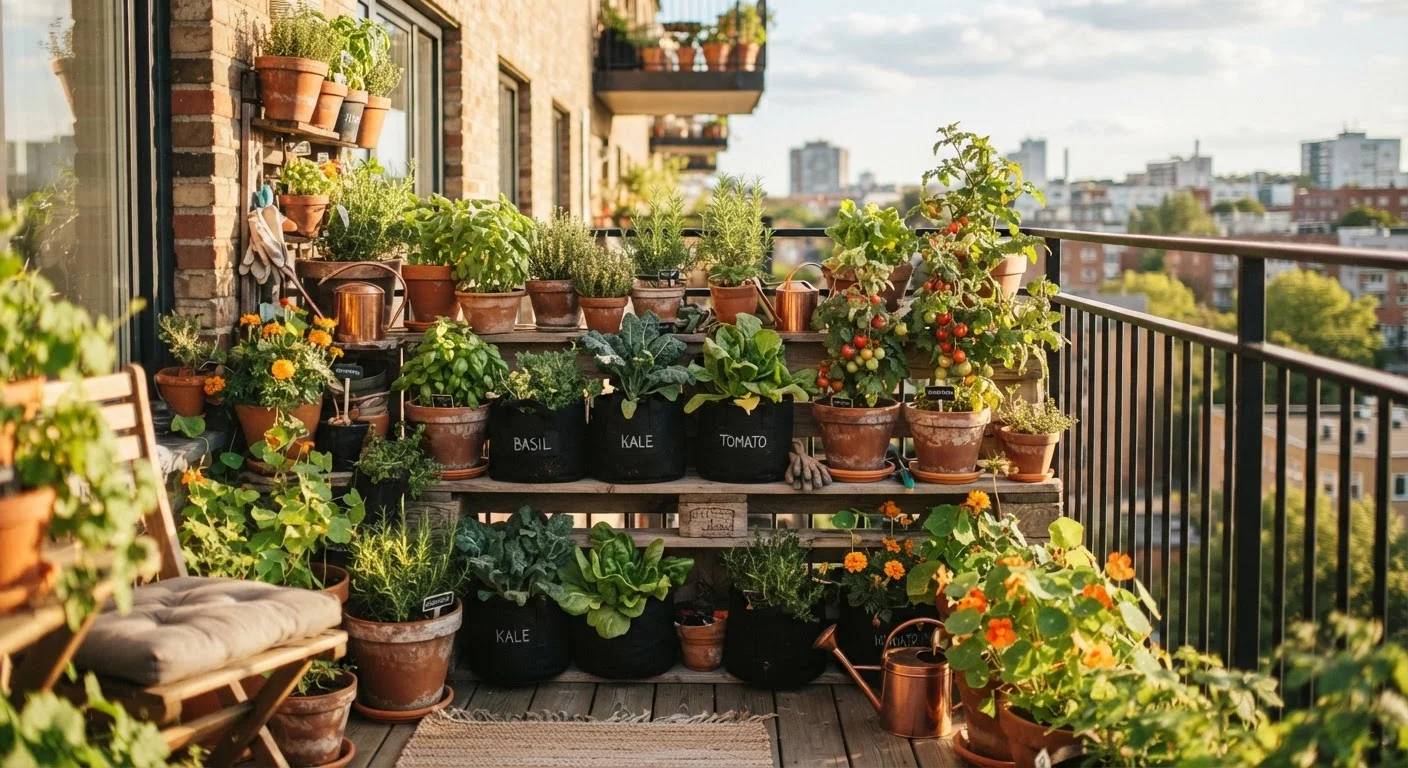
Why Container Gardening Is Built for Renters
Renting does not mean giving up on greenery or fresh food. Container gardening sidesteps the two biggest barriers renters face — no ground access and no permission for permanent changes — by keeping everything self-contained, portable, and reversible. When your lease ends, your entire garden packs up with you.
Beyond portability, containers let you control soil quality precisely, which matters especially in urban settings where shared outdoor areas may have poor or contaminated ground. You choose what goes in the mix, what nutrients you add, and where each pot sits — all without a landlord's sign-off on soil amendments or raised beds.
The Small Space Living hub is a useful companion resource if you're thinking beyond the balcony and looking to optimize your entire rental for comfort and function on a limited budget.
Check Your Lease Before You Start
Some rental agreements restrict balcony weight loads, prohibit drilling, or limit outdoor décor. Review your lease carefully and contact your landlord or property manager in writing before placing heavy containers on balconies or attaching anything to walls or railings. Getting written approval protects both your deposit and your garden.
Getting Started: What You Need and Where to Find It
The tools and materials for container gardening are minimal, and most can be sourced secondhand or repurposed. Before buying anything, read through the prerequisites and gather what you already have at home.
What you will need
Containers (pots, fabric grow bags, or repurposed buckets)
Hold soil and plants; the foundation of any container garden.
Potting mix (not garden soil)
Provides the drainage and aeration roots need in confined containers.
Saucers or drip trays
Catch excess water to protect floors and surfaces from staining.
Watering can with a narrow spout
Delivers water directly to soil without disturbing seedlings.
Slow-release granular fertiliser
Feeds container plants steadily over weeks without daily effort.
Freestanding plant stand or pallet shelf
Stacks containers vertically to maximise limited floor space.
Audit your light before choosing any plants
Stand in your rental space at midday and count the hours of direct sunlight each potential growing spot receives. South- and west-facing balconies typically get six or more hours — enough for tomatoes, peppers, and most herbs. East-facing spots suit leafy greens and mint. North-facing windowsills are best reserved for microgreens, chives, and shade-tolerant herbs like parsley.
Knowing your light profile prevents the most common beginner mistake: buying sun-loving plants for a shady corner and wondering why they fail.
Source containers without spending a lot
Containers do not need to be expensive. Food-grade five-gallon buckets, colanders, wooden crates lined with burlap, and deep nursery trays all work well. Thrift stores, online community exchanges, and restaurant supply leftovers are reliable sources. Fabric grow bags — sold inexpensively in multi-packs — are particularly useful for renters because they fold flat when you move.
For starting seeds and growing microgreens, repurposed takeout containers with drainage holes punched in the bottom are entirely functional. See our guide to starting a food garden with almost no budget for a deeper look at free and recycled resources.
Fill containers with the right growing medium
Garden soil dug from the ground compacts in containers and cuts off the air roots need. Use a commercially bagged potting mix, or blend two parts potting mix with one part perlite (a lightweight volcanic mineral that improves drainage). This combination works for most vegetables and herbs.
To cut costs further, a ratio of roughly 60% coir (coconut fibre), 30% compost, and 10% perlite performs well and uses less of the pricier pre-mixed bags. Fill containers to within an inch of the rim to leave room for watering without overflow.
Select plants matched to your container size
Container size dictates what you can grow successfully:
- Small pots (under 6 inches): chives, basil, mint, microgreens
- Medium pots (8–12 inches): lettuce, radishes, spinach, compact pepper varieties
- Large containers (14 inches and above): tomatoes (dwarf or patio varieties), cucumbers, Swiss chard, kale
Mixing compatible plants in one large container — a practice called companion planting — can improve yields and make use of vertical layers. Our article on what companion planting actually does explains which pairings have real evidence behind them.
Set up a watering routine
Containers dry out faster than in-ground beds because their soil volume is small and heat builds up in the pot walls. In warm weather, most containers need watering once daily; in cooler months, every two to three days. Push your finger an inch into the soil — if it feels dry, water thoroughly until it drains from the bottom holes.
Group containers together to reduce evaporation and create a slightly more humid microclimate around leaves. Self-watering pots with a built-in reservoir are worth considering for anyone who travels or has an irregular schedule.
Maximise vertical space without drilling
Floor space on a balcony or patio is finite. Freestanding ladder shelves, tension-rod plant hangers, and stacked pallet frames let you layer containers upward without a single screw going into a wall. This approach can triple your growing area without increasing your footprint.
The vertical space guide for renters covers load-bearing considerations and no-drill display solutions in detail. Always confirm the weight rating of any balcony shelf and keep heavier containers at floor level.
For plant spacing strategies that squeeze the most food from limited container real estate, the space-efficient planting guide offers layout techniques tailored to small balconies and patios. Once your container garden is established, building a low-maintenance garden explores how smart plant choices can reduce the time you spend keeping things alive.
The content provided on our blog site traverses numerous categories, offering readers valuable and practical information. Readers can use the editorial team’s research and data to gain more insights into their topics of interest. However, they are requested not to treat the articles as conclusive. The website team cannot be held responsible for differences in data or inaccuracies found across other platforms. Please also note that the site might also miss out on various schemes and offers available that the readers may find more beneficial than the ones we cover.