

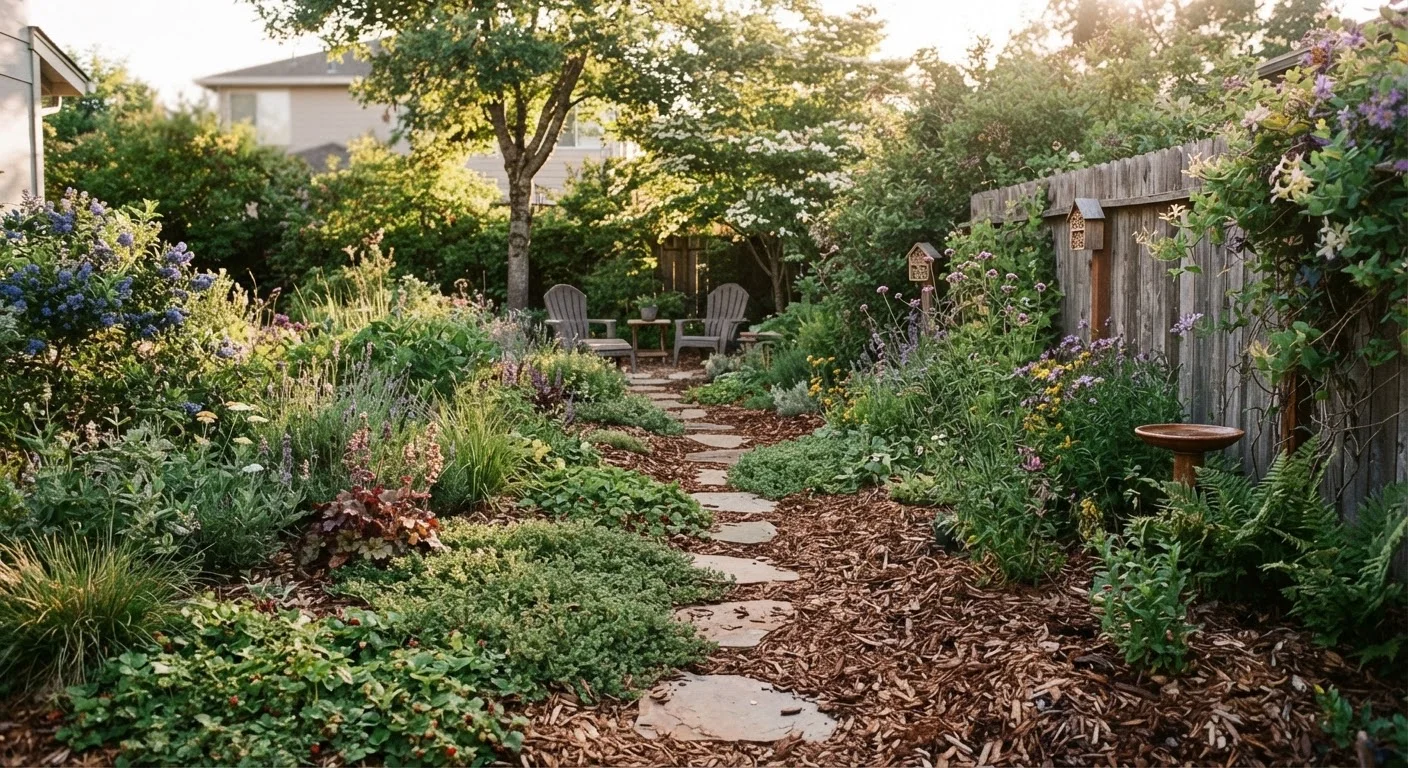
Why Low-Maintenance Gardening Starts with Design, Not Effort
Most gardeners burn out not because gardening is inherently hard, but because they set up a system that demands constant intervention. A poorly planned garden fights you — weak soil forces you to fertilise, bare earth invites weeds, and water-hungry plants tether you to a hose every other evening.
Low-maintenance gardening is fundamentally a design problem. The goal is to front-load the thinking and preparation so the garden can sustain a natural balance with minimal input. This doesn't mean a wild, unkempt yard — it means a yard where the components work together: the right plants for the right spots, soil that feeds itself over time, and ground-covering strategies that crowd out problems before they start.
If you're managing a small home and want the outdoor space to pull its weight without consuming your weekends, this guide covers the full picture — from initial plant choices to soil health to smarter watering habits. For broader ideas on running a home efficiently on a budget, the Low-Cost Home Life hub is a useful companion resource.
Choosing Plants That Do the Heavy Lifting
Plant selection is where you either earn or spend future maintenance time. The guiding principle: choose plants adapted to your local climate, soil type, and rainfall patterns. These plants evolved alongside your regional conditions and generally require no supplemental fertiliser, less watering once established, and better natural resistance to local pests.
Perennials Over Annuals
Perennial plants — those that return each year from the same root system — require far less replanting effort than annuals. While annuals like impatiens or marigolds demand a fresh start each season, perennials such as coneflowers (Echinacea), black-eyed Susans, or ornamental grasses establish themselves and grow stronger each year.
Ground Covers as Weed Suppressors
Low-growing, spreading plants like creeping thyme, clover, or ajuga act as living mulch. They shade the soil surface, reduce moisture loss, and physically block weed germination — replacing the need for regular weeding or chemical treatments. Clover also fixes atmospheric nitrogen into the soil, offering a natural fertility boost at zero cost.
For small spaces or rented properties, container gardening strategies can complement in-ground planting without permanent changes.
When selecting perennials, look for plants labelled 'native to your region' at the nursery rather than just 'low-maintenance' — native plants are adapted to local rainfall and pest pressure in ways that generic hardy plants are not.
Locally native plants have co-evolved with regional climate and soil conditions, meaning they typically require no supplemental watering once established and resist local pests without chemical intervention.
Apply mulch in late spring after the soil has warmed — not in early spring — so you're locking in warmth rather than keeping cold soil cold and slowing plant establishment.
Soil temperature directly affects root activity and microbial life. Mulching too early in the season can delay the soil warming that many plants depend on to begin active growth.
Building Soil That Feeds Itself
Healthy soil is living soil. A teaspoon of good garden soil contains billions of microorganisms — bacteria, fungi, and other organisms — that break down organic matter, cycle nutrients, and create the crumbly texture that plant roots need to thrive. Feeding and protecting this biology is far more effective than repeatedly adding purchased fertilisers.
Start with a Simple Soil Test
Many county cooperative extension offices in the US offer low-cost or free soil testing. A basic test reveals pH and major nutrient levels, giving you targeted information rather than guesswork. Over-fertilising is a common and expensive mistake — knowing what your soil actually lacks prevents wasted money.
Add Organic Matter, Not Synthetic Inputs
Compost is the most versatile soil amendment available. It improves drainage in clay soils, improves water retention in sandy soils, and steadily feeds soil biology. If you're not already composting, the composting basics guide explains the process honestly, including the real time investment. For free alternatives, see free and low-cost soil enrichment methods — coffee grounds, leaf mould, and wood chip mulch are all legitimate options.
Mulching: The Single Highest-Value Task in Your Garden
If you only do one thing for your garden's long-term health, apply mulch. A 2–3 inch layer of organic mulch — shredded leaves, wood chips, straw, or bark — delivers a remarkable range of benefits simultaneously: it suppresses weeds by blocking light to the soil surface, retains soil moisture (reducing watering frequency by up to 50% in some conditions), moderates soil temperature, and gradually breaks down to feed soil biology.
Shredded autumn leaves are entirely free and often available in abundance. Many municipalities also offer free wood chip mulch from tree-trimming operations — worth checking with your local public works department.
Don't pile mulch against plant stems
A common mistake is mounding mulch directly against the base of plants, shrubs, or trees — sometimes called 'volcano mulching.' This traps moisture against the stem or trunk, encouraging rot, fungal disease, and pest damage. Always leave a 2–3 inch gap between the mulch layer and any plant stem.
Mulch does not need to be refreshed constantly. A once-a-year top-up in spring is typically sufficient for most gardens. The key is keeping the layer consistent — thin patches invite weeds, while mulch piled against plant stems can cause rot.
Smarter Watering Without Constant Attention
Watering is where many gardeners inadvertently create extra work. Frequent shallow watering encourages roots to stay near the surface, making plants more dependent on you. Infrequent deep watering trains roots to grow downward, where soil moisture is more stable — producing more drought-tolerant plants over time.
Group plants with similar water needs together (a practice called hydrozoning) so you're not over-watering drought-tolerant plants to satisfy thirsty ones. A basic drip irrigation system or soaker hose on a timer removes the daily decision-making entirely — and uses water more efficiently than overhead sprinklers, which lose significant moisture to evaporation. The guide to watering habits that quietly kill plants covers the most common mistakes in detail.
Keeping Costs Minimal from the Start
A low-maintenance garden should also be a low-cost garden to establish. The two goals align: the more you spend on inputs (fertilisers, pesticides, water, replacement plants), the harder your garden is working against you.
Tools: Less Is More
Most gardening tasks require a trowel, a hand fork, a hoe, and a watering can or hose. Before adding anything else to your kit, run through the tool-purchase checklist to avoid buying gear you'll use once and store forever.
Seed Swaps and Division
Many perennials can be divided every few years — a single plant becomes two or three. Community seed swaps and local gardening groups are practical sources for plants at no cost. Regrowing vegetables from kitchen scraps is another genuinely cost-free way to expand your growing space.
Plan Before You Plant
Time spent planning saves money. Knowing your frost dates, sun exposure, and soil type before buying anything prevents the most common beginner mistake: purchasing plants that won't survive your conditions. The seasonal planting calendar is a useful starting framework for timing decisions.
A well-designed, self-sustaining garden is one of the most effective ways to add long-term value to your living space — without ongoing financial drain. For more ideas on running your home efficiently, explore the complete guide to making a small home work long-term.
The content provided on our blog site traverses numerous categories, offering readers valuable and practical information. Readers can use the editorial team’s research and data to gain more insights into their topics of interest. However, they are requested not to treat the articles as conclusive. The website team cannot be held responsible for differences in data or inaccuracies found across other platforms. Please also note that the site might also miss out on various schemes and offers available that the readers may find more beneficial than the ones we cover.