

Our Verdict
The price difference between generic and branded budget gadgets reflects a real but uneven mix of overhead costs, safety investment, and customer support — not a simple quality gap. For passive accessories and simple peripherals, generic options regularly hold their own. For power-related or safety-critical devices, certifications and accountability structures that come with established brands carry genuine value.
| Best for | Recommended |
|---|---|
| Shoppers wanting the lowest possible spend on low-risk accessories | Generic gadgets |
| Anyone buying charging hardware or devices that connect to mains power | Branded gadgets with safety certifications |
| Those who want a balance of savings and accountability | Established budget-focused brands with verifiable warranties |
Where the Price Difference Actually Comes From
Walk into any online marketplace and you'll find a $6 USB-C cable next to a $25 one that looks nearly identical. The instinct is to assume someone is being ripped off — but the truth is more complicated. Price gaps between generic and branded gadgets typically break down into four categories: manufacturing origin, compliance and certification costs, brand overhead, and post-sale support infrastructure.
Many generic gadgets, particularly simple accessories, roll off the same contract manufacturing lines as branded ones. In consumer electronics, it's common for one factory to produce goods for multiple labels simultaneously — a practice known as white-label manufacturing. What changes between the $6 and $25 cable isn't necessarily the copper inside; it may be the UL or USB-IF certification stamp, the customer service team standing behind it, and the margin built in to fund a recall if needed.
That said, some generic price cuts do reflect real component trade-offs — thinner wire gauges, lower-grade plastics, or capacitors that tolerate less heat. The challenge for budget shoppers is that neither scenario is obvious from a product listing photo. For context on how this dynamic plays out in non-tech categories, our piece on store-brand vs. name-brand groceries shows a strikingly similar pattern.
When Generic Is a Perfectly Reasonable Call
Not all gadget categories carry equal risk, and understanding that distinction is the clearest path to spending smarter. Passive accessories — think phone stands, webcam covers, cable organizers, basic styluses — involve no power regulation, no firmware, and minimal safety exposure. In these categories, generic options regularly match branded equivalents in day-to-day use.
Similarly, simple peripherals like wired keyboards, basic mice, and single-function USB hubs have limited failure modes. A generic wired keyboard either registers keystrokes or it doesn't; there's no firmware to exploit and no mains voltage to worry about. For this type of purchase, paying a premium for a name primarily buys you a returns experience — which matters, but not always enough to justify doubling the spend.
| Generic Gadgets | Branded Budget Gadgets | |
|---|---|---|
| Typical price point | Lower (often 40–70% less) | Moderate (reflects overhead costs) |
| Safety certification likelihood | Often absent or unverified | Generally present and verifiable |
| Warranty / return support | Seller-dependent; often minimal | Structured warranty, customer service |
| Firmware / software updates | Rare to nonexistent | More likely, especially for IoT devices |
| Component quality consistency | Variable; batch-dependent | More consistent QC standards |
| Best use case | Passive accessories, low-risk peripherals | Charging gear, smart devices, gifting |
The key evaluation question isn't "branded or generic?" — it's "what goes wrong if this fails?" If the answer is "I'm mildly annoyed and return it," generic is a reasonable gamble. See our broader framework in what value for money actually means in consumer tech.
When the Brand Premium Is Worth Paying
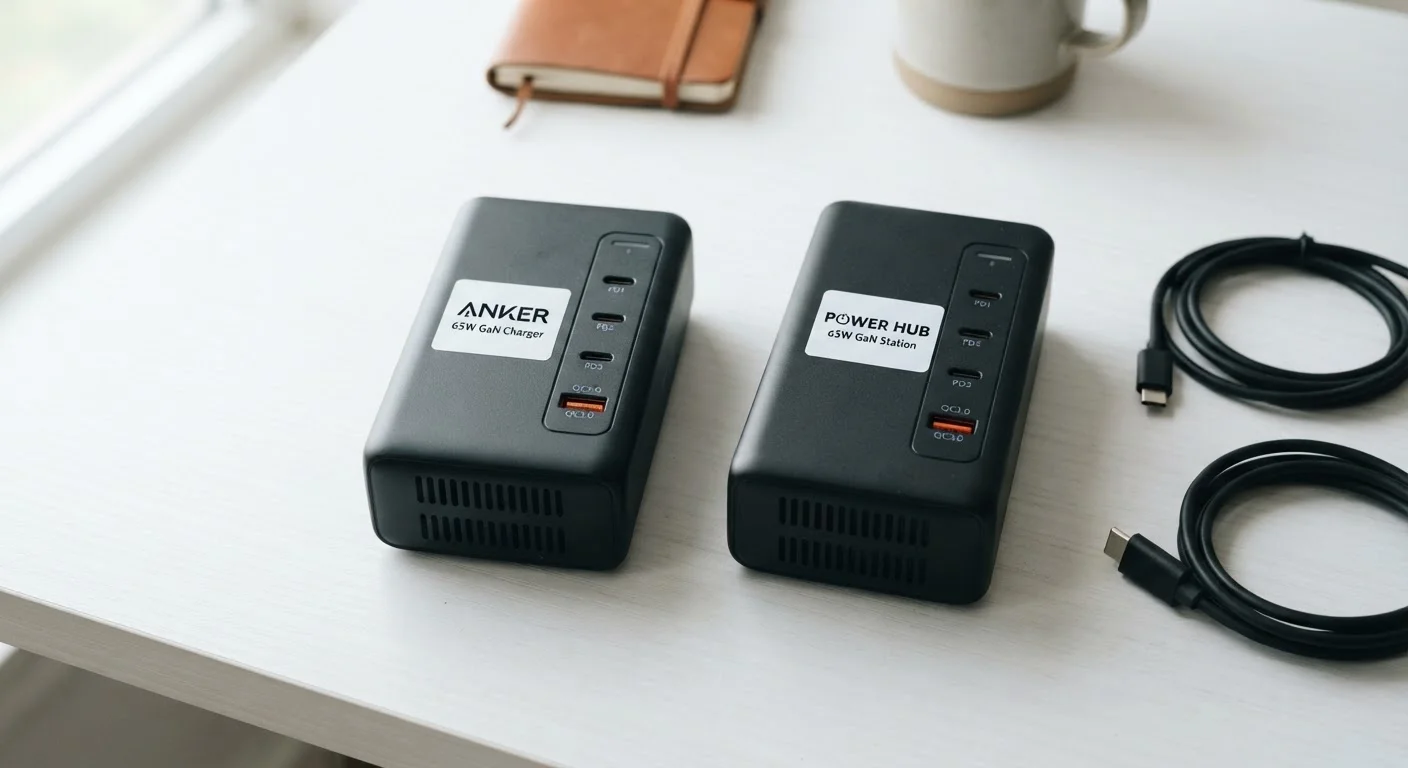
Anything that connects to a power outlet, charges a lithium battery, or plugs into a laptop deserves closer scrutiny. Cheap, uncertified chargers and power banks have a documented history of overheating and, in rare cases, fire. The UL, FCC, or CE markings on a product aren't marketing fluff — they represent testing costs the manufacturer paid, and accountability obligations they accepted. Generic listings frequently omit or falsify these marks, which is a meaningful red flag.
Wireless earbuds, cheap smart plugs, and no-name Wi-Fi cameras introduce a second risk layer: software. Generic IoT (Internet of Things) gadgets often ship with firmware that receives no security patches. That $12 smart plug might work fine for two years — or it might become a vulnerability on your home network with no update path. For more on this, our article on common misconceptions about budget tech addresses the "brand names are always safer" myth while still acknowledging where the concern is legitimate.
The calculus shifts further if you're buying for someone else — a kid, an elderly relative — who won't monitor for warning signs. In those situations, verifiable warranty coverage and a real customer service contact aren't luxuries.
How to Evaluate a Generic Gadget Before You Commit
Generic doesn't have to mean a blind gamble. A few practical checks shift the odds significantly in your favor:
- Search for the certification marks relevant to the product (UL for electrical safety in the US, FCC for radio devices). Look for them in the listing, then search the certifying body's public database to verify they're real.
- Check the seller's return window and policy. A 30-day no-questions return window is your real warranty on a $10 item. Without it, you're absorbing all the risk.
- Read one-star reviews, not five-star ones. Failure modes and longevity issues show up there, not in curated positive feedback.
- Look for consistent brand presence. A seller with multiple listings, a storefront, and a track record of customer responses carries more accountability than a single-listing drop-shipper.
These same evaluation principles apply whether you're shopping for tech or other household goods — our generic vs. brand-name cleaning products comparison walks through a parallel process for everyday home purchases.
If you're also weighing refurbished options alongside generic ones, refurbished vs. new budget tech breaks down what each label actually guarantees — a useful companion read before any budget tech purchase.
The content provided on our blog site traverses numerous categories, offering readers valuable and practical information. Readers can use the editorial team’s research and data to gain more insights into their topics of interest. However, they are requested not to treat the articles as conclusive. The website team cannot be held responsible for differences in data or inaccuracies found across other platforms. Please also note that the site might also miss out on various schemes and offers available that the readers may find more beneficial than the ones we cover.