

Why Renter-Friendly Smart Home Advice Is Hard to Find
Most smart home content is written with homeowners in mind — people who can drill holes, replace wiring, and swap out fixtures without a second thought. If you're renting, that framing leaves you with a list of products you can't actually use without risking your deposit.
The real question isn't "what's the most powerful smart home setup?" It's "what can I automate without violating my lease?" Those are very different questions, and this reference guide addresses the second one directly.
Before adding any device, it helps to run through basic compatibility and compatibility questions. See this pre-purchase checklist for a structured way to think that through. And if you're starting from zero, building a smart home in the right order matters more than most guides admit.
What Renters Can Realistically Change
The safest smart home upgrades for renters share one trait: they plug in or sit on surfaces rather than replacing anything built into the unit.
Generally Safe Without Landlord Permission
- Smart plugs: Convert any standard outlet into a remotely controlled one. No wiring required. Unplug when you leave.
- Smart bulbs: Screw into existing fixtures. Restore original bulbs before moving out.
- Plug-in smart lamps and light strips: Entirely freestanding; zero impact on the unit.
- Smart speakers and displays: Portable, no installation needed.
- Robot vacuums and smart air purifiers: Floor-based appliances your landlord won't notice or care about.
- Smart power strips: Control multiple devices from one outlet.
Often Okay — But Ask First
- Plug-in smart doorbells: Some models clip over existing doorbells without any screws. Others require minimal drilling — get permission first.
- Removable smart locks: Certain models mount over your existing deadbolt without replacing it, but your lease may prohibit any lock modification. Check in writing.
- Smart smoke detectors: Replacing an existing detector may void fire-safety obligations in your lease. Confirm with your landlord and local code before touching these.
Thinking about ongoing costs beyond devices? subscription fees and energy draw can quietly add up even on plug-in setups.
What Renters Generally Cannot (or Should Not) Change
Some smart home upgrades involve modifying the unit itself — and those almost always require explicit landlord permission, a licensed technician, or both.
Smart plug
An adapter that sits between a standard wall outlet and any appliance, allowing remote on/off control via an app or voice assistant. No wiring is involved — it simply plugs in.
Low-voltage wiring
The thin wiring that connects thermostats and doorbells to HVAC systems or chime units. It carries less electricity than standard household wiring but still requires care — and in rental settings, it belongs to the landlord's infrastructure.
Lease modification clause
A section of most rental agreements that prohibits tenants from altering the physical structure or fixtures of the unit without prior written landlord consent. Violating it can trigger deposit deductions or eviction proceedings.
Permit requirement
Many U.S. states and municipalities require a building permit — and sometimes a licensed electrician — for work involving household wiring, panel access, or structural changes. Requirements vary widely by location.
Typically Off-Limits Without Written Landlord Approval
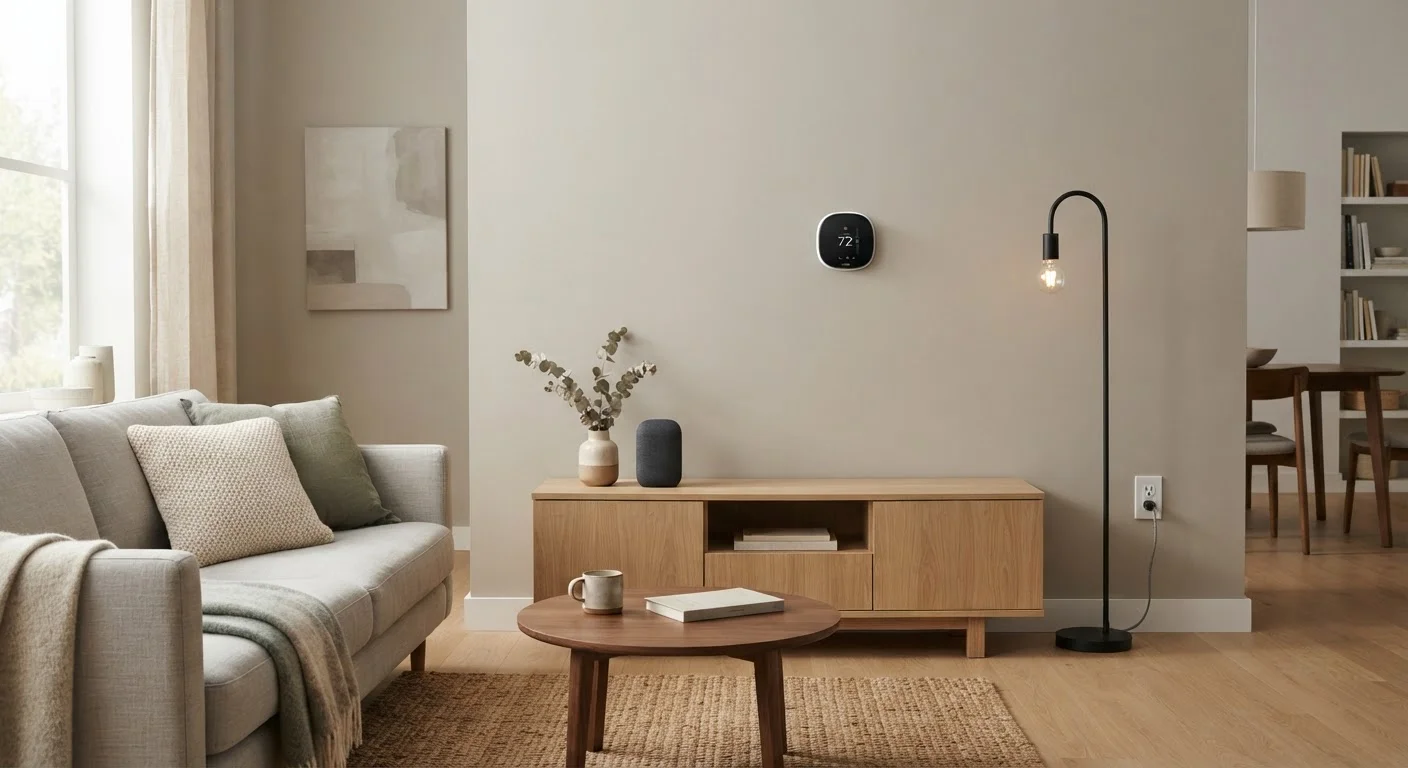
- Smart thermostats: Replacing a wired thermostat involves disconnecting existing low-voltage wiring. This modifies a landlord-owned system and may affect HVAC warranties. Some landlords will agree to it; many won't.
- In-wall smart switches and dimmers: These replace existing switch hardware and require working inside the electrical box — regulated work in most U.S. jurisdictions and a lease violation in most rentals.
- Hardwired smart doorbells: Wired models tap into existing doorbell wiring; this modifies the unit.
- Smart ceiling fans or fixtures: Replacing any ceiling-mounted fixture typically requires turning off a breaker and handling wiring. Permit requirements vary by state.
- In-wall ethernet or cable runs: Drilling through walls for network wiring is a structural modification.
If your landlord does approve any of the above in writing, document everything — before and after photos, the written agreement, and a note of who did the work. For entry-level setups that stay well within renter-safe territory, understanding what budget devices actually do is a useful starting point.
Once you know what you can install, setting up genuinely useful automations is the logical next step. These early automations work well even with plug-in-only devices. For broader household budgeting context, the Low-Cost Home Life hub covers running a comfortable rental without overspending.
This article provides general informational guidance only and is not legal or professional advice. Lease terms and local regulations vary. Always review your specific lease agreement and consult a qualified professional if you are uncertain about your rights or obligations as a tenant.
The content provided on our blog site traverses numerous categories, offering readers valuable and practical information. Readers can use the editorial team’s research and data to gain more insights into their topics of interest. However, they are requested not to treat the articles as conclusive. The website team cannot be held responsible for differences in data or inaccuracies found across other platforms. Please also note that the site might also miss out on various schemes and offers available that the readers may find more beneficial than the ones we cover.