

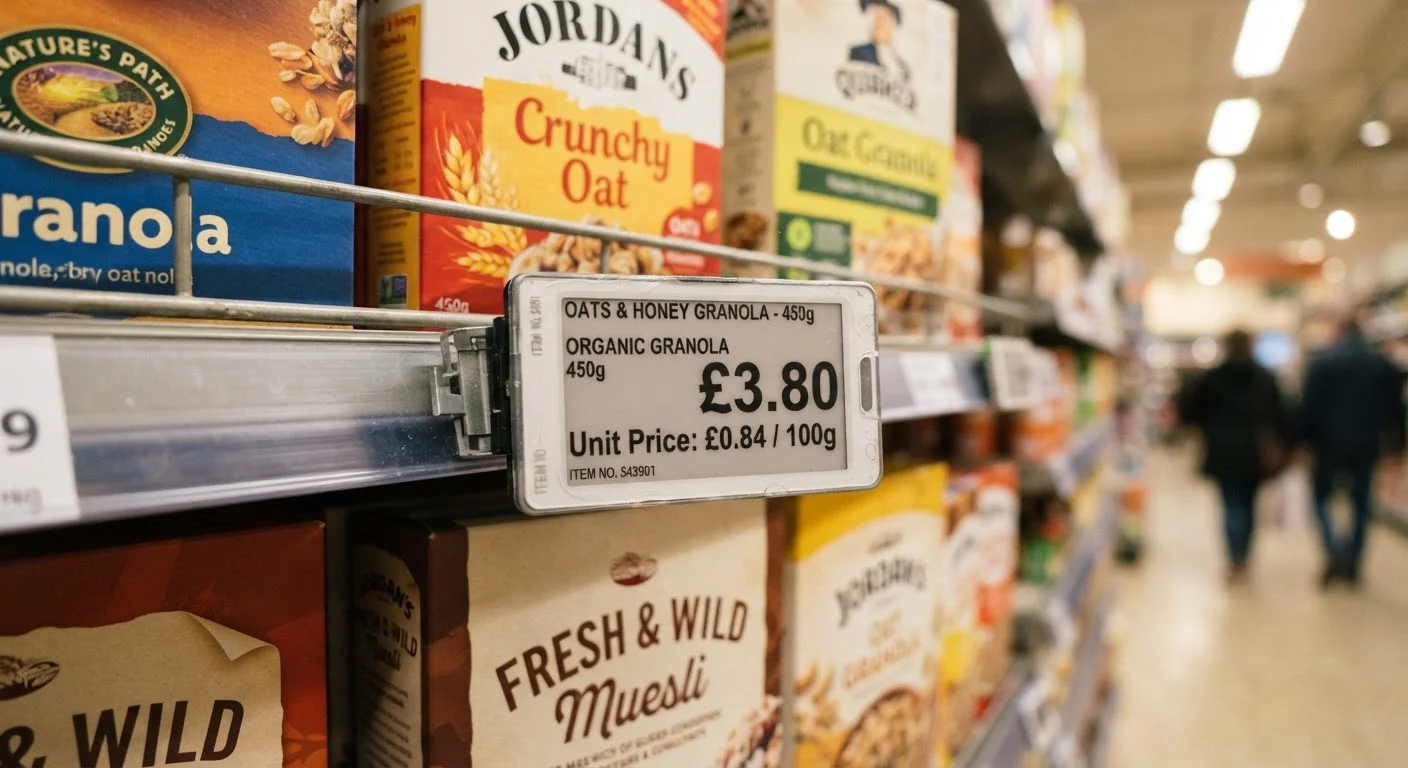
Why Unit Pricing Is the Skill Most Shoppers Miss
Walk down any grocery aisle and you'll see a wall of choices — same product, six different sizes, five different prices. Most shoppers default to comparing shelf prices or guessing that bigger means cheaper. That's exactly where grocery budgets quietly leak.
Unit pricing cuts through that noise. Instead of comparing a $3.49 bottle against a $5.29 bottle, you compare what each costs per ounce, per count, or per pound. That's the number that tells you what you're actually paying. For a deeper look at why shelf price alone misleads, see our guide on unit price vs. shelf price.
The good news: this skill takes about two minutes to learn and costs nothing to use. It's one of the most reliable changes you can make in a routine grocery run — no coupons, no apps, no membership required. If your current shopping habits are already costing you more than you realize, it's worth pairing this with a look at common grocery habits that drain budgets.
What You'll Need Before You Start
Unit pricing requires almost no setup — but a couple of things help.
What you will need
That's genuinely it. No special apps or tools are needed, though a phone calculator speeds things up when shelf labels are unclear or absent.
You Don't Need an App for This
Some grocery apps calculate unit pricing automatically, but you don't need one to get started. The shelf label and your phone's built-in calculator are enough. Keeping it simple means you're more likely to actually do it every time.
How to Use Unit Pricing at the Store
Follow these steps during your next grocery run. Once it clicks, it becomes automatic.
Locate the unit price on the shelf label
Most US grocery stores display unit price directly on the shelf label, usually in smaller print beneath the shelf price. It typically looks like: $0.18 / oz or $1.24 / lb. Look for it in the bottom-left or bottom-right corner of the label.
The unit — ounce, pound, count, liter — is printed alongside the price. Make a note of it before comparing products.
Calculate the unit price yourself when the label is missing
If a label doesn't show a unit price — which does happen, especially for sale items or end-caps — calculate it yourself:
- Find the total price of the product.
- Find the total quantity (check the package: net weight, fluid ounces, count, etc.).
- Divide the price by the quantity: Price ÷ Quantity = Unit Price.
Example: A $4.80 jar containing 24 oz works out to $0.20 per ounce. A $3.60 jar at 16 oz is $0.225 per ounce. The larger jar is cheaper per ounce despite the higher shelf price.
Compare unit prices across sizes and brands
With unit prices in hand, the comparison is straightforward: the lower unit price is the better deal per unit of product, assuming quality is equivalent.
Check across:
- Package sizes of the same brand (medium vs. large vs. family size)
- Store brand vs. name brand for identical product types
- Different brands at different price points
Jot down the unit prices on your phone or list if you're comparing across different aisles.
Factor in realistic usage before choosing the larger size
The lowest unit price doesn't automatically mean the right choice. Ask yourself: will I actually use all of this before it expires or goes stale?
For shelf-stable pantry staples — canned goods, dried pasta, rice, condiments you use regularly — buying the larger size when it has a lower unit price is usually a straightforward win. For fresh produce, dairy, or anything perishable, weigh the unit price savings against realistic consumption.
Make it a consistent habit at checkout
Unit pricing pays off most when it becomes a default behavior rather than an occasional effort. Before adding any product to your cart, spend five seconds glancing at the unit price. Over a full shop, those quick comparisons compound into meaningful savings.
After a few trips, you'll start to remember the unit prices of items you buy regularly, which makes the process even faster.
One thing to keep in mind: unit pricing is most useful when you're comparing the same type of product — same quality tier, same intended use. A store-brand olive oil and a premium imported olive oil may have very different unit prices, but they're not always equivalent substitutes. Use unit price to compare genuinely comparable options. For guidance on where store-brand alternatives hold up well, check out our look at generic vs. brand-name products.
When Unit Pricing Doesn't Tell the Whole Story
Unit pricing is a reliable tool, but it has limits worth knowing.
Perishables and waste: The lowest unit price on a bulk pack of produce means nothing if half of it spoils before you use it. Factor in realistic consumption before committing to a larger size. This connects to a broader question explored in when bulk buying actually saves money.
Inconsistent units: Some stores display unit price per ounce for one size and per pound for another on the same shelf. Always check that you're comparing the same base unit before drawing conclusions.
Sale pricing: A smaller size on sale can sometimes undercut the unit price of the larger standard-priced version. Don't skip checking the sale tag's unit price — it's often printed there too.
Convenience packaging: Single-serve or pre-portioned products almost always carry a unit price premium. That premium isn't always unjustified — but it's worth knowing you're paying it. The real cost of convenience adds up faster than most people expect.
Unit pricing works best as one tool among several. Combine it with a solid pre-shop routine — our pre-shop checklist covers exactly that — and you're building a habit stack that consistently keeps spending in check without overhauling how you live.
This article is for general informational purposes only and does not constitute financial advice. For guidance tailored to your personal financial situation, consult a qualified financial professional.
The content provided on our blog site traverses numerous categories, offering readers valuable and practical information. Readers can use the editorial team’s research and data to gain more insights into their topics of interest. However, they are requested not to treat the articles as conclusive. The website team cannot be held responsible for differences in data or inaccuracies found across other platforms. Please also note that the site might also miss out on various schemes and offers available that the readers may find more beneficial than the ones we cover.