

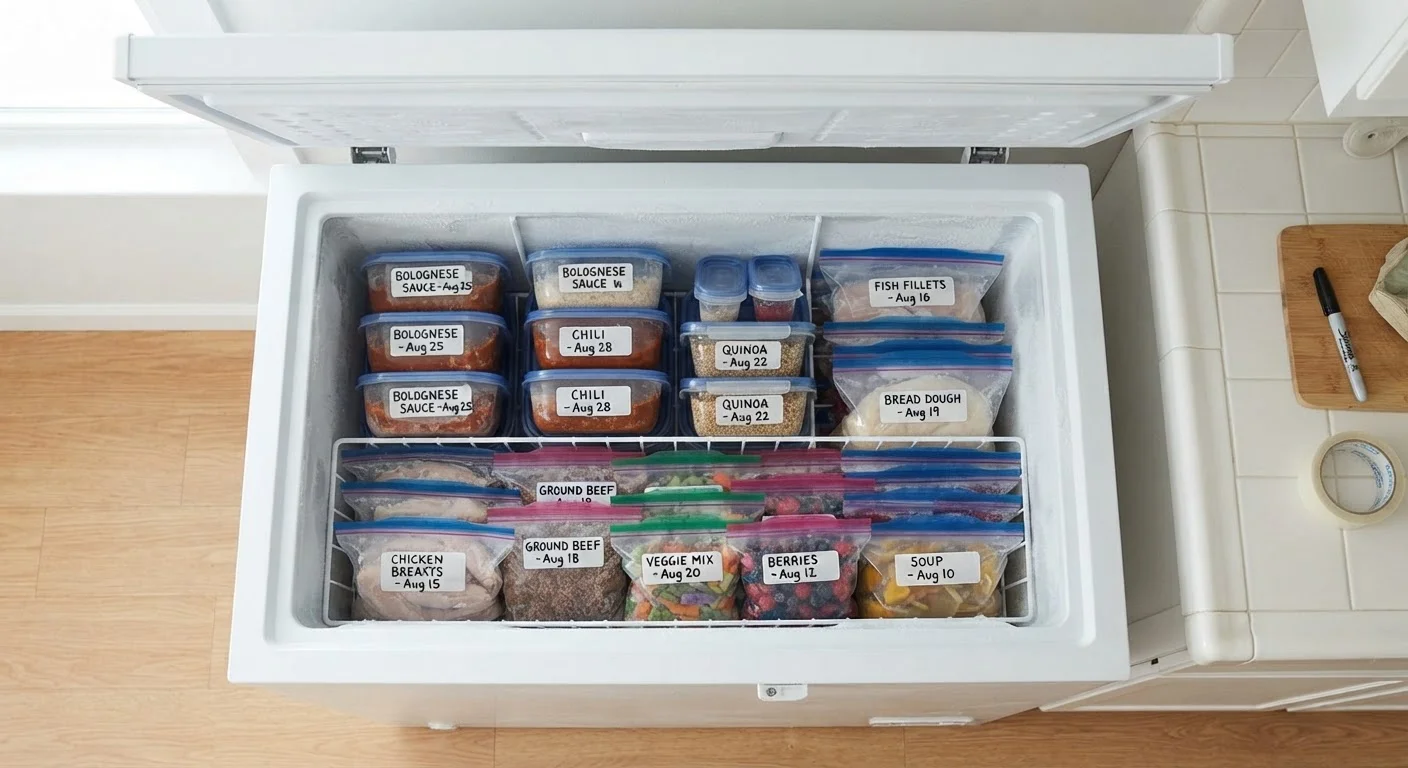
Why Your Freezer Is an Underused Budget Tool
For most budget-conscious households, the freezer sits somewhere between a convenience and a mystery. Food goes in optimistically and sometimes comes out months later as an unidentifiable frost-covered block. That's not a storage problem — it's a system problem.
Used intentionally, even a small apartment freezer can dramatically reduce your weekly grocery spend. It lets you buy proteins in bulk when prices dip, batch-cook once and eat multiple times, and rescue produce before it turns. If you already plan meals around what you have on hand — as outlined in our weekly grocery budget guide — the freezer becomes the engine that makes that system actually work.
The goal here isn't a perfectly curated freezer. It's a functional one that you can navigate quickly and trust completely.
What Actually Freezes Well (and What Doesn't)
Understanding what survives the freezer is half the battle. The following categories hold up well:
- Raw proteins: Chicken, ground beef, pork, fish fillets, and shrimp all freeze well. Portion before freezing so you only thaw what you need.
- Cooked grains and legumes: Rice, quinoa, lentils, and beans freeze in portions perfectly. Cook a big batch, freeze in cup-sized amounts, and you have instant meal components.
- Blanched vegetables: Briefly boiling vegetables before freezing (blanching) stops enzyme activity that causes deterioration. Broccoli, green beans, corn, and spinach all respond well.
- Bread and baked goods: Sliced bread, muffins, and pancakes freeze without issue and thaw at room temperature in minutes.
- Soups, stews, and sauces: Tomato-based and broth-based preparations freeze excellently. Avoid cream- or dairy-heavy sauces — they often separate when reheated.
Foods that don't freeze well include raw potatoes (they turn grainy), high-water salad greens, whole eggs in shells, soft cheeses, and most mayonnaise-based dishes. It's worth knowing this before you commit freezer space to something that won't be usable.
For more on how frozen produce compares nutritionally to fresh, see our piece on what nutrition science says about frozen vs. fresh produce.
Storage Practices That Maximize Limited Space
Small freezers reward a specific packing strategy. Here's what makes the biggest difference:
Freeze flat in resealable bags to maximize vertical space
Flat-frozen bags stack like files in a drawer, making it possible to fit significantly more into a compact freezer. They also thaw faster than thick blocks because of the increased surface area.
Label everything with contents and the date it was frozen
Unlabeled food is food you'll throw away. After even a few weeks, most items look identical under frost. A label takes five seconds and is the difference between a useful freezer and a guessing game.
Portion proteins before freezing, not after
Thawing and refreezing degrades texture and creates food safety risk. Portioning before freezing means you only thaw exactly what a single meal requires, reducing both waste and risk.
Keep a small buffer of empty space for airflow and new additions
A completely packed freezer makes rotation nearly impossible and can strain the appliance in some models. A 10–15% empty buffer keeps the system manageable and accessible.
Treating your freezer as part of a broader pantry-first cooking approach — where you cook from what you already own before buying more — makes these habits compound over time. Our pantry-first cooking guide explains how to build this into a weekly routine.
Rotation: The Habit That Prevents Waste
Rotation is just one rule applied consistently: first in, first out. Whatever went into the freezer first should come out first. This sounds obvious, but without a deliberate system most people load new items on top and discover six-month-old chicken behind the newer stuff.
A good rotation habit works best when paired with a simple freezer inventory — even a sticky note on the door listing what's inside and when it was added. You don't need an app or spreadsheet. You just need to know what you have so you can plan around it rather than rediscovering it months later in an unusable state.
This article is for general informational purposes only. Food safety guidance can vary; consult official food safety resources such as USDA FoodSafety.gov for specific storage time recommendations and safe handling practices.
The content provided on our blog site traverses numerous categories, offering readers valuable and practical information. Readers can use the editorial team’s research and data to gain more insights into their topics of interest. However, they are requested not to treat the articles as conclusive. The website team cannot be held responsible for differences in data or inaccuracies found across other platforms. Please also note that the site might also miss out on various schemes and offers available that the readers may find more beneficial than the ones we cover.