

Why Starting in Your Kitchen Beats Starting at the Store
Most grocery overspending doesn't happen at the register — it starts at home, when you write a shopping list without first checking what you already have. You end up buying a second jar of cumin, forgetting the chicken thighs in the freezer, or letting half a bag of spinach go limp in the crisper drawer. Those small losses accumulate fast.
The fix is straightforward: before you plan a single meal, you audit what's already in your kitchen. This approach — sometimes called pantry-first cooking — treats your existing inventory as the foundation of the week's menu, not an afterthought. For a deeper look at why food waste quietly drains household budgets, see The Hidden Cost of Food Waste — and a Weekly Routine That Fixes It.
The steps below walk you through the full process, from scanning your shelves to writing a grocery list that covers only what you genuinely need.
What you will need
Step-by-Step: Plan Meals Around What You Own
Follow these steps once a week — ideally the day before your usual grocery run. The process gets faster once it becomes habit.
Clear and audit your fridge
Pull everything out of the fridge — or at minimum, check every shelf and drawer deliberately. Group items by type: proteins, dairy, produce, condiments, leftovers. Note what needs to be used within the next two to three days before it spoils. These become your meal planning priorities for the first half of the week.
Inventory your freezer
Freezers accumulate forgotten food quickly. Take stock of what's in there: proteins, pre-cooked grains, frozen vegetables, sauces. Write down anything that's been sitting for more than a month — those items should get priority in this week's meal plan before quality degrades further. A labeled list taped inside the freezer door makes this step faster every subsequent week.
Scan your pantry for usable staples
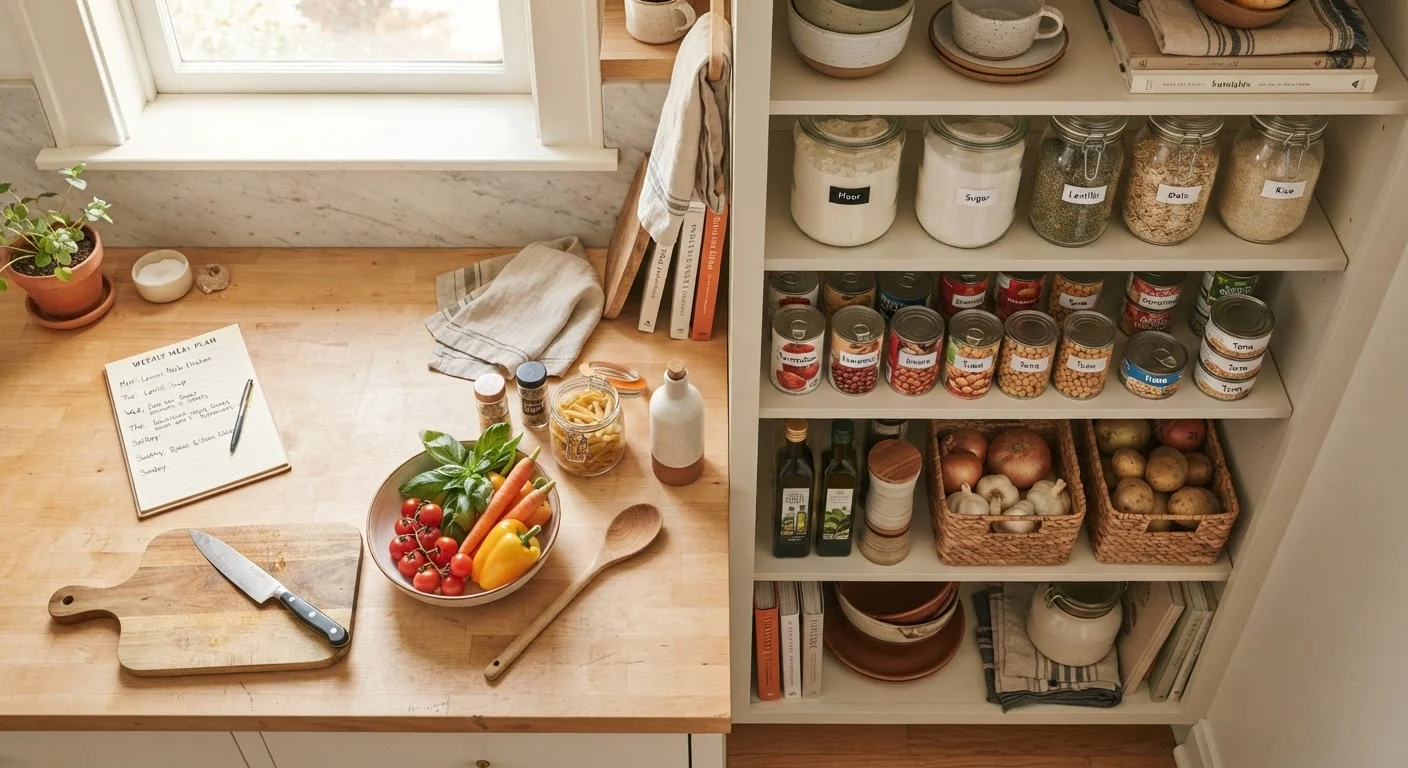
Check dry goods: pasta, rice, lentils, canned beans, canned tomatoes, oats, flour. Note quantities — half a box of pasta is still a meal with the right additions. Look at oils, vinegars, spices, and sauces too. These pantry staples are the backbone of low-cost cooking and often mean you need to buy far less fresh food than you'd assume.
Build your meal plan around what you have
Start with your most perishable fridge items and plan meals for Monday and Tuesday around those first. Then layer in freezer proteins and pantry staples to fill out the rest of the week. Aim for five to six dinners, keeping lunches simple — leftovers from the previous night's dinner cut down on both effort and cost. If protein variety feels limited, plant-based proteins like lentils and chickpeas are affordable ways to fill the gap without hitting the meat counter.
Write a gap-only shopping list
Now that you know what the week's meals require, identify only the ingredients you genuinely don't have. Write a specific list — not "vegetables" but "one bunch of kale and two bell peppers." Vague lists lead to overspending. Before heading out, cross-reference your list against your audit notes one final time. For a complete pre-shop checklist you can reuse every week, see Before You Head to the Supermarket.
Getting More From Every Week
Once the pantry-audit habit is locked in, a few refinements stretch your results further. Stocking a reliable set of dry staples — grains, legumes, canned tomatoes, oils — gives you a flexible base that rarely needs restocking every week. Pantry Staples That Form the Foundation of Frugal Cooking covers which items deliver the most meal variety per dollar spent.
Your freezer is another underused asset. Proteins, cooked grains, and even some vegetables keep for weeks or months when stored correctly, giving you built-in flexibility without daily shopping. Making the Most of a Small Freezer explains what freezes well and how to rotate stock so nothing gets buried and forgotten.
If you want to connect this weekly routine to a broader financial habit, Meal Planning as a Financial Habit, Not Just a Cooking Strategy frames meal planning as a recurring money decision — not just a cooking convenience. And when you're ready to build out the full framework, Eating Well on Tight Weeks covers every stage from budgeting to plate.
Batch Cooking Stretches This Further
Once you've planned around what's in your kitchen, consider cooking some components in bulk — a pot of grains, a batch of roasted vegetables, or a large protein portion. It reduces daily cooking time and makes it easier to stick to your plan through a busy week. Batch Cooking From Scratch walks through how to do it without burning out.
The content provided on our blog site traverses numerous categories, offering readers valuable and practical information. Readers can use the editorial team’s research and data to gain more insights into their topics of interest. However, they are requested not to treat the articles as conclusive. The website team cannot be held responsible for differences in data or inaccuracies found across other platforms. Please also note that the site might also miss out on various schemes and offers available that the readers may find more beneficial than the ones we cover.