

Why a Stocked Pantry Changes Your Budget
Most overspending at the grocery store happens in reaction to an empty kitchen. You don't have anything to build a meal from, so you buy prepared food, order delivery, or grab ingredients for a single recipe without thinking about what's left over. A stocked pantry breaks that cycle.
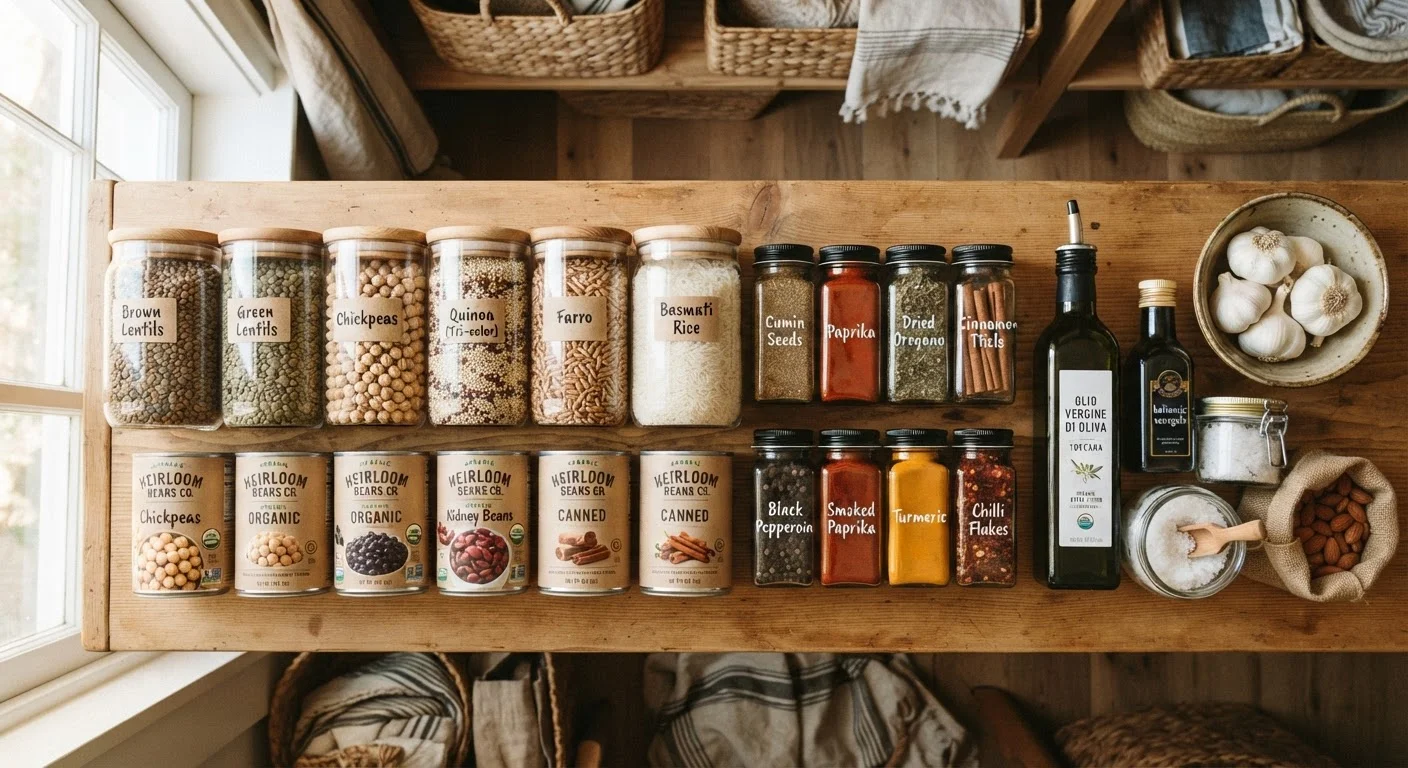
The staples listed below are chosen for three reasons: they're inexpensive per serving, they have long shelf lives that reduce waste, and they work across dozens of recipes. You don't need to buy all of them at once — build the list gradually, replacing items when they run low rather than doing a single expensive haul.
For a practical approach to using what you already own before you shop, see our guide to pantry-first cooking. It pairs well with everything here.
Dried Lentils and Split Peas
Dried lentils and split peas cost a fraction of almost any other protein source and require no soaking. A one-pound bag typically yields six to eight servings. Red lentils dissolve into soups and dals; green or brown lentils hold their shape for salads and grain bowls. Split peas make a filling soup from almost nothing.
Their fiber and protein content means a small portion genuinely satisfies, which keeps per-meal costs low. Stock at least two varieties so you have flexibility.
Dried lentils deliver more protein per dollar than almost any other pantry item.
White Rice and Rolled Oats
White rice is a neutral base that absorbs flavors from whatever you cook alongside it. A five-pound bag stretches for weeks. Rolled oats pull double duty: a hot breakfast for pennies per serving, and a binding agent in veggie burgers, meatballs, or baked goods. Both items store for a year or more in sealed containers.
Together, these two grains cover breakfast and a dinner base — two of your three daily meals — at almost no ongoing cost.
Rice and oats together cover two meals a day at minimal per-serving cost.
Canned Tomatoes
Canned whole or crushed tomatoes are one of the most versatile items in a frugal kitchen. They form the base of pasta sauces, curries, chilis, soups, and braised dishes. A single can costs under two dollars in most US markets and serves three to four people when combined with other pantry staples.
Diced tomatoes with green chiles add a quick shortcut to Mexican-style dishes. Keep a mix of plain and seasoned varieties to vary your output without extra effort.
A single can of tomatoes forms the base of a full meal for multiple people.
Dry Pasta and Noodles
Dry pasta is shelf-stable, fast to cook, and endlessly flexible. A one-pound box covers four servings as a main dish. Stocking two or three shapes — something long like spaghetti, something tubular like penne, and something small like orzo — gives you variety without clutter. Rice noodles extend your range into Southeast Asian-style dishes using the same pantry backbone.
Pasta's main job is turning a small amount of protein or vegetables into a complete, filling meal. That ratio makes it genuinely valuable for a tight grocery budget.
Two or three pasta shapes give you a week's worth of varied, satisfying dinners.
A Neutral Cooking Oil and Olive Oil
Keep two oils: a neutral high-heat oil (vegetable, canola, or sunflower) for everyday sautéing and frying, and a bottle of olive oil for finishing, dressings, and lower-heat cooking. Buying the larger format saves meaningfully per ounce over smaller bottles. Both oils last six months to a year when stored away from heat and light.
Oil is easy to overlook, but running out mid-cook is a real inconvenience that can push you toward takeout. Treat it as a non-negotiable staple.
Keeping two oils on hand prevents mid-cook shortages that derail home-cooking habits.
A Core Spice Set
Spices are what separate a dull cheap meal from one you'd actually look forward to. You don't need dozens — a working set of eight to ten covers most cuisines. Prioritise: cumin, smoked paprika, garlic powder, onion powder, turmeric, chili flakes, oregano, and a curry powder blend. Whole cumin seeds and coriander give you additional range if you cook Indian or Middle Eastern food regularly.
Buy spices from bulk bins or international grocery stores when possible — the same spice often costs a third of the price compared to branded jars in a mainstream supermarket.
Eight spices can unlock dozens of distinct flavor profiles from the same base ingredients.
Dried or Canned Beans
Canned beans offer convenience; dried beans offer much lower cost per serving. Black beans, chickpeas, kidney beans, and cannellini beans each have distinct uses. Chickpeas roast well, work in curries, and blend into hummus. Black beans anchor tacos, soups, and rice dishes. Dried beans require advance planning — soaking overnight — but a one-pound bag yields roughly the equivalent of three cans at a fraction of the price.
For more on building affordable meals around these ingredients, the plant-based protein breakdown goes deeper on nutrition and cooking methods.
One pound of dried beans equals three cans of protein at a fraction of the cost.
Soy Sauce, Vinegar, and Hot Sauce
These three condiments add salt, acid, and heat — the flavor levers that make simple food taste intentional. Soy sauce works in stir-fries, marinades, and braises. A bottle of white wine or apple cider vinegar brightens dressings and cuts richness in heavier dishes. Hot sauce or chili garlic paste wakes up anything bland.
None of these are expensive, and all three last months in the pantry or fridge. The return on a few dollars spent here is enormous when you're cooking primarily from cheap base ingredients.
Soy sauce, vinegar, and hot sauce are the cheapest way to make simple food taste good.
Putting It All Together
These staples don't work in isolation — their real value shows up when you treat the pantry as the starting point for every meal rather than an afterthought. Once these items are in your kitchen consistently, you'll find you need far fewer impulse purchases each week.
Build Your Pantry Gradually, Not All at Once
You don't need to buy every item on this list in a single shop. Add one or two new staples per week when your budget allows, prioritising whatever fills the biggest gap in your current cooking. Within a month, you'll have a working pantry that covers most meals. The weekly grocery budget guide can help you audit what you already own so you're not duplicating items you have.
If you want a structured system for turning these ingredients into weekly meals without waste, the complete low-budget meal planning framework walks through every step. And if protein is your main concern, the plant-based protein guide covers how to make lentils, chickpeas, and eggs do serious heavy lifting on a tight budget.
This article is for general informational purposes only and does not constitute financial or dietary advice. Prices and availability vary by region and retailer. Consult a registered dietitian for guidance tailored to your specific nutritional needs.
The content provided on our blog site traverses numerous categories, offering readers valuable and practical information. Readers can use the editorial team’s research and data to gain more insights into their topics of interest. However, they are requested not to treat the articles as conclusive. The website team cannot be held responsible for differences in data or inaccuracies found across other platforms. Please also note that the site might also miss out on various schemes and offers available that the readers may find more beneficial than the ones we cover.